
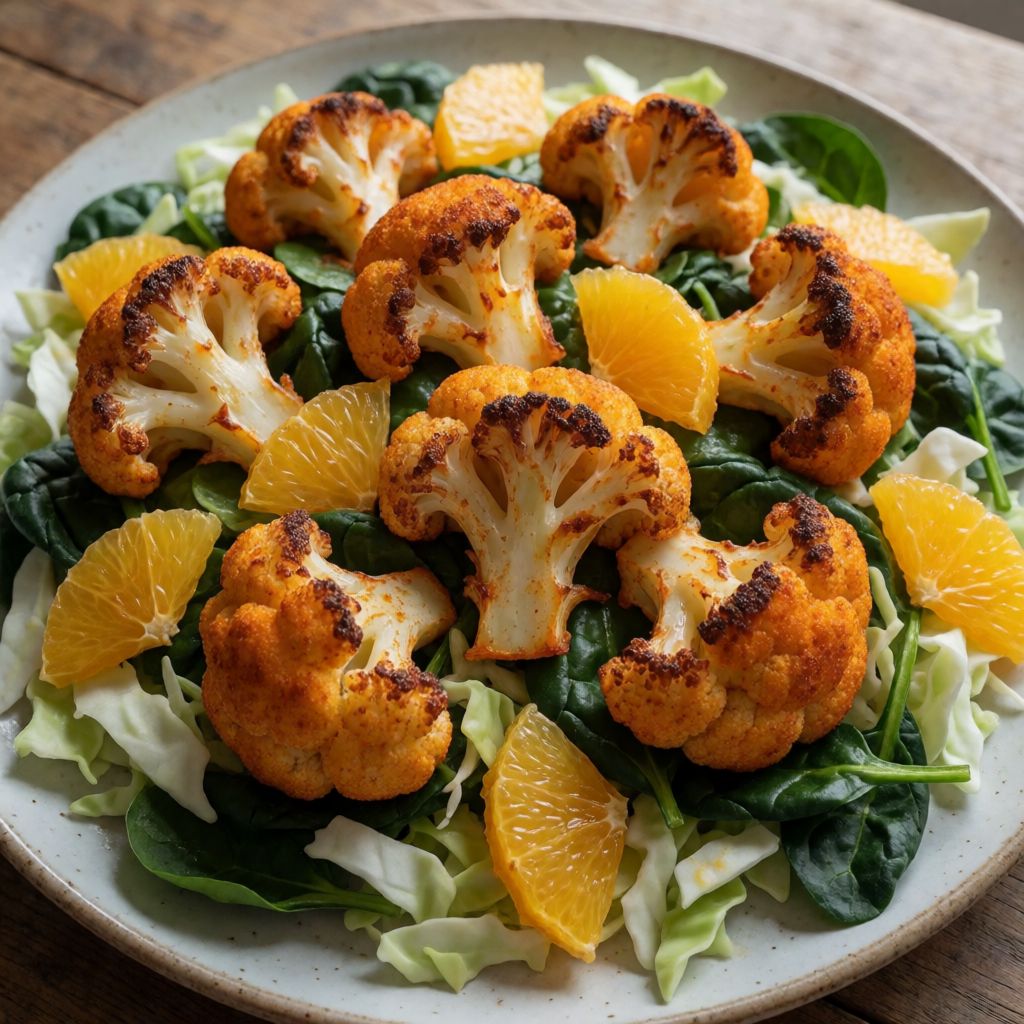
 AI photo
Smoked Paprika Cauliflower with Orange Salad
A warm salad of roasted smoked paprika cauliflower with orange segments, spinach, pointed cabbage and avocado.
Labels are worked out automatically from the ingredients and can be wrong. Check the packaging if it matters to you.
Ingredients
- 250 g Cauliflower in small florets
- 1 tsp Smoked paprika
- 1 pinch Cinnamon
- 2 pcs Orange
- 70 g Spinach
- 0.5 pcs Pointed cabbage finely shredded
- 1 pcs Avocado diced
- 1 tbsp Sesame seeds toasted in a dry pan
- 3 tbsp Olive oil
- Salt to taste
- Black pepper freshly ground






Steps
Toss the cauliflower with the olive oil, smoked paprika, cinnamon, salt and pepper.
Spread the florets on a baking tray lined with baking paper and roast in a preheated oven at 200°C fan for 20 minutes.
20 minSegment the oranges, cutting away the peel and white pith around each segment.
Arrange the baby spinach, pointed cabbage, orange segments and avocado on a plate together with the roasted cauliflower.
Sprinkle with toasted sesame seeds, salt and pepper before serving.
This is two dishes on one plate, and it only works if you keep them as two dishes until the last second: hot, blackened cauliflower against a cold, sweet-sharp salad. If you let the cauliflower sit and steam under foil before serving, or if you dress the salad while it's hot, you get warm limp vegetables with no contrast — and the whole point of the dish disappears.
What decides it: florets cut small and spread out with room to breathe, so the oven's heat can actually reach the surface and dry it rather than trap steam under a crowd of cauliflower. Same mistake as roast potatoes on a Sunday that come out pale and soft — pan too full, moisture has nowhere to go, so it steams instead of roasts. Cauliflower is worse than potato here because it's already mostly water; crowd it and you'll get grey mush with paprika dust on top, not char.
The second decider is the orange. Pith — the white layer under the peel — is where the bitterness lives, not in the flesh. Cut it away properly and the segments are clean sweetness that cuts through the smoky paprika; leave shreds of it on and every bite fights itself. This takes a steady hand and no rush — patience is an ingredient in a dish with this few components, because there's nowhere for a sloppy cut to hide.
Cauliflower: look for a tight, pale head with no brown freckling at the stem end — that browning is the first sign of age, and it spreads into bitterness once roasted. Cut florets small and roughly equal, because an oven doesn't negotiate: a fat floret stays raw in the centre while a thin one chars, and you end up picking through the tray for the one size that's actually done. Doneness here isn't a timer — it's the edges going from white to deep gold-brown, almost black at the tips of the smaller shoots. That char is flavour, not a mistake; don't rescue it early.
Smoked paprika and cinnamon both need fat to carry them — their flavour compounds are oil-soluble, not water-soluble, which is why you toss the florets in oil first rather than sprinkle the spice on dry. A pinch of cinnamon, not a spoonful: it's there to round the smoke, not to turn the dish into a dessert. Any oil with no strong smell of its own would do the carrying job fine — sunflower, a mild rapeseed — but olive oil here is a choice, not a default, because its own fruitiness sits well next to smoke. Use what you have; the paprika won't mind.
Oranges: navel oranges segment most cleanly because the membrane between segments is thin and the flesh holds together when you cut it free. Slice off top and bottom so the fruit sits flat, then follow the curve of the flesh with the knife, cutting the peel and white pith away together in one pass rather than peeling first — that's how you avoid leaving ragged bitter strips behind. Blood oranges work too and look better on the plate, but they're a short season; don't wait for them if the recipe is in front of you now.
Pointed cabbage is chosen for thin, tender ribs that don't need blanching or massaging to go soft enough to eat raw — any pale, sweet cabbage with narrow ribs will do the same job: spring cabbage, the outer leaves of a Savoy with the thick spine cut out. A dense winter cabbage with thick ribs will just sit there chewy and sulking next to soft avocado and warm cauliflower.
Avocado should give slightly under a thumb, not mush. Cut it close to serving — the blackening you see on a cut avocado after a while isn't spoilage, it's oxidation, the same browning as a cut apple, and the citrus acid already on the plate will slow it down if you toss the pieces near the orange rather than leaving them stranded on the far side.
Sesame seeds get toasted dry, no oil, because the point is to crack their shells open just enough to let the oil inside them smell like something — raw sesame is mostly inert, flat. Watch the pan, not the clock: they go from pale to gold fast, and from gold to burnt faster still, so stay by the stove for the thirty seconds it takes rather than walking off to do something else.