
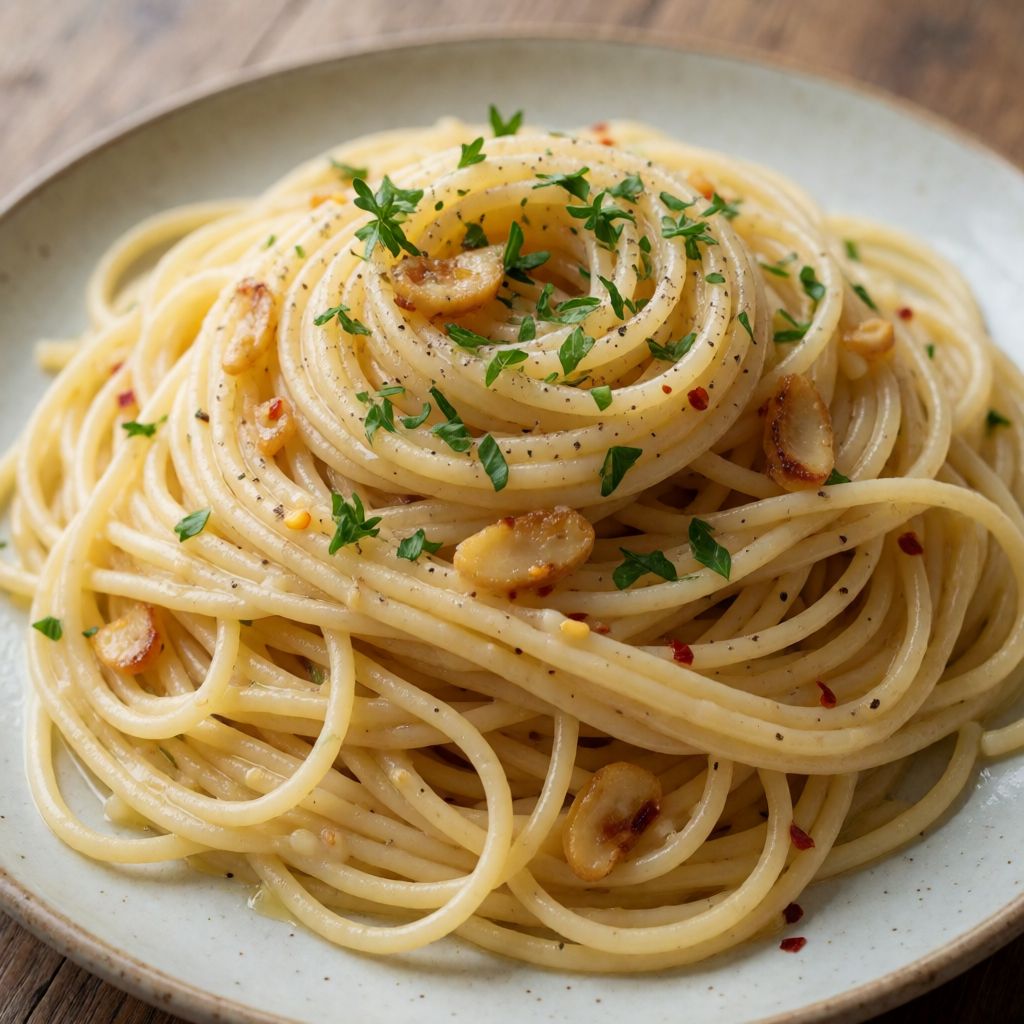
 AI photo
Spaghetti with Garlic, Olive Oil and Chilli
A simple pasta dish tossed with garlic, chilli and olive oil, finished with fresh parsley.
Labels are worked out automatically from the ingredients and can be wrong. Check the packaging if it matters to you.
Ingredients
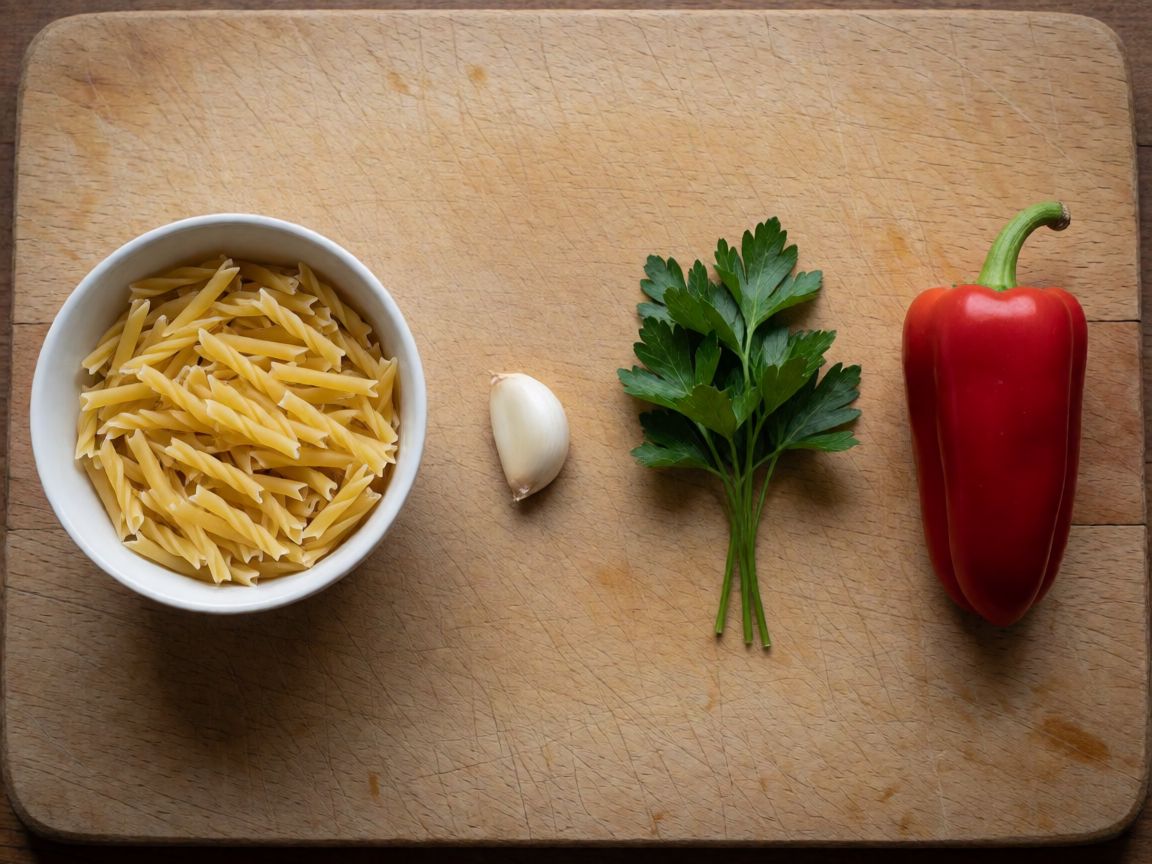
- 360 g Spaghetti
- 1 clove Garlic
- 1 bunch Parsley
- 1 pcs Red chilli pepper
- Salt to taste
- Black pepper to taste
- Olive oil to taste







Steps
Cook the spaghetti in plenty of salted boiling water.
10 minCrush the garlic with the flat side of a knife.
1 minWash the chilli pepper, cut it lengthways in half, remove the seeds and slice into strips or small cubes.
2 minWash and very finely chop the parsley.
2 minHeat a little olive oil in a large pan, add the garlic and chilli and sauté.
3 minRemove the garlic and add a ladle of the pasta cooking water to loosen the sauce.
1 minDrain the spaghetti al dente, transfer to the pan, add the parsley and warm through for a few minutes.
3 minIf needed, loosen the sauce further with more pasta cooking water.
1 minServe the spaghetti sprinkled with a pinch of black pepper.
This is a dish built on a tightrope: there's almost nothing in the pan, so every mistake shows. No tomato to hide behind, no cream to smooth things over — just oil, garlic, chilli and the water the pasta cooked in. What decides whether it works is one thing: the colour of the garlic. Pale gold means the oil now carries garlic's fragrance. Brown means the sugars in the clove have scorched, and bitterness has gone into every drop of oil you're about to toss with the pasta. There is no saving it after that point — you start again.
Some cooks think more heat means faster flavour, so they crank the hob the way you'd crank it for a steak. Don't. Garlic releases its aroma into fat slowly, through gentle, almost lazy bubbling — the oil should shimmer, not smoke. A domestic ring runs hotter at the centre than a professional burner spreads it, so pull the pan off dead centre if your garlic is colouring too fast at the edges.
The second thing that decides the dish is the ladle of pasta water you add back in. That water isn't filler — it's starchy and salted, and it's what lets oil and water meet each other instead of sitting apart, oil floating on top like it does in a badly made salad dressing. Swirl it in and the sauce turns from 'garlic oil with pasta nearby' into a glaze that actually clings to every strand.
Garlic: one clove sounds thin for four people, and it is — this is a dish of restraint, not generosity, so don't compensate by chopping it fine to 'spread it further'. Flattened with the knife, it stays in large enough pieces to pull out again. If your garlic is old and sprouting green in the middle, cut that green shoot out; it turns acrid under heat long before the clove itself does.
Chilli: removing the seeds and the pale membrane around them isn't squeamishness, it's arithmetic — that's where the capsaicin concentrates, and left in, one chilli can out-shout the garlic entirely. Sliced into strips, the flesh gives a warmth you feel after the fact, not a punch up front. If fresh chilli isn't in the shop, a pinch of dried flakes dropped into the oil with the garlic does the same job — add it cautiously, since dried loses moisture but not heat.
Parsley: flat-leaf, if you can get it — curly works but carries less flavour for the same handful. It goes in late and off any real heat, because parsley's whole value is its green, grassy smell, and that smell cooks off in under a minute. Treat it the way you'd treat tea left too long in the pot — once it's stewed, the good part is gone.
Olive oil: here it isn't a cooking medium you discard, it's the sauce itself, so use the best plain olive oil you're willing to drink a spoonful of. 'Extra virgin' is a grading, not a guarantee — smell it first. Any oil with no flavour of its own (sunflower, say) would technically bind the pasta, but it would also turn this into spaghetti with garlic and nothing, since there's no fat character left to carry anything.
Salt and pepper: the salt belongs in the pasta water, generously, because that's your only chance to season the strands from the inside — salting the sauce after can't reach where the water already has. Black pepper comes right at the end, cracked rather than pre-ground if you can manage it, for the same reason parsley goes in late: heat burns off what makes it worth adding.
This dish has a history worth knowing before you dismiss it as 'just pasta with garlic' — it's Neapolitan larder food, aglio, olio e peperoncino, the thing you cooked when the week's money had run out before the week had. Its whole reputation rests on technique doing the work that expensive ingredients usually do, which is exactly why rushing the garlic ruins it faster than rushing a ragù ever could.