
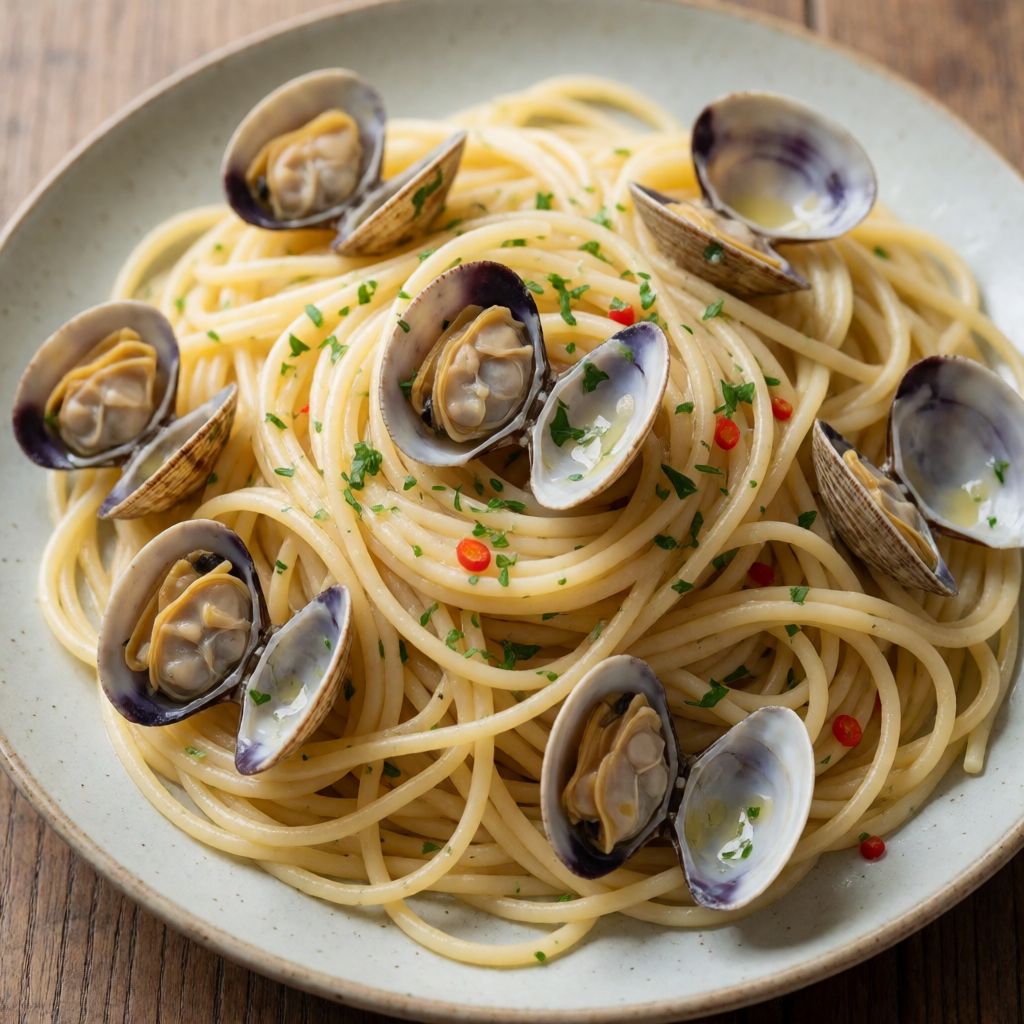
 AI photo
Spaghetti alle Vongole
A classic Italian pasta of clams, garlic, chilli and white wine, finished with butter, parsley and lemon.
Labels are worked out automatically from the ingredients and can be wrong. Check the packaging if it matters to you.
Ingredients
- 500 g Clams
- 4 clove Garlic finely chopped
- 1 pcs Red chilli finely chopped
- 2 tbsp Olive oil
- 100 ml White wine
- 1 bunch Parsley finely chopped
- 400 g Spaghetti
- 1 pcs Lemon unwaxed
- 2 tbsp Butter
- Salt
- Black pepper freshly ground











Steps
Rinse and scrub the clam shells under running water.
Discard any cracked clams or ones that don't close when tapped lightly on the worktop.
Cook the spaghetti until al dente.
Meanwhile, fry the garlic and red chilli in a pan with olive oil for 1–2 minutes over medium heat.
2 minAdd the clams and white wine, cover with a lid and simmer for 5 minutes.
5 minAdd the spaghetti to the clams in the pan.
Add the butter, chopped parsley, grated lemon zest and the juice of half a lemon.
Mix well and season with salt and black pepper.
Serve immediately, ideally with good bread, a nice salad and a tasty glass of white wine.
Remove the clams from their shells and discard any that didn't open during cooking.
Spaghetti alle vongole is a dish with almost nothing in it — clams, garlic, chilli, oil, wine, parsley — and that is exactly why it fails so easily. There is no sauce to hide behind. What decides it: whether the clams are alive and clean when they go in the pan, and whether you stop the pasta before the clams finish, because the two cook on completely different clocks.
The clams give you two signals before you ever taste anything. Tap one on the worktop: if it doesn't close, it's dead, and a dead clam left in the shell has started breaking down — bin it. A cracked shell means grit and seawater can get into the flesh, which no amount of rinsing fixes afterwards. This isn't fussiness, it's the only quality control you get, because you can't see inside a closed shell.
Some say you need a splash of cream to make vongole "proper" Italian comfort food — no, because the whole point of this sauce is that it's clam liquor and wine reduced by heat, nothing added to mask it. Cream would just drown the one flavour the dish exists to show off. If the sauce tastes thin, that's not a flaw to fix with dairy — it means your clams gave up less liquid than they should have, which happens with clams that have sat too long out of water.
The clams are the one ingredient you can't substitute and still call this dish vongole — frozen or tinned clams give you rubber and nothing in the shell to trap the sauce. If your fishmonger (or the fish counter at a decent supermarket) has them, that's your Thursday-Friday errand before a Sunday roast ever gets planned; clams don't keep, so buy them the day you cook, ideally the same morning, and keep them in the fridge wrapped loosely — not sealed in a bag, they need to breathe.
Garlic and chilli go in first, in oil, over heat gentle enough that the garlic turns pale gold, not brown. Burnt garlic turns bitter and there's no rescuing a sauce once that bitterness is in — this is the one spot in the whole recipe where rushing costs you the dish. "Medium heat" on a British hob means different things depending on the pan; watch the garlic, not the dial. Any oil with no smell of its own does the job here — a light olive oil, not your good finishing extra virgin, which you're about to pour money down the drain cooking off.
The wine does two things: it deglazes whatever's stuck to the pan from the garlic, and it steams the clams open. You don't need an expensive bottle — anything dry and white you'd actually drink the rest of, because it's going in the sauce too, not just the pan. No wine in the house? A splash of water with a squeeze of lemon gets the clams open, though you lose some of the acidity that cuts through the richness later.
The lid matters more than it looks. Clams open by steam pressure and heat, not by magic — cover the pan and that trapped steam is what forces the shells apart within a few minutes. No lid in your kitchen that fits? A large plate laid over the pan does the same job; it's an old trick from flats with mismatched pan-and-lid sets, and it works because all you need is something to stop the steam escaping, not an airtight seal.
Spaghetti al dente isn't a texture preference here — it's timing insurance. Pasta carries on cooking in the hot pan once it's tossed with the clams, so pulling it slightly underdone from the pot means it finishes exactly right by the time it's mixed through and plated, rather than going soft and gluey.
And the clams that never opened at the end — throw them out, don't prise them open to "not waste it." A clam that stayed shut through heat and steam was already dead or sealed with grit before it went in the pan; eating it is the one shortcut in this whole short list of steps you really don't want to take.