
 AI photo
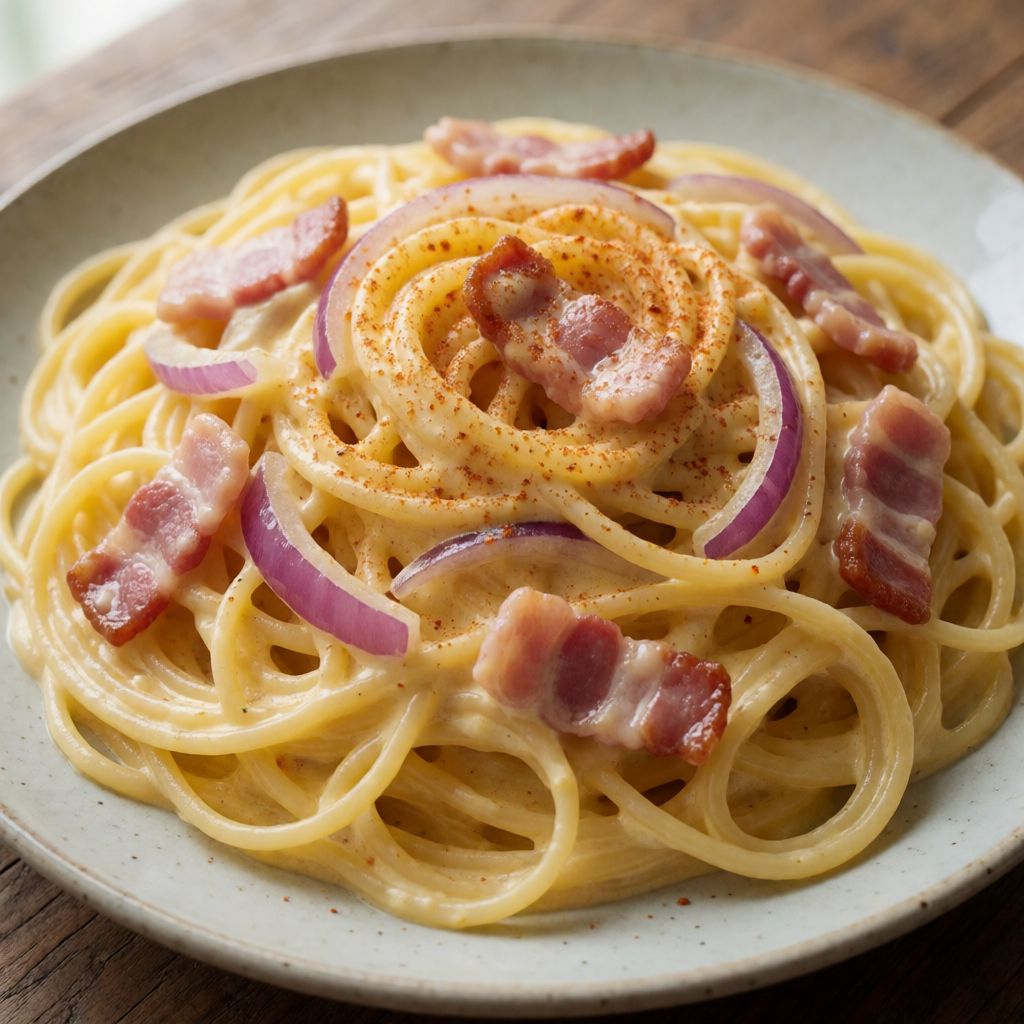
Spaghetti Carbonara with Red Pepper
A spaghetti carbonara with red bell pepper, red onion and pancetta, finished with pecorino and a touch of white wine.
Labels are worked out automatically from the ingredients and can be wrong. Check the packaging if it matters to you.
Ingredients
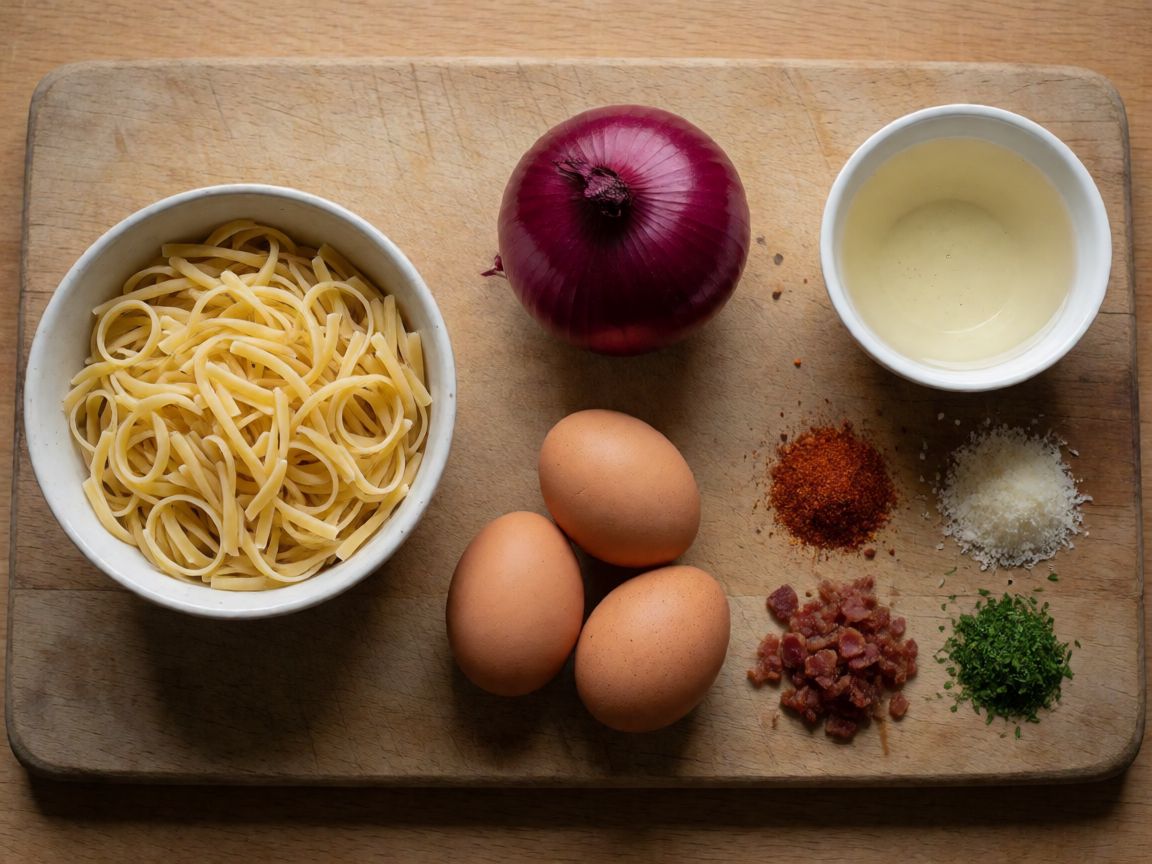
- 400 g Spaghetti
- 1 pcs Red onion
- 3 pcs Eggs
- Salt to taste
- 1 pinch Chilli powder dried
- 150 g Pancetta
- 3 tbsp Pecorino
- Parsley to taste
- 2 tbsp Olive oil
- 120 ml White wine
- 1 pcs Red pepper










Steps
In a pan, fry the onion and pancetta in olive oil until the pork reaches an internal temperature of 70°C
Pour in the white wine and let it evaporate
Add the sliced red pepper and cook gently
10 minCook the spaghetti
In a bowl, whisk the eggs with the pecorino, a pinch of chilli powder and the parsley
Drain the pasta al dente and tip it into the pan with the whisked eggs, adding another spoonful of pecorino
Toss quickly for a few minutes and serve
Call this carbonara and a Roman will correct you before you've finished the sentence — real carbonara has no onion, no pepper, no wine, and definitely no cream. What you have here is a different animal wearing carbonara's clothes: an egg-and-cheese sauce built the same way, but padded out with a sweet pepper and onion sofrito and a splash of white wine, which is more frittata-with-pasta than Roman trattoria. That's not an insult. It's just honesty about what's in the pan.
What decides whether it works is the same thing that decides any egg-based pasta sauce: heat control at the very end. Eggs scramble at a lower temperature than you think — call it somewhere around 70°C, the same number this recipe quietly hands you for the pancetta. Below that, egg and fat and starchy water turn glossy and cling to the strand. Above it, you get sweet little curds floating in grease, which is what happens to almost everyone's first carbonara and why so many people decide, wrongly, that cream is the fix for a "dry" sauce. The sauce was never dry — it was cooked.
The pepper and onion aren't there to be "Italian." They're there because pancetta fat is rich and a bit one-note, and a vegetable cooked slowly in that fat until it goes soft and sweet gives the dish some roundness — the same logic as a British mince-and-onions base, just with peppers standing in. The wine does a specific job too: it hits the hot fat, the alcohol burns off, and what's left behind is acid and flavour that cling to the meat and the vegetables instead of sitting as raw liquid in the pan.
Spaghetti: use a dried pasta, not fresh egg pasta — you already have eggs in the sauce, you don't need them twice over, and dried spaghetti holds its bite for the few seconds of tossing it needs at the end. Save a cupful of the cloudy cooking water before you drain it; that starchy water is your insurance if the sauce looks like it's about to seize, because starch slows down how fast the eggs can clump.
Pancetta is cured, unsmoked pork belly — the fat is the point, it's what the onion and pepper cook in and what carries flavour through the whole dish. If you can't get pancetta, a British streaky bacon works almost as well; it's smokier, which changes the character slightly but won't ruin anything. What you shouldn't reach for is lean back bacon — not enough fat renders out, and you'll end up frying the vegetables in dry oil instead of pork fat, which is a different, thinner-tasting dish.
Eggs: three whole eggs for 400g of pasta is a generous ratio, enough to coat without drowning. Crack them into the bowl with the pecorino and whisk before the pasta is anywhere near ready, not after — you want one smooth mixture going into a hot pan, not someone frantically beating eggs while the spaghetti goes cold and sticks.
Pecorino is a hard, salty sheep's cheese — it's sharper and saltier than Parmesan, which is why traditional carbonara uses it rather than the cow's-milk cheese that's easier to find in a British supermarket. Parmesan is the honest substitute here; it's milder, so taste before you add extra salt, since pecorino's saltiness is doing some of that work for you already.
Red onion and red pepper: nothing locks you to red specifically — it's a colour choice as much as a flavour one, sweeter and a touch less sharp than white onion or green pepper, but either will cook down the same way. Cook them gently, not to colour them brown but to soften them — you're looking for the pepper to go slack and the onion to turn translucent, not charred. On a domestic hob without the fierce, even heat of a kazan or a professional burner, gentle genuinely means gentle: too high and the vegetables catch and taste bitter before they've gone soft.
White wine: any dry white you'd drink works; don't buy "cooking wine," which is usually salted and bland and gives you none of the acidity you actually added it for. If you have none open, a squeeze of lemon juice stirred in at the same point gets you most of the acid lift, just without the flavour that cooking off alcohol leaves behind.
The last step — tipping drained pasta into whisked egg in a pan that's off the heat or barely warm — is the whole recipe's hinge. Patience here isn't a virtue, it's the ingredient that makes the difference between sauce and scrambled egg with spaghetti in it. Toss, don't stir; the motion coats every strand quickly and keeps any one spot of the pan from cooking the egg sitting on it. If it starts tightening up too fast, a splash of that reserved pasta water loosens it back to silk.