
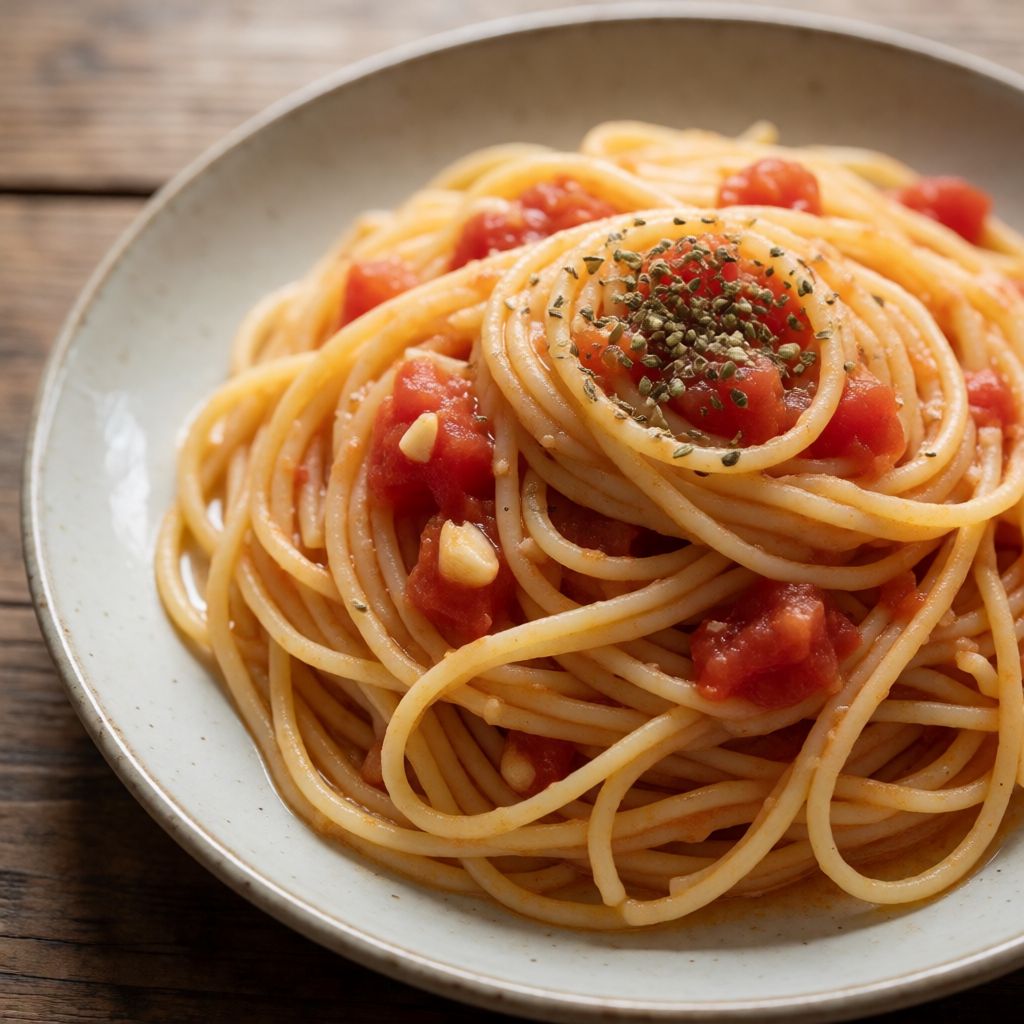
 AI photo
Poor Man's Spaghetti
A simple, humble spaghetti dish made with cherry tomatoes, garlic and a little grated hard cheese.
Labels are worked out automatically from the ingredients and can be wrong. Check the packaging if it matters to you.
Ingredients
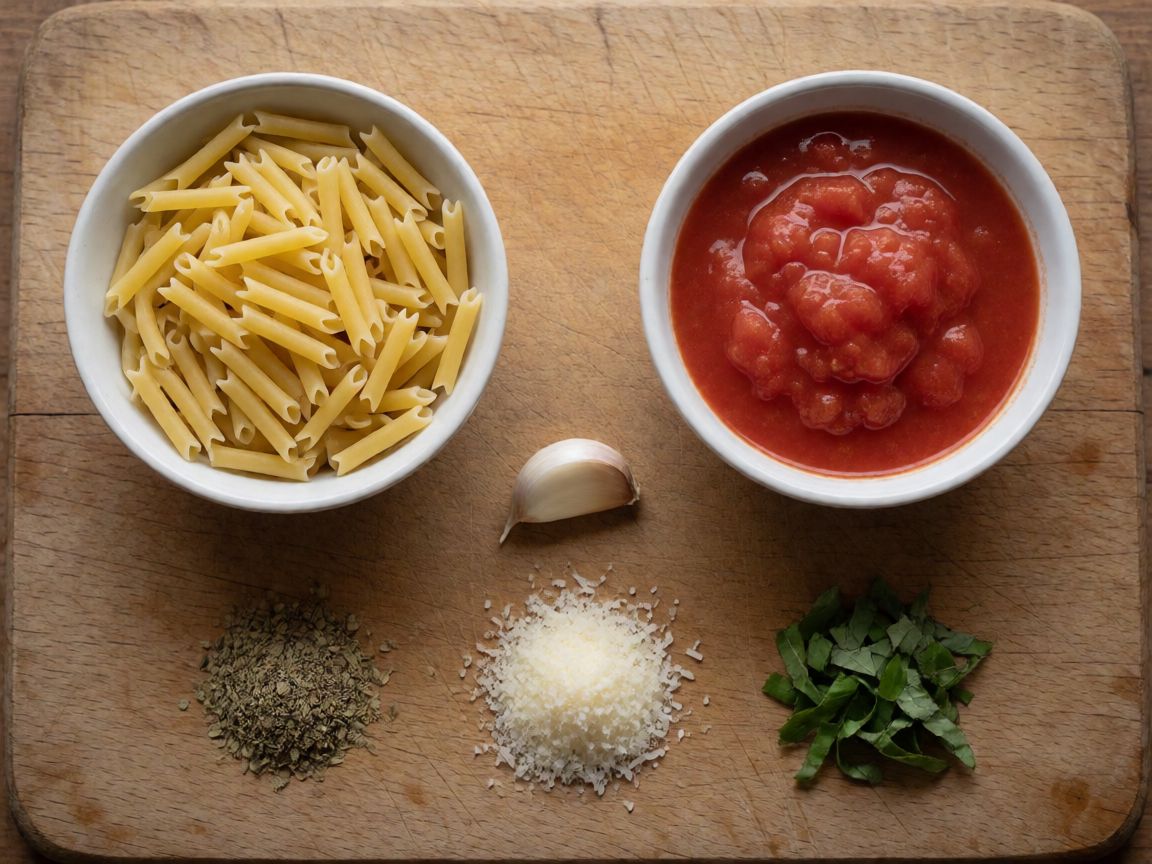
- 400 g Spaghetti
- 500 g Cherry tomatoes
- Salt to taste
- 1 clove Garlic
- Vegetable oil for frying
- Oregano to taste
- Hard cheese grated, to taste
- Basil optional








Steps
Heat the oil in a wide frying pan with a crushed garlic clove.
2 minLightly fry the garlic, add the cherry tomatoes cut in half and the salt, then cover with a lid.
5 minCook over a slightly higher heat until the tomatoes swell and become soft.
15 minStir in a little oregano just before turning off the heat.
3 minToss the cooked spaghetti with the sauce over the heat and mix in the grated hard cheese.
5 min
This is the dish Italians call pasta povera — poor man's pasta — and the name is not marketing, it is a receipt. No meat, no cream, no anchovies: garlic, oil, tomatoes, pasta, cheese. It exists because for most of history that is what a kitchen actually had, especially on the days the church told you not to eat meat, or the days your wallet told you the same thing. Calling it "poor" is not an insult to the dish — it is a compliment to whoever worked out that four cheap things, handled right, taste like more than four cheap things.
What decides whether it works is not the tomatoes or the garlic alone — it is whether you let the tomatoes become a sauce instead of staying a pile of boiled fruit, and whether the spaghetti finishes its life in that sauce rather than next to it. Garlic that goes dark is bitter, not toasted — some say brown garlic means you've cooked it properly, no, because brown means burnt, and burnt garlic flavours nothing but your own regret. Watch the colour, not the clock: pale gold, not amber, and pull it before it tips.
The tomatoes need steam more than they need fierce heat. Covered, their own water and sugar start to run, the skins give up and split, and what was five hundred grams of whole cherry tomatoes collapses into something you can actually call a sauce. Uncovered, that same heat just dries them into little roasted husks sitting in oil — same ingredients, wrong texture, because you took away the thing that was supposed to turn liquid into sauce rather than let it evaporate.
On the garlic: one clove, crushed rather than minced, and that's deliberate. A crushed clove is still mostly whole — bruised, split, oils just starting to leak — so it releases its flavour slowly into the oil instead of all at once, and you can see it and pull it before it browns. Minced garlic in hot oil is basically garlic dust with nowhere to hide; it catches and burns in the time it takes you to answer the phone.
The oil just needs to be one with no character of its own — it's a carrier here, not a flavour. Sunflower or any other flavourless vegetable oil does the job the recipe actually asks for. Olive oil is the traditional choice in Italy for this exact dish, and you can use it if you have a cheap one lying around, but don't go hunting for something fancy — a dish born out of having little is not the place to spend on a bottle that costs more than the rest of the ingredients combined.
Cherry tomatoes aren't a style choice, they're a mechanism. Small fruit means more skin relative to flesh, and more concentrated sugar, which is exactly what turns watery tomato into sauce in fifteen minutes rather than an hour. A big tomato has to cook down for ages to lose the same proportion of water. If it's deep winter and the cherry tomatoes in the shop taste of nothing — which happens here more often than anyone likes to admit — a tin of good whole tomatoes, crushed by hand, will give you more actual tomato flavour than a punnet of pale out-of-season ones. That's not cheating, that's reading the produce honestly.
The lid matters more than it looks like it should. In a wide frying pan standing in for a kazan, a proper lid rarely fits — a plate laid over the top does the same job: it holds the steam in so the tomatoes cook from both the pan and their own vapour, and that's what gets the skins to burst rather than shrivel. Skip it and you've basically oven-dried your tomatoes on the stove.
Oregano goes in at the very end, off or almost off the heat, because its aroma is the first thing to leave a hot pan — add it early with the tomatoes and by the time you plate up, you'll have the memory of oregano and not much else. Same logic for basil if you use it: tear it, don't chop it, and drop it in raw right at the finish. Chopped basil bruises and blackens; cooked basil loses the thing you added it for in the first place.
On the cheese: any hard, aged, dry cheese that grates into fine shreds rather than clumps will do — Parmesan or Pecorino are the obvious choices, but a mature hard cheddar, which is easy enough to find in any shop here, works by the same logic: age and dryness, not the label on the wheel. And toss the spaghetti into the sauce, in the pan, over the heat, rather than spooning sauce onto a plate of pasta — the starchy water still clinging to the spaghetti is what lets the sauce grip the strands instead of pooling at the bottom of the bowl while you eat the pasta dry on top.