
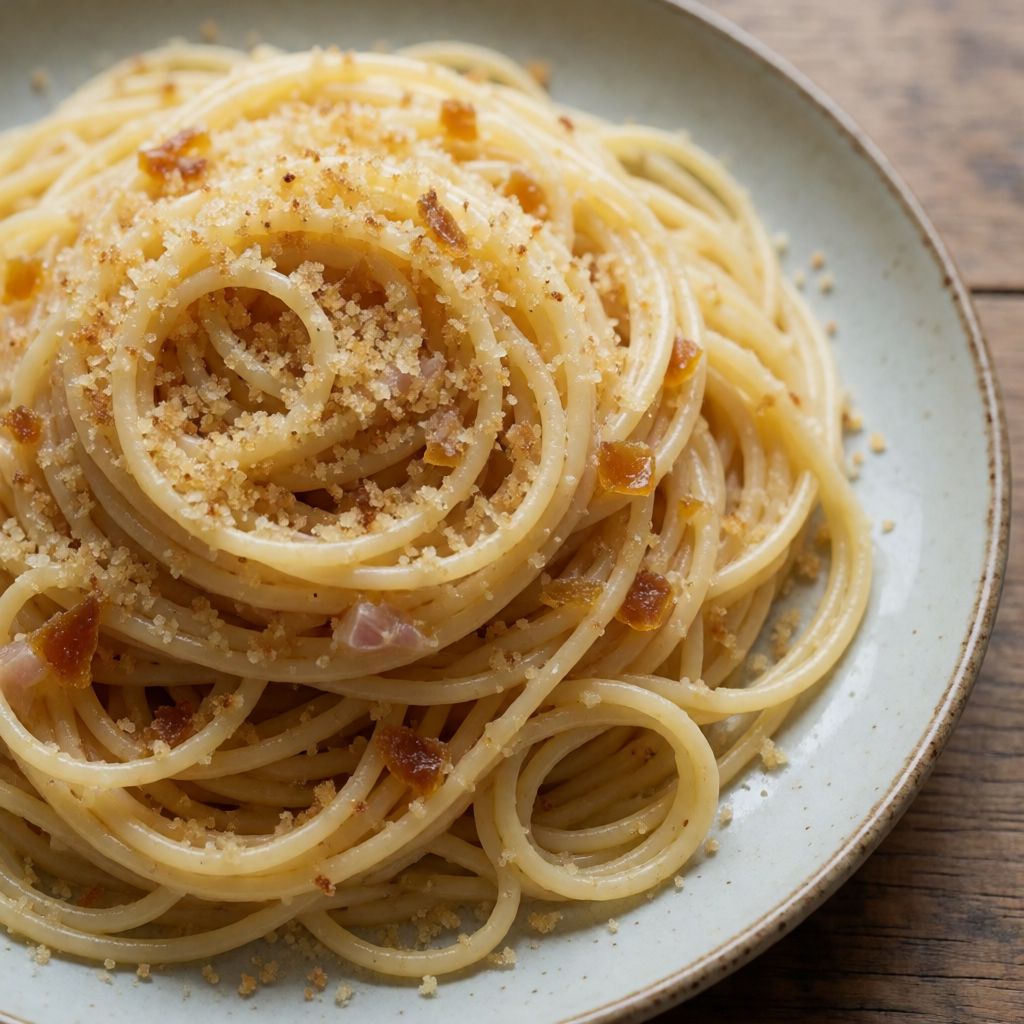
 AI photo
Spaghetti with Bottarga
A simple Italian-inspired pasta with cured mullet roe, lemon zest and crisp breadcrumbs.
Labels are worked out automatically from the ingredients and can be wrong. Check the packaging if it matters to you.
Ingredients
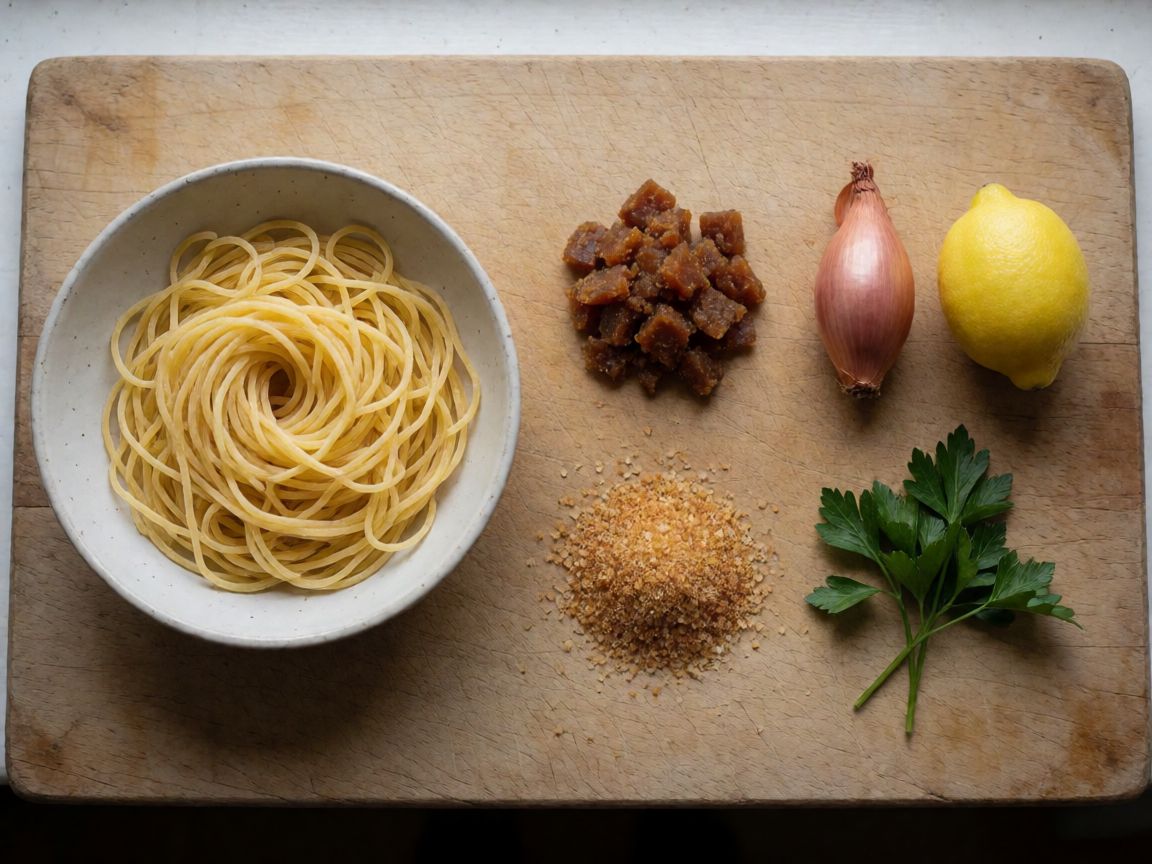
- 400 g Spaghetti
- 80 g Mullet bottarga
- 1 pcs Lemon
- 1 pcs Shallot
- 2 tbsp Breadcrumbs dried
- 8 tbsp Olive oil
- Salt to taste
- Black pepper to taste
- Parsley to taste








Steps
In a large pot with high sides, bring plenty of salted water to the boil.
In a non-stick pan, gently fry the finely chopped shallot over a very low heat, adding a few spoonfuls of pasta water from time to time.
Using a mandoline or grater, slice or grate the lemon zest and add it to the pan with the oil and shallot.
In another pan, heat a few spoonfuls of oil, add a spoonful of breadcrumbs and, if you like, a little finely chopped parsley.
Cook the spaghetti until al dente, saving a few spoonfuls of pasta water, then drain and transfer to the pan.
Grate the bottarga directly over the pasta, add salt and black pepper to taste, and the remaining breadcrumbs.
If the dish seems too dry, add a little pasta water along with another handful of grated bottarga.
Serve on plates and garnish with a few more bottarga shavings.
This is not a fish pasta in the usual sense — nothing swims in a sauce here. You take spaghetti, dress it with the grated roe sac of grey mullet, cured in salt and dried until it turns the colour of dark honey, lift it with lemon zest and a softened shallot, and finish with toasted crumbs standing in for cheese. Fourteen ingredients on paper, but the whole dish is really built around one decision: how much heat the bottarga is allowed to see.
Bottarga is already finished food. It was salted, pressed, and air-dried weeks before it got anywhere near your kitchen — that's the whole point of curing, it's how fishermen's wives kept the roe through winter long before anyone owned a fridge. So you are not cooking it, you're waking it up. Grate it onto hot pasta off the direct flame and it melts into the oil, turns fragrant, a little briny, a little like the sea at low tide. Put it in a hot pan and the proteins seize, the delicate aromatics that took weeks to develop cook off, and what's left tastes like scorched salt and not much else. That's the one mistake this dish can't survive.
Buy the bottarga whole if you can, not pre-grated in a jar — once it's ground it starts losing its oils to the air, and jarred bottarga is often cut with cheaper roe or salt to bulk it out. Look for a firm, dry-but-not-brittle lobe, amber to deep brown, with a clean marine smell — if it smells of ammonia or fish gone over, it's past its best no matter how good the vacuum pack looks. Grey mullet (muggine) is the classic; tuna bottarga exists too, stronger and cheaper, and it will work here, just expect a blunter, more iodine-heavy result. There's no honest substitute for bottarga itself — anchovy paste or fish sauce will give you salt and umami but none of the dry, waxy texture that turns to silk against hot pasta, so if you can't get it, this becomes a different dish, not a copy of this one.
The shallot is cooked low and slow, almost poached in its own moisture topped up with pasta water, because the job here is to soften it into the oil without letting it brown. Browning means sugars caramelising, and caramel notes would fight the clean, salty brightness you're building toward — this is one of the rare pasta sauces where you actively don't want colour on your aromatics. A finely diced small onion will do if shallots aren't in the shop, just chop it finer, since onion's layers are thicker and slower to soften.
Zest only the yellow — the white pith underneath is where the bitterness lives, and an unwaxed or organic lemon matters more than usual here because you're eating the skin, not just squeezing the juice out of it. If all you've got is a waxed supermarket lemon, scrub it hard under hot water first; it won't be perfect, but it'll be eatable.
Toasting the breadcrumbs in oil before they ever touch the pasta is what gives them crunch instead of soggy grit — dry crumbs dropped straight onto a damp dish just absorb moisture and disappear. A couple of minutes in warm oil, moving them so they colour evenly, is enough; stop the second they go gold, because crumbs go from toasted to bitter in the time it takes to answer the phone. Any neutral oil works for this step if you're out of olive oil, but for the rest of the dish you want olive oil with real character — this is not a recipe to use up a bland bottle on, since the oil is carrying half the flavour here, not just frying in silence.
Hold back on salt until you've tasted everything together — bottarga is cured, which means salt is already baked into it, and this is the one dish where seasoning too early, out of habit, ruins more plates than seasoning too late. The starchy pasta water you keep adding isn't padding, it's glue: the starch lets the oil and the grated roe cling to the strands instead of pooling at the bottom of the bowl, which is the difference between a dressed pasta and a pasta sitting in a puddle.
This isn't a dish you rush, even though the method looks quick on paper. The shallot wants its low heat and its patience, the crumbs want watching, not stirring once and walking off. Fifteen minutes of prep and twenty of cooking is the lower bound the way the recipe states it — give yourself a bit more the first time you make it, until your hands know when the shallot's gone soft rather than just warm.