
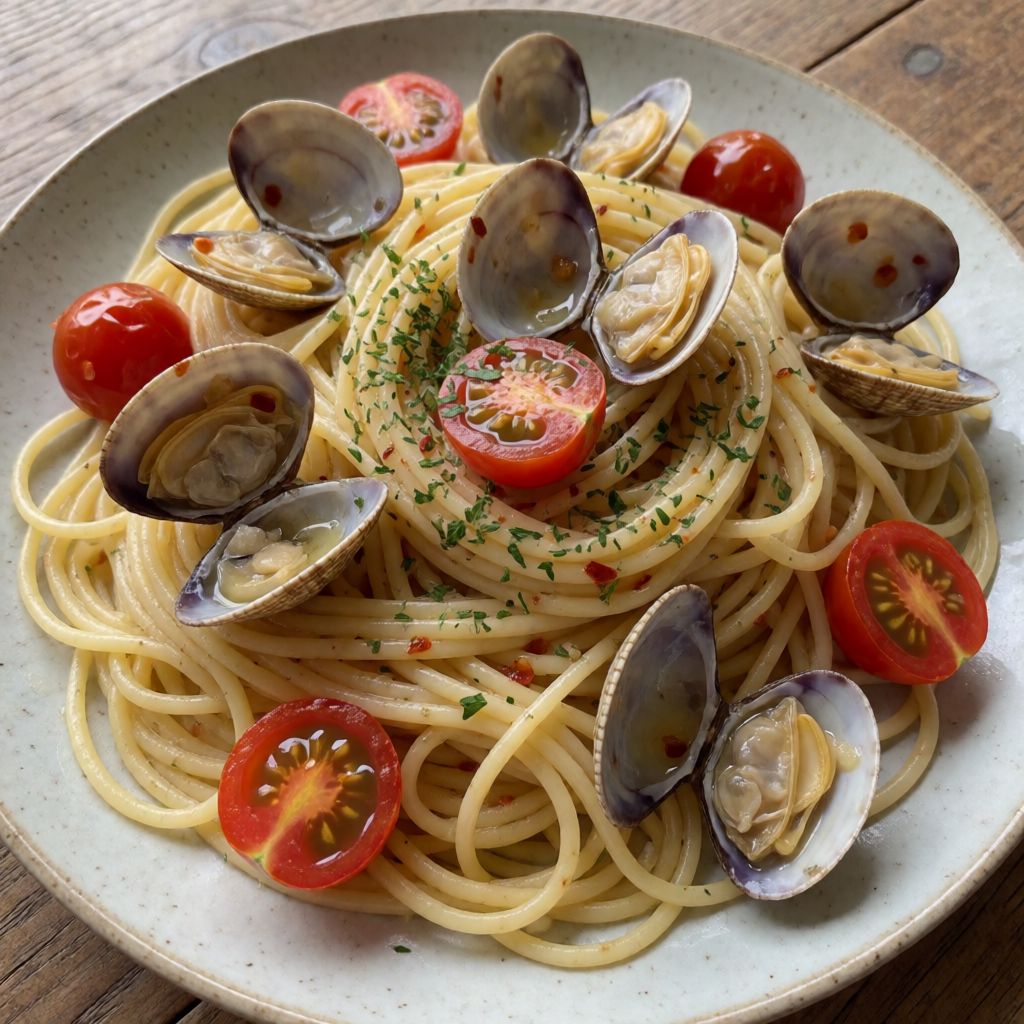
 AI photo
Spaghetti with Clams and Cherry Tomatoes
A simple pasta of clams and cherry tomatoes, finished with white wine and parsley.
Labels are worked out automatically from the ingredients and can be wrong. Check the packaging if it matters to you.
Ingredients
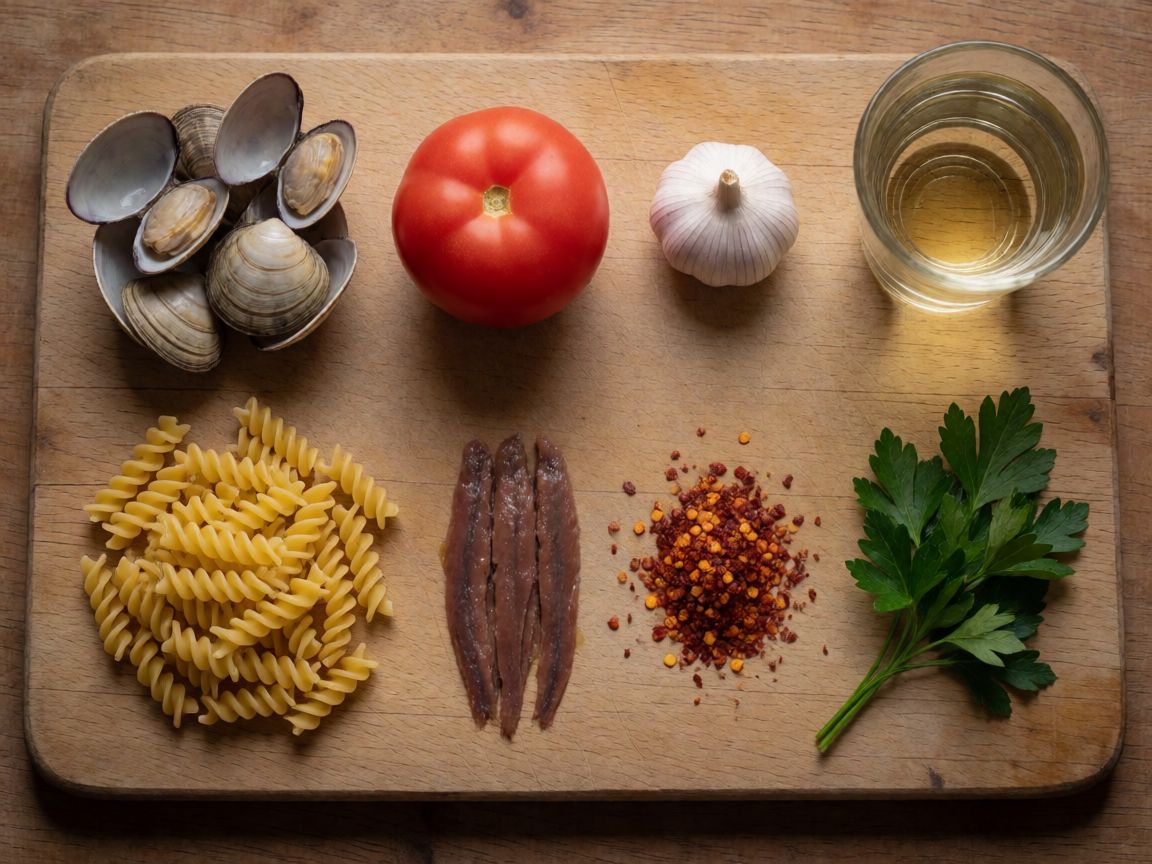
- 1 kg Clams
- 400 g Spaghetti or linguine
- 500 g Cherry Tomatoes
- 1 clove Garlic
- 2 pcs Anchovies in Oil
- 1 pcs Fresh Chilli
- Olive Oil to taste
- Parsley to taste
- 120 ml White Wine
- Salt to taste










Steps
Soak the clams in salted water for at least 2 hours, then rinse them very well.
120 minIn a large pan, cook the clams until they open, set them aside, and strain the liquid.
In another pan, fry the crushed garlic, chilli and chopped anchovies in 2 tbsp of olive oil.
Remove the garlic and add the washed cherry tomatoes, halved, pour in the white wine, let it evaporate and cook until the tomatoes have softened well.
Season with salt to taste, pour in the clam liquid, and add the clams.
Sprinkle with parsley.
Add the spaghetti, cooked al dente and drained, to the pan, mix and fry for a few minutes.
Serve.
Spaghetti with clams is really two dishes glued together by starch: shellfish cooked in their own salt water, and a quick tomato sauce sharpened with anchovy and chilli. What decides whether it works isn't the pasta, it's whether you treat the clam liquid as the sauce — not the wine, not the tomatoes. Everything upstream of that liquid is just preparation for it.
The two-hour soak is not laziness built into the recipe, it's physics. Clams filter-feed, and that means they hold grit and sand inside the shell, not just on it. Rinsing under a tap only cleans the outside. Give them standing salted water — close to seawater salinity — and the clam opens slightly and pushes grit out on its own terms. Skip this and you will find out at the table, between your teeth, which is a worse way to learn it.
Cooking the clams first, separately, is about timing two different proteins correctly. A clam is done the moment it opens — a minute more and the meat tightens into something rubbery. Tomatoes and garlic need the opposite: slow collapse, not a flash. Cook them together and you either have raw tomato or a clam like an eraser. So you cook clams hard and fast, set them aside, and keep the liquid they release — that's seawater plus clam, free seasoning you'd otherwise have to fake with salt and fish stock.
Clams: buy them alive, meaning closed, or closing when tapped. A clam open and unresponsive in the shop is already dead and you don't know for how long — don't take it home. If clams aren't to be had or the price makes you flinch, mussels work on the same logic: they open, they release liquid, that liquid is the sauce. You lose the tighter bite of clam meat, that's the only honest difference.
Anchovies in oil aren't there for fishiness, they're there to dissolve into the hot oil and disappear, leaving behind salt and a savoury depth you can't get from salt alone — that's the whole trick of umami before anyone needed the word. If you don't have them, a teaspoon of fish sauce does the same job faster, though a purist will tell you that's cheating. It isn't; it's just a shorter route to the same flavour compound.
Garlic goes in to perfume the oil, not to be eaten — that's why it comes out again. Leave it in and by the time the tomatoes are soft, the garlic has turned bitter from sitting in hot oil too long; pulling it out at the right moment is how you keep the flavour without the burn. One clove, crushed not minced, gives you more surface area to flavour the oil and less chance of a stray chunk scorching black.
The wine's job is to deglaze and to add acidity the tomatoes alone won't give you — "let it evaporate" means wait until the raw alcohol smell is gone and what's left is the smell of wine as a flavour, not a liquid. A dry white you'd actually drink works; don't reach for "cooking wine", which usually means cheap wine with salt added, a trick from decades ago to stop kitchen staff drinking the stock. You don't need that problem solved twice.
Cherry tomatoes specifically, not standard ones, because their skin-to-flesh ratio breaks down into sauce faster — you want collapse in minutes on a domestic hob, not the twenty you'd need with big tomatoes and no proper simmering heat to help you along.
The final toss — pasta into the sauce, not sauce onto the pasta — is the one step people skip and shouldn't. Al dente pasta still releases starch into whatever it's mixed with; finishing it in the pan with the clam liquid lets that starch thicken the sauce slightly so it clings to the spaghetti instead of pooling at the bottom of the bowl. This takes patience and a slightly too-small pan where you have to toss with intent rather than stir lazily — a wide domestic frying pan is actually better for this than a narrow saucepan, more surface for the liquid to reduce against.
Salt needs restraint here, more than most pasta dishes — the clams already carry seawater salinity into the sauce, and anchovy adds more. Taste before you reach for the salt cellar; this is one of the few Italian dishes where adding salt by habit, rather than by tasting, genuinely ruins it.