
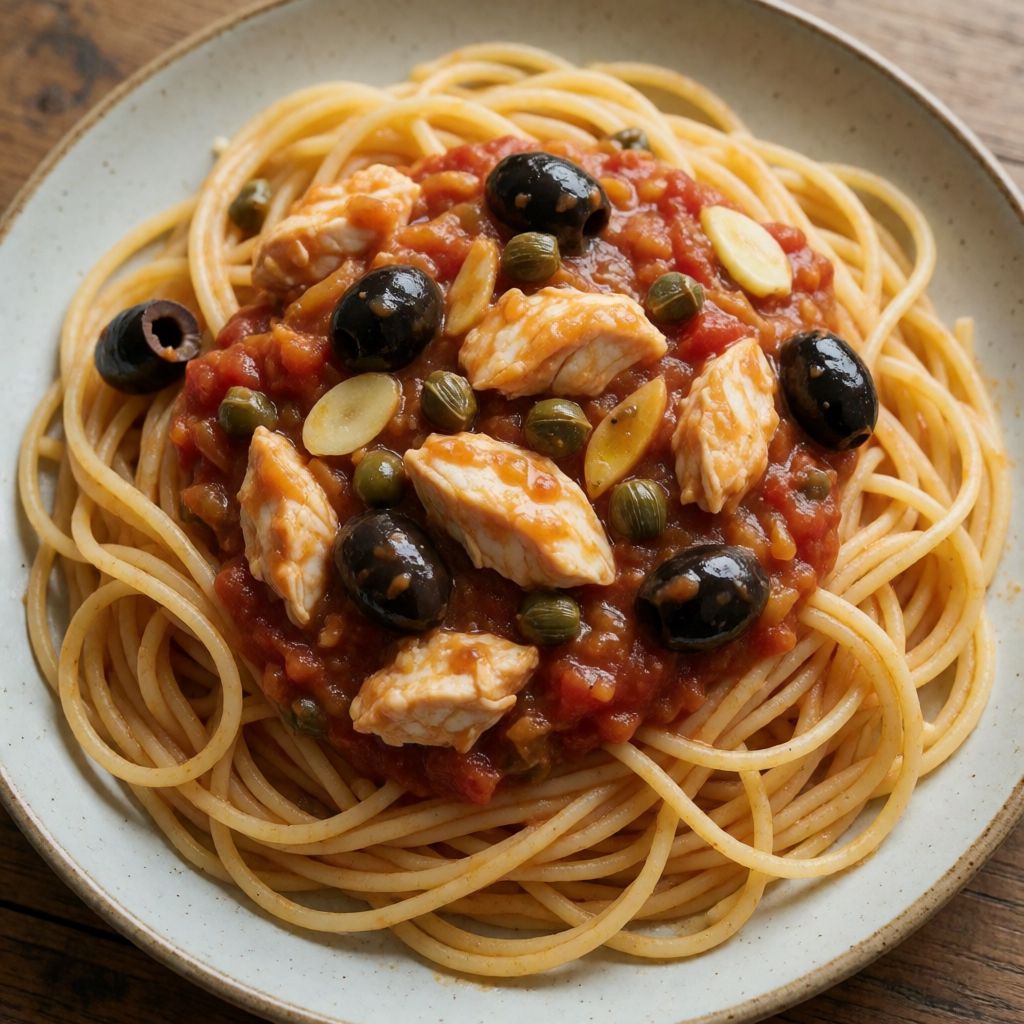
 AI photo
Spaghetti with Salt Cod
A simple pasta dish of spaghetti tossed with soaked salt cod, cherry tomatoes, olives, capers and parsley.
Labels are worked out automatically from the ingredients and can be wrong. Check the packaging if it matters to you.
Ingredients
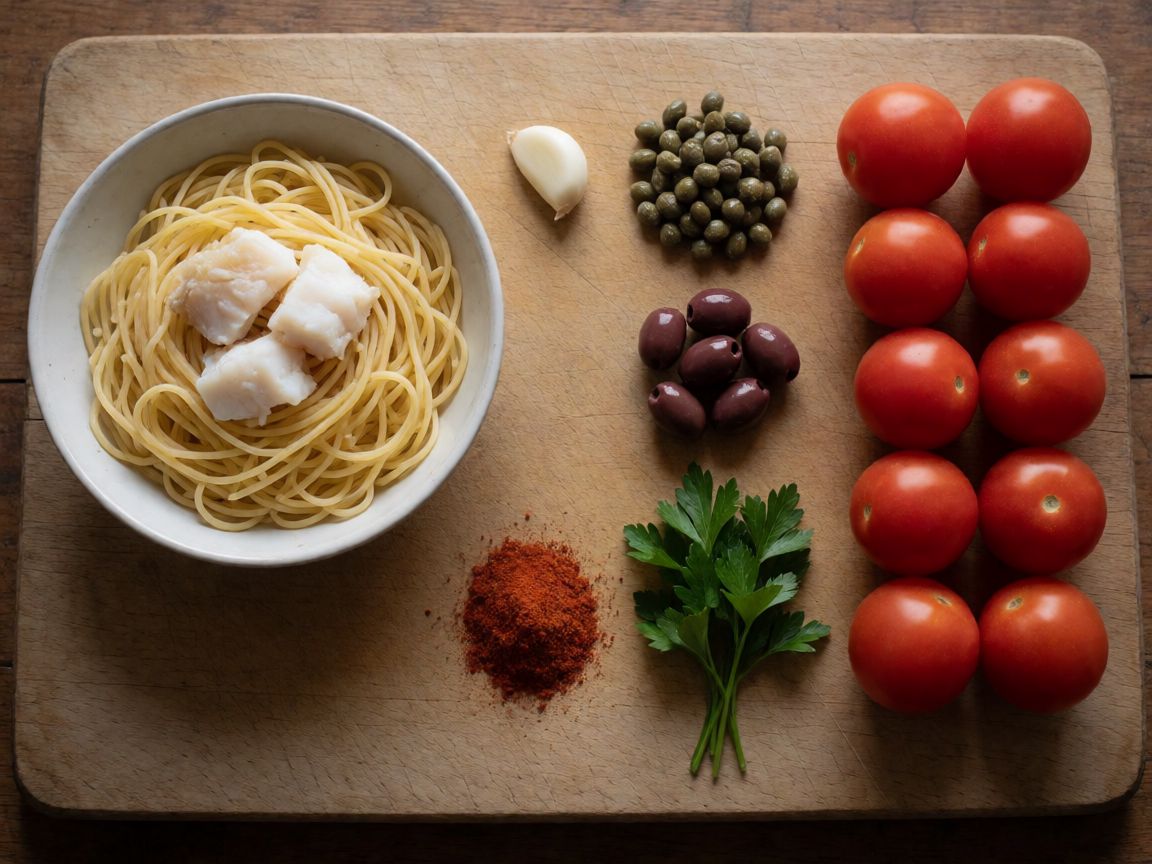










Steps
Peel a clove of garlic and fry it in a pan with a little olive oil.
When the garlic is lightly browned, remove it from the pan.
Add the washed cherry tomatoes, halved, to the pan and cook over high heat.
Add the sliced olives and the soaked capers.
Skin the salt cod and cut it into small pieces.
Add the cod to the rest of the ingredients in the pan and cook for about 5 minutes, stirring occasionally. It is ready when the thickest part reaches 63°C.
5 minBring a pot of water to the boil for the pasta.
Salt the water to taste and cook the spaghetti for the time stated on the pack.
Drain the spaghetti al dente and tip it into the pan with the sauce.
Toss with two forks so the cod and other ingredients are evenly distributed.
Sprinkle with freshly chopped parsley and add paprika to taste before serving.
Salt cod got invented not because anyone loved the taste of salt, but because fish rots fast and salt is the oldest preservative we had before someone bolted a compressor onto a box. A whole cod, caked in salt and dried hard as a shingle, could sit in a ship's hold for months and cross an ocean without turning into a biohazard. That's the whole story of bacalao, baccalà, morue — call it what you like, it's the same economics: cheap protein that travels. The soaking you do at home — days of cold water, changed often — is just you reversing that preservation, pulling the salt back out so the fish behaves like fish again instead of like a mineral.
What decides whether this dish works is not the sauce, which is forgiving — garlic, tomato, olives, capers, all things that like each other and don't ask for precision. What decides it is whether you've actually rehydrated and desalted the cod properly before it hits the pan, and whether you pull it off the heat the moment it's cooked through and not a beat later.
Salt cod is unlike fresh fish in one crucial way: it's already been dehydrated and partly "cooked" by salt and time. That means it firms up fast and dries out faster. Five minutes in a hot pan with tomatoes is plenty — you're not braising a brisket. The texture you want is flakes that hold their shape but give when pressed, not chalky threads. If it's dry and stringy, that's not the recipe's fault — that's three minutes too long.
On the garlic: you fry it whole, in the skin or out, just to perfume the oil, then you take it out. This is a technique worth understanding rather than imitating blindly. Garlic left in from start to finish, in a hot pan, for the full cooking time, turns bitter — the sulphur compounds break down unevenly and what was sweet becomes acrid. Frying it briefly and removing it gives you the smell without the risk. If you want more garlic flavour than one clove gives, don't leave it in longer — add a second clove, late, finely chopped, in the last minute.
Capers and olives are doing the same job here that they do in a dozen Mediterranean fish dishes: they're salt-cured or brine-cured themselves, so they bring a punch of acidity and saltiness that cuts through the richness of oil and the blandness of pasta. Buy capers in salt rather than vinegar brine if you can find them — rinse the salt off and they taste cleaner, less pickled. If you've only got the vinegary jarred kind, that's fine, just taste before you add any extra salt to the sauce, because you've already got plenty coming from three directions: capers, olives, and whatever's left in the cod.
Cherry tomatoes get cooked on high heat specifically so they blister and collapse fast rather than stewing slowly into a sauce. You want pieces, not a purée — a British supermarket cherry tomato, picked for shelf life rather than flavour, actually does better here than a big beef tomato would, because its skin holds together under high heat and it doesn't need peeling. If your tomatoes taste like nothing — which happens, especially outside summer — a pinch of sugar does more good than more salt.
Olive oil is listed "to taste," and that's honest: this dish doesn't demand an extraordinary bottle, because the dominant flavours are cod, caper and olive, not the oil itself. Use anything with no strong character of its own that can take moderate heat — a basic olive oil is traditional and correct, but a neutral vegetable oil with a small finishing drizzle of good oil at the end would not betray the dish.
Salt cod itself — in the UK you'll find it labelled bacalao or dried salt cod in Portuguese, Spanish or Caribbean grocers more reliably than in a standard supermarket. If you genuinely can't get it, a firm fresh white fish — cod, hake, pollock — lightly salted yourself for an hour and rinsed will give you something closer in spirit than skipping the fish entirely, though you lose the particular dense, almost meaty texture that only proper drying gives. Don't substitute smoked fish; smoke is a different preservation story entirely and it will fight the garlic and tomato rather than sit with them.
Paprika at the end is a finishing dust, not a cooking spice here — it goes on raw, after the heat, so it keeps its colour and its slight sweetness instead of turning bitter the way paprika does if it sits in hot oil too long. Sweet or smoked, your choice; smoked will nudge the whole plate toward something more like a Sunday roast's char than a coastal lunch, which isn't wrong, just a different dish wearing the same name.
And the one thing that has no substitute: time on the soak. A kettle boils in two minutes; cod doesn't desalt in two hours. That patience is the actual ingredient that makes everything after it — five minutes in a pan, the time it takes spaghetti to cook — look effortless.