
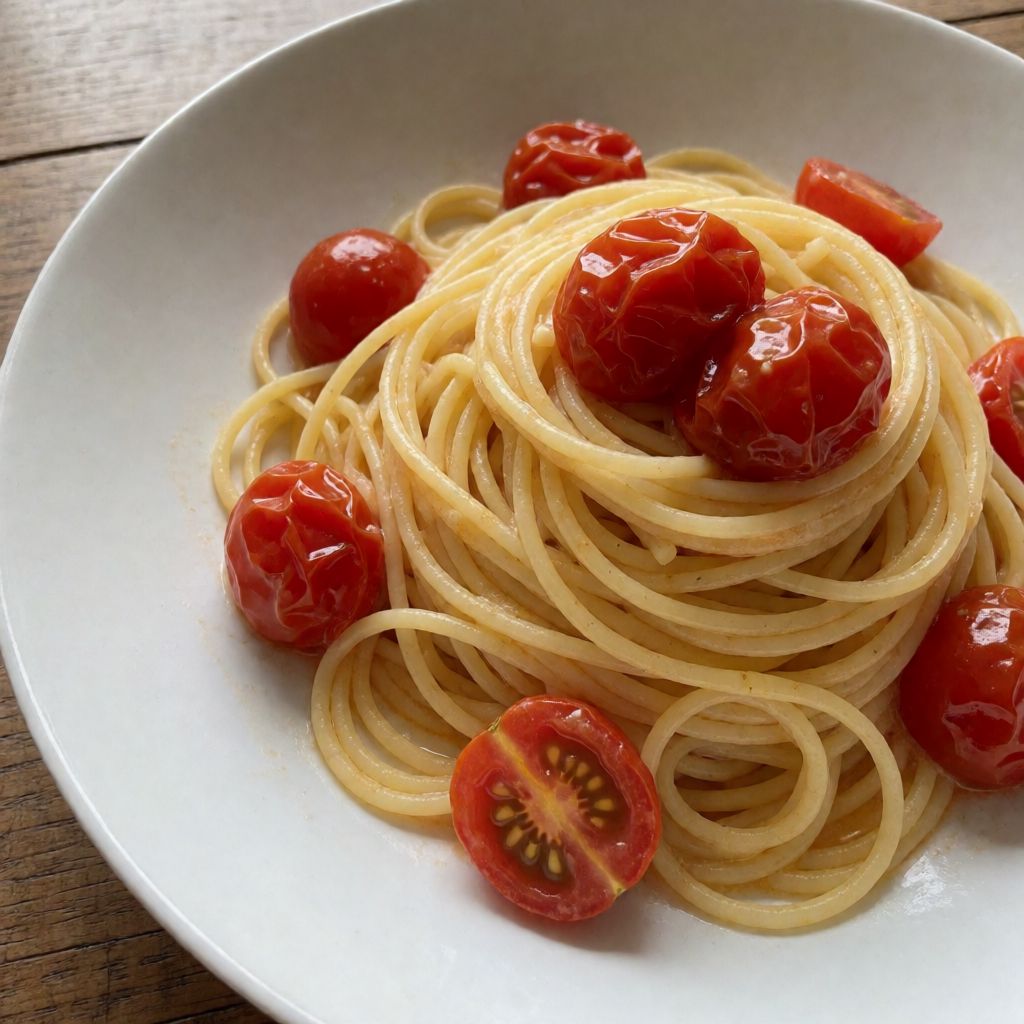
 AI photo
Spaghetti with Mackerel, Cherry Tomatoes and Toasted Almonds
A quick pasta dish with sweet cherry tomatoes, tinned mackerel and a crunch of toasted almonds.
Labels are worked out automatically from the ingredients and can be wrong. Check the packaging if it matters to you.
Ingredients
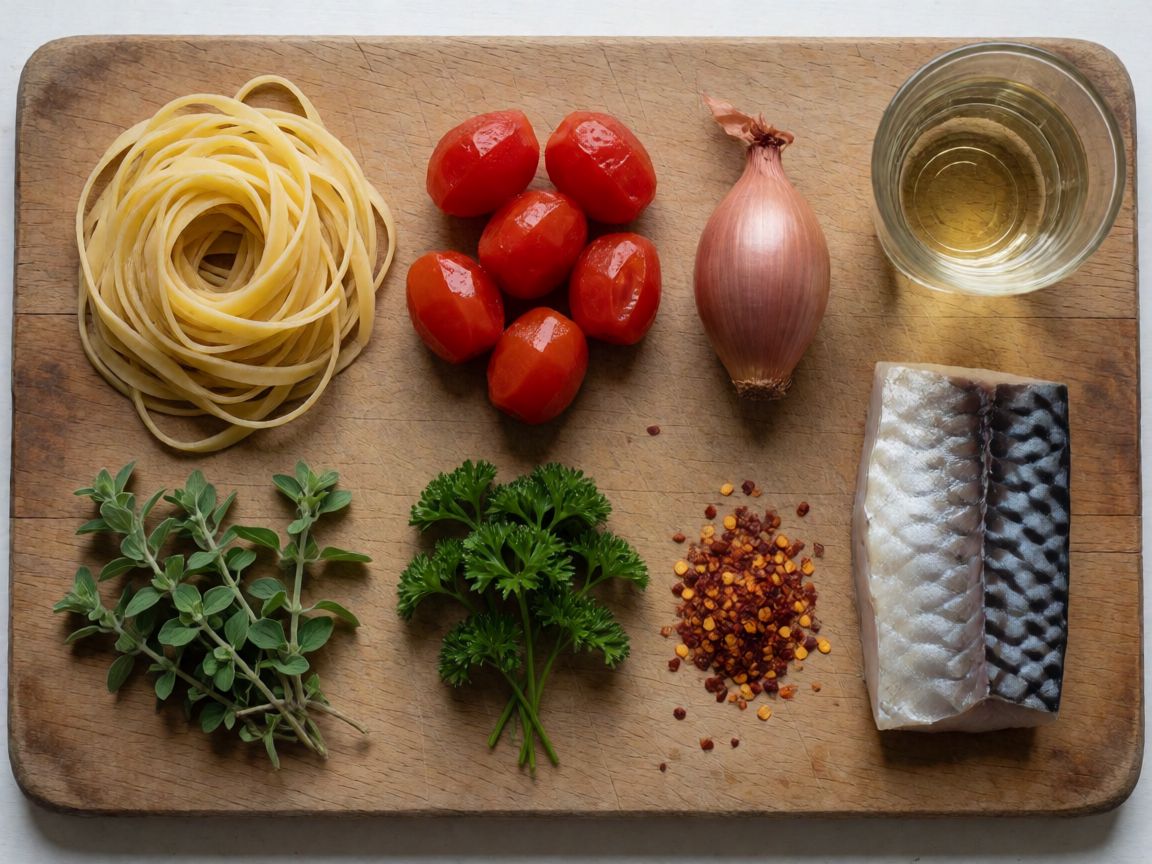
- 350 g Spaghetti wholewheat works too
- 200 g Cherry tomatoes
- 1 pcs Shallot
- 2 tbsp Olive oil
- Olive oil to taste
- Oregano to taste
- Parsley to taste
- 120 g Mackerel fillet in oil
- 118 ml White wine
- Chilli flakes to taste
- Salt to taste
- Almonds toasted, to taste










Steps
In a large non-stick frying pan, fry the thinly sliced shallot in 2 tbsp olive oil.
Add the washed, dried and halved cherry tomatoes.
Crumble in the chilli flakes and add the flaked mackerel fillet, drained of its oil.
Pour in the white wine and let it evaporate, cooking a few more minutes while sprinkling in oregano and parsley and crumbling in the toasted almonds.
Cook the spaghetti until al dente in plenty of salted water.
Transfer the spaghetti to the pan and toss for a few seconds with the sauce.
Serve immediately.
This is a pantry-raid pasta dressed up as something considered. The whole dish lives on the idea that tinned fish, if you treat it right, is not a compromise — it's a different ingredient from fresh mackerel, with its own job to do. Oil-packed mackerel is already cooked, already seasoned by time in the tin, already breaking into soft flakes without effort. You're not cooking it here, you're warming it through and letting it dissolve into the sauce.
What decides whether this works is restraint at two points. First: the tomatoes go in whole-ish, just halved, and they only need to slump and give up a bit of juice — not collapse into jam. Second: the pasta meets the sauce, not the other way round. You lift spaghetti out of its water straight into the pan and toss for seconds, so the starch left clinging to it grabs the oil and wine and fish juice into something that coats rather than puddles at the bottom of the bowl.
Some say tinned fish needs disguising — drowned in cream, buried under cheese. No: the reason it works unapologetically here is that the oil it sat in already carries flavour, and wine and shallot do the rest. What it doesn't need is masking.
The almonds are not decoration. Toasted and crumbled in at the end, they're the one thing in the dish with crunch, and crunch is what stops a pan of soft fish and soft tomato and soft pasta from being monotonous in the mouth.
Start with the mackerel, because the whole dish is built around a substitution most people wouldn't call a substitution at all: tinned, oil-packed fillet instead of fresh. Fresh mackerel is an oily fish that goes off fast and needs real heat to cook through without turning fibrous. Tinned mackerel has already had that problem solved for it — cooked gently, sealed in oil, aged a little in the can, which softens it further. Drain the oil (not because it's bad, just because you don't need two oils fighting in one pan) and it flakes with a fork before it even hits the heat. If you can't find mackerel in oil, sardines in oil do the same job — same oiliness, same give. Tuna in oil will work in a pinch but it's drier and flakier in a different way, less silky; it's a fallback, not an equivalent.
The shallot is there for sweetness without aggression. Onion would do it too, but onion needs longer at the pan's edge to lose its bite, and a weeknight pasta doesn't have that long before the spaghetti's ready. Slice it thin so it softens fast in shallow oil rather than browning hard at the edges — on a domestic hob, a wide pan spreads heat thin, so a thick slice just sits there raw-tasting in the middle while the surface scorches.
Cherry tomatoes are chosen over standard tomatoes for a simple reason: concentrated sweetness in a small package that collapses quickly. You want them to blister and give up juice in the few minutes the mackerel and wine need, not sit there stubbornly whole the way a big tomato wedge would. If cherry tomatoes aren't to hand, any small sweet tomato halved works; a big tomato chopped small will do at a pinch but expect more liquid and a longer wait for it to reduce.
White wine does two things, not one. It deglazes whatever's caught at the base of the pan from the shallot, and its acidity cuts the fattiness of the oily fish — mackerel without something sharp nearby tastes heavy. Let it evaporate properly; this isn't optional seasoning, it's removing raw alcohol bite, and you're waiting for the smell to change from sharp to rounded, not counting seconds. No wine open? A splash of water with a squeeze of lemon gets you the acidity, not the depth, but it keeps the dish from tasting flat.
Chilli flakes, oregano, parsley — none of these are measured because none of them need to be. They're adjustments, not structure. Oregano brings a dried, slightly bitter herbal note that suits oily fish (it's the same logic as oregano on a tin of sardines on toast); parsley at the end is freshness against all that richness, added late so it doesn't wilt into nothing.
Toasted almonds, crumbled in late, are the one textural outlier in a dish that's otherwise entirely soft — pasta, fish, collapsed tomato. Toast them yourself in a dry pan until they smell nutty and faintly caramelised rather than buying ready-toasted, because pre-toasted nuts lose that smell fast sitting in a packet. No almonds, use toasted pine nuts or walnuts — anything that gives a dry crunch against the wet sauce.
Patience here is short but real: it's the patience to let the spaghetti water salt properly and boil hard, to let the wine actually reduce rather than rushing the pasta in too early, and to toss the pasta into the sauce for only a few seconds — long enough to marry, not so long the fish turns to paste. It's a quick dish, but quick isn't the same as careless.