
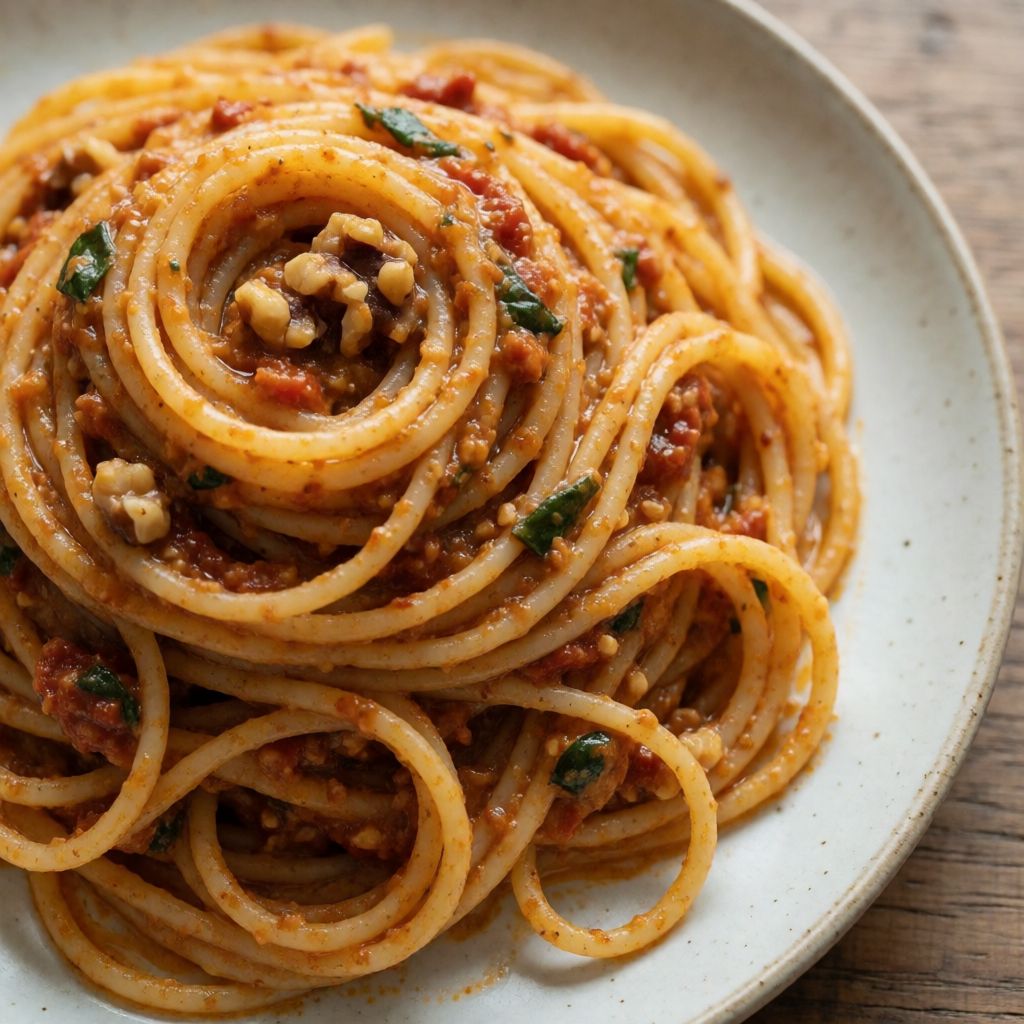
 AI photo
Spaghetti with Sun-Dried Tomato and Walnut Pesto
A quick pesto of basil, sun-dried tomatoes, walnuts and pecorino, tossed with spaghetti.
Labels are worked out automatically from the ingredients and can be wrong. Check the packaging if it matters to you.
Ingredients
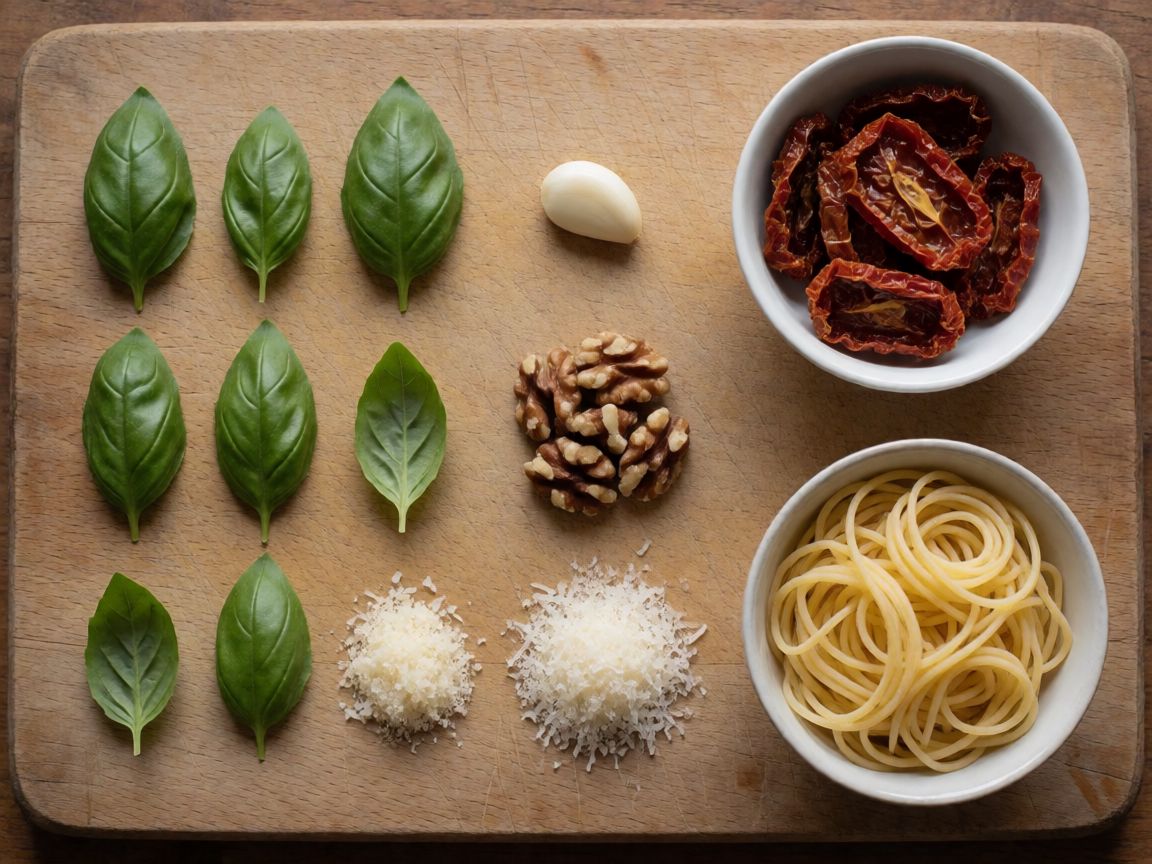









Steps
Put the basil, sun-dried tomatoes and a pinch of salt in a blender and blend until smooth.
5 minAdd the pecorino toscano, parmesan, walnuts, garlic and olive oil, and blend until creamy.
5 minCook the spaghetti until al dente.
10 minDrain the pasta and toss it with the prepared pesto, adding a little pasta water if needed.
2 minServe immediately.
This is not pesto alla genovese wearing a disguise — it's a cousin from further south, the sauce Sicilians call pesto alla trapanese. Genovese pesto needs pine nuts and basil that's barely bruised; this one needs tomatoes that have already given up most of their water to the sun, and walnuts standing in for almonds because walnuts are what grows where this recipe actually gets made in a flat kitchen far from Trapani. Nothing here gets cooked except the pasta. Everything else is raw, blended, and tossed — so the whole dish lives or dies on balance, not on heat: the sweetness of dried tomato against the salt-sharp bite of two cheeses and a bare clove of garlic, held together not by cream or butter but by a splash of the water the spaghetti just left.
What decides whether it works is restraint in the blender, not skill with a knife. Push basil and raw garlic through blades too long and the heat of friction — yes, a blender generates real heat, not imagined — turns basil bitter and garlic harsh. That's why the recipe splits into two blends: tomato and basil first, soft enough to need no mercy, then the harder things — nuts, cheese, garlic, oil — added after, blended just to creamy, not to a hot green paste. Pulse, don't grind.
Basil: ten leaves is not much, and that's deliberate — this sauce isn't a basil sauce, it's a tomato sauce that basil lifts. Bruised basil, from too much time between blades, goes bitter and dull green instead of bright; the usual advice to blanch it first is solving a different problem — oxidation and discolouring over hours, which doesn't matter here because you're eating this in minutes, not storing it in a jar.
Garlic: one clove, raw, and that's enough, because raw garlic's sharpness doesn't survive long in oil — fat carries off the sulphur compounds that make it bite, so by the time it's blended through with oil it's rounder than it tastes on its own. If your clove has gone soft or green in the middle, cut that bit out; it's bitter and it won't mellow no matter how long you blend.
Olive oil, "to taste": because nothing here gets cooked, you taste the oil itself, not just its ability to carry heat — so use one with actual flavour, extra virgin, something a bit peppery or grassy. A flavourless oil — rapeseed, sunflower, the sort of oil you'd reach for in a Sunday roast tray — will do the mechanical job of binding the paste but leaves a gap where the oil's own character should be; if that's what you've got, make up for it with a squeeze of lemon or a bit more cheese at the end.
Sun-dried tomatoes: the whole dish exists because of a kitchen problem solved before fridges did — a glut of tomatoes in August, no way to keep them, so salt and sun did the preserving instead. Look for ones that are deep brick-red to brown, not the lurid bright red kind, which usually means sulphur dioxide was used to hold the colour rather than the sun doing its slow work. If yours are the dry, leathery kind rather than jarred in oil, soften them first — a few minutes in warm water, or even in the pasta water itself before the spaghetti goes in — or they'll stay tough grit in the blender instead of turning to paste.
Walnut: toast them lightly first if you have a few minutes and a dry pan — raw walnut carries a tannic bitterness that sits in the thin skin between the halves, and heat breaks that down. Skip this if you're short on time; it's an improvement, not a requirement. Any oily nut without a loud flavour of its own can stand in — almond is the traditional swap this recipe already made once, from pine nut to walnut, so there's no sin in moving it again.
Pecorino Toscano and parmesan: pecorino brings the salt and the sheep's-milk sharpness that this sauce actually needs, parmesan just backs it up with depth. If you can't get pecorino, more parmesan works, but go lighter on the added salt — pecorino is saltier by nature, and the usual mistake people make with any pesto is salting by habit instead of by taste, forgetting that the cheese and the dried tomato have already done most of that work. Taste before the pinch goes in, not after.
Spaghetti: 400g feeds four honestly, not four if everyone's being polite. The only real enemy here is overcooking, because a soft noodle can't hold a thick paste — it goes slack and the sauce slides off instead of clinging. Patience at this stage means checking by biting, not by guessing, and it means not drowning the pot — spaghetti needs room to move or it sticks to itself near the bottom, oil in the water won't fix that, stirring in the first minute will.