
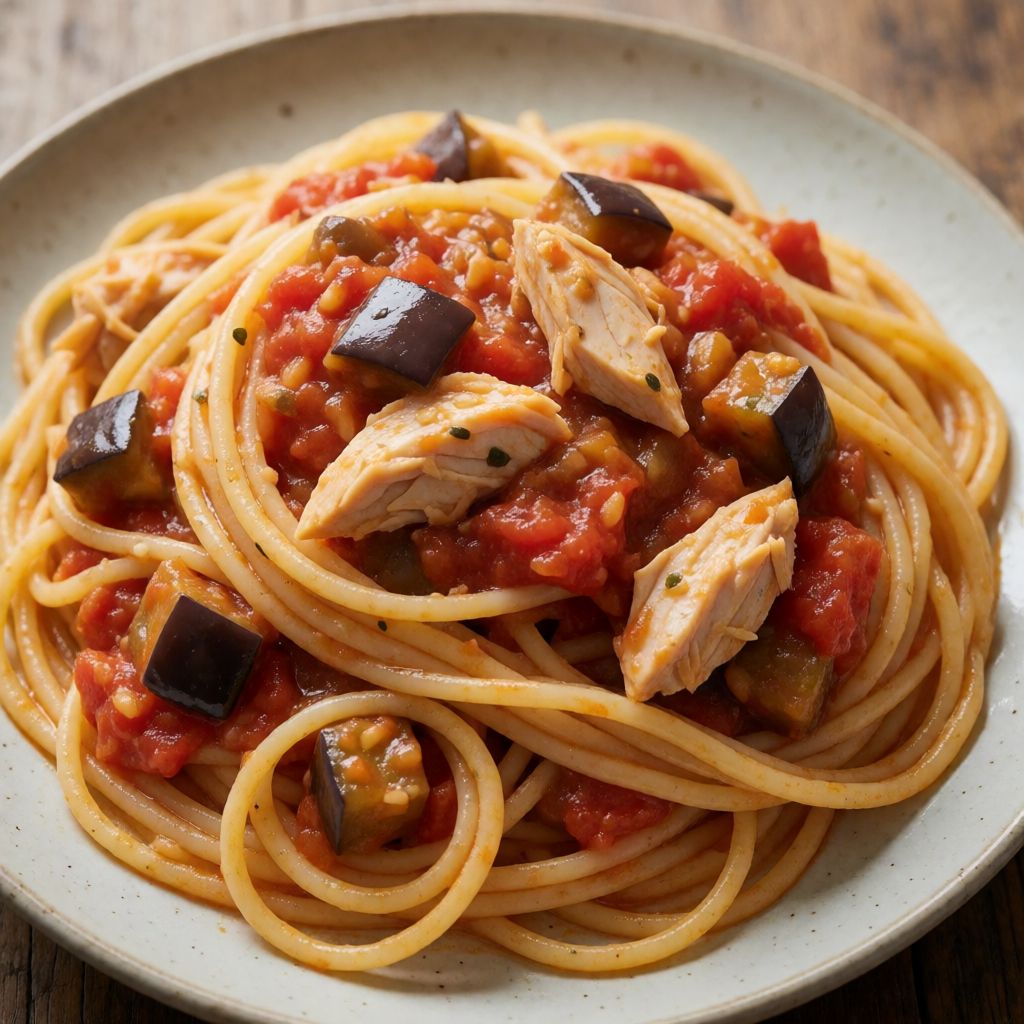
 AI photo
Spaghetti with Swordfish
A simple pasta dish with swordfish, aubergine and tomato in a light olive oil sauce.
Labels are worked out automatically from the ingredients and can be wrong. Check the packaging if it matters to you.
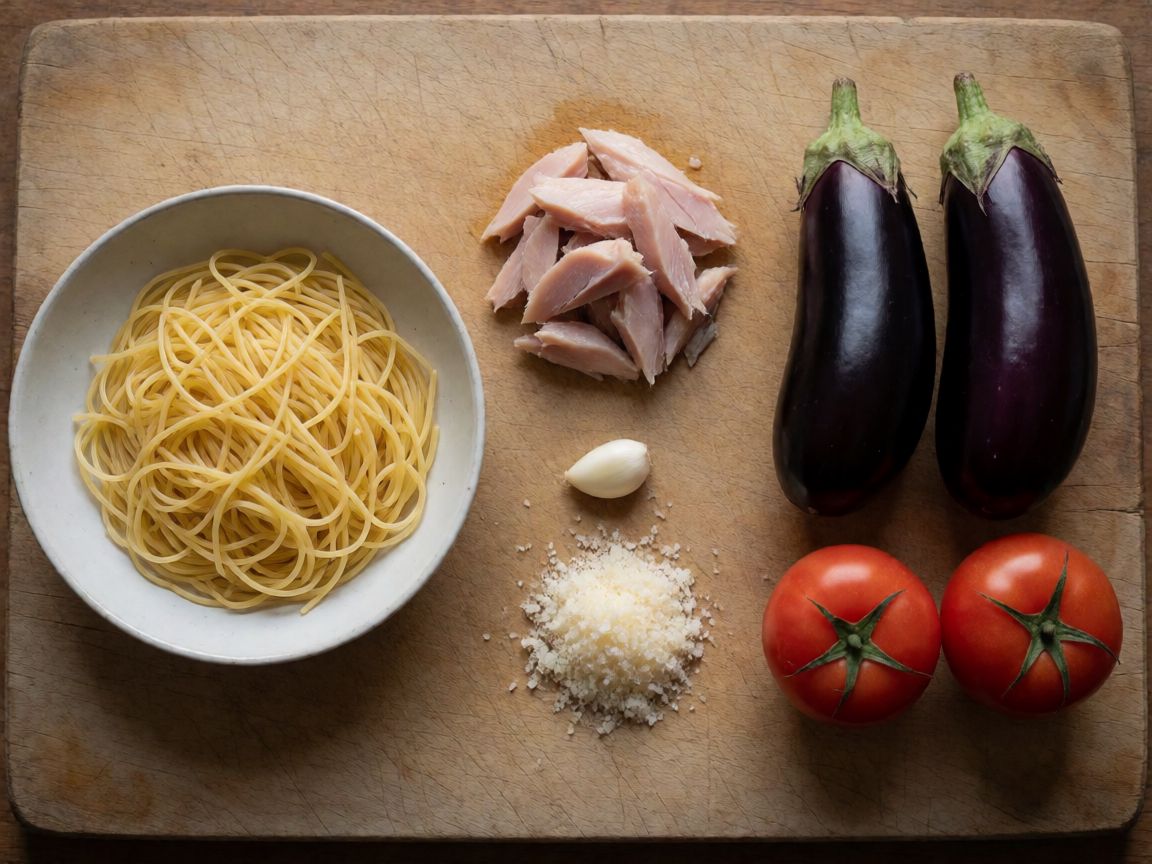
Ingredients









Steps
Prepare the swordfish: remove the skin, any small bones and cartilage, then cut it into strips.
Rinse and pat dry the aubergines, then cut them into small cubes. Slice the tomatoes thinly.
Finely chop the garlic and fry it in a frying pan with two tablespoons of olive oil.
When the garlic turns golden, add the aubergines and cook for a few minutes, stirring occasionally.
Reduce the heat, add the swordfish and cook over medium-low heat. It is ready when the thickest part reaches 63°C.
Cook the spaghetti in plenty of salted water until al dente. Season with salt and add a little of the pasta cooking water to the fish and vegetables.
Drain the spaghetti and add it along with the tomatoes to the rest of the ingredients in the pan, then mix well.
Before serving, add a pinch of black pepper and some parmesan.
This is a Sicilian way of making swordfish go further than it has any right to - fifty grams of fish a head, stretched out with aubergine, pasta and the oil they all cooked in together. The fish here behaves like a quick steak, not a stew fish: it goes in near the end and comes out before it's had time to dry.
What decides the plate is not how long anything cooks but how far you let the fish go. Swordfish carries almost no fat of its own - unlike salmon or mackerel, there's nothing inside it to baste itself as the flesh firms up. Once the muscle tightens past a point, it stays tight, and there's no walking it back. That's why the recipe gives you a number, 63°C in the thickest part, rather than a clock: pull it there - really, a touch before, because it keeps climbing once it's off the heat - and it's moist. Miss it by a few degrees and it's cardboard that happens to be pink. Patience is the actual ingredient in this step, not an instruction.
Everything else exists to build a small sauce around that fish. Garlic goes gold, not brown - brown garlic is bitter garlic, and there's no saving it afterwards. Aubergine goes in cut small so it cooks through in a shallow puddle of oil in an ordinary frying pan, rather than needing the deep bath it would get in Sicily. Cut it fine, cook it until it folds rather than crunches, and it does the job of stretching the fish without sitting on the plate like a separate side dish.
Spaghetti, 400g for four, is the ordinary ratio - 100g a head. What matters more than the pasta is what it leaves behind. Salt the water until it tastes like the sea, and keep back a cupful before you drain: that starchy water, worked into the pan with the oil and fish juice, is what turns a loose collection of ingredients into something that clings to the strand instead of pooling at the bottom of the bowl. No starch, no water, no cling - that's the whole mechanism, not a trick.
Swordfish: look for flesh that's dense and steak-like, cuts clean into strips without falling apart, flavour mild rather than fishy. It isn't a standard supermarket fish in Britain - ask a fishmonger for a steak cut and trim it yourself, skin, small bones and cartilage out. If you can't get it, the criterion for a substitute is a meaty white or pink fish that holds its shape in strips and isn't so oily it needs handling like salmon: tuna steak works, with a little more fat to forgive you; monkfish works, firmer still. Flaky fish like cod is wrong here - it collapses into shreds instead of staying in strips.
Aubergine: pick one firm, glossy, heavy for its size - a light one is old, full of air pockets and bitter seeds. Some still swear you must salt and soak aubergine to leach out bitterness. That was true decades ago, when the varieties grown were genuinely bitter; today's are bred milder, and salting is insurance, not law. The real reason to still do it, if you want, is texture: it pulls water out so the cubes sear instead of steam, giving a firmer bite. Economically, this is the whole trick of the dish laid bare - aubergine was the cheap filler vegetable of coastal Mediterranean cooking, used to make an expensive catch feed more mouths, which is exactly what it's doing here with the fish.
Tomato goes in sliced thin and late, so the pan's residual heat only warms it - it stays close to raw, for acid and freshness, rather than collapsing into a cooked sauce. If your tomatoes are the pale, watery kind that turn up in a British shop in winter, the fix isn't more tomato, it's earlier tomato: let it go in a touch sooner so there's time for what little flavour it has to concentrate, rather than relying on a short, thin slice to carry it.
Garlic and olive oil work as a pair, and neither is really the point on its own - the point is the oil they make together, which carries garlic flavour into everything that follows. The oil needs no particular virtue beyond a taste you're happy to eat, since it survives all the way to the finished plate; olive oil is traditional here because this is Mediterranean cooking and that's what was cheap and local, not because another decent oil would ruin anything.
Parmesan, grated fine, melts into hot pasta as small dry granules rather than a gluey sheet - a softer, wetter cheese would just clump instead of scattering through. The criterion for a substitute is a hard, salty, aged cheese that grates into crumbs: pecorino, grana padano, even a mature cheddar from a British fridge, though that last one pulls the dish away from Sicily toward something else - it will still work, just taste less like where the recipe came from.