
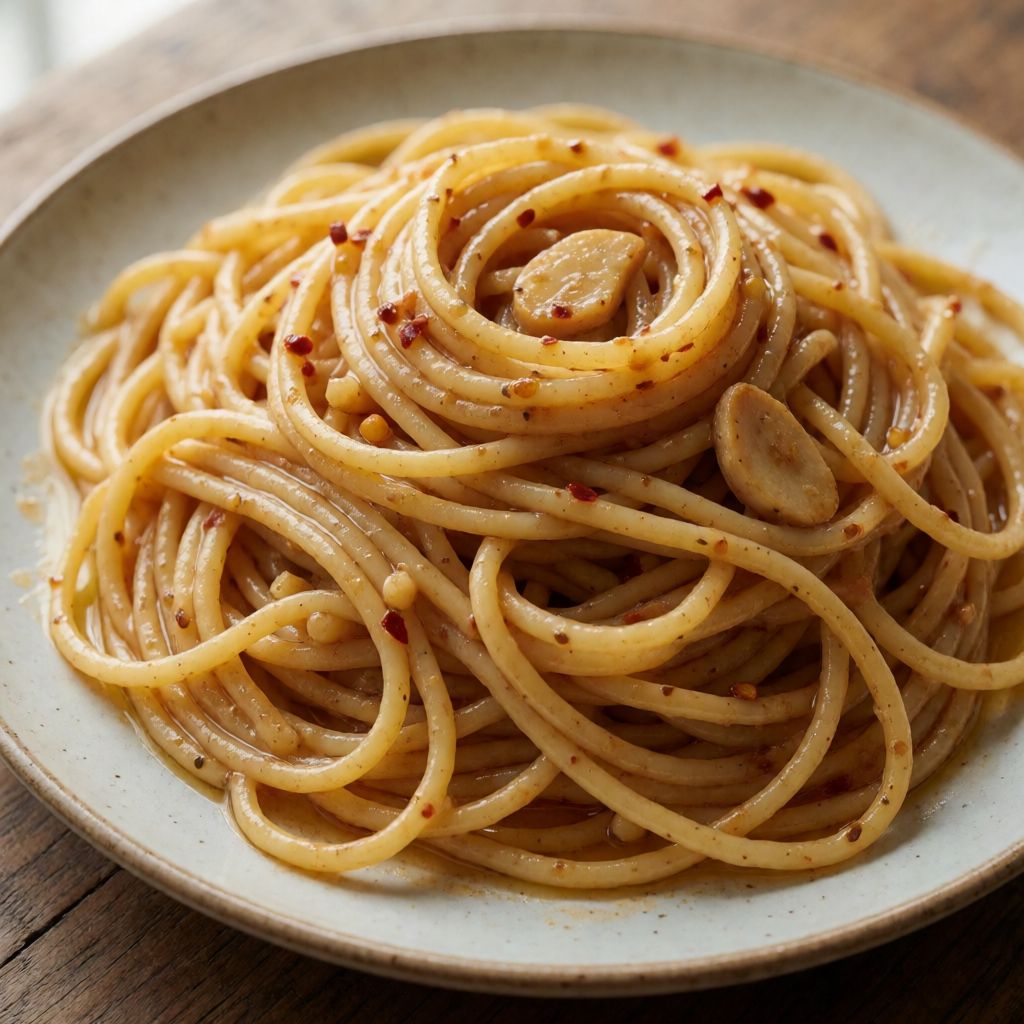
 AI photo
Spaghettoni with Anchovy Sauce
A simple Italian pasta dish tossed in a punchy garlicky anchovy sauce with chilli and parsley.
Labels are worked out automatically from the ingredients and can be wrong. Check the packaging if it matters to you.
Ingredients
- 400 g Spaghettoni
- 4 pcs Anchovies
- 1 clove Garlic
- 1 pcs Dried red chilli
- Olive oil to taste
- Salt to taste
- 1 bunch Parsley
- Pecorino Romano to taste







Steps
In a small pan, fry a crushed garlic clove in olive oil until golden, add the anchovies and mash with a fork.
5 minCrumble in the dried chilli and add chopped parsley.
2 minCook the spaghettoni in salted water.
10 minDrain the spaghettoni and toss with the sauce, sprinkling over the pecorino.
3 min
This is the lazy family of pasta — oil, garlic, something salty, something green — but the anchovy changes the whole logic of it. It doesn't sit on the plate as a visible fish. It dissolves. In warm oil, with a fork pressing it against the side of the pan, the anchovy breaks down into salt, glutamate and a faint sweetness, and the fish shape disappears entirely. What you're building is not a fish sauce — it's a savoury oil that happens to have come from a fish.
What decides whether this works is two things, both visual, neither about minutes. First, the garlic: it has to go gold, not brown. Gold means the oil is now carrying garlic's aroma. Brown means the garlic has burned and the whole pan tastes bitter from that point on, no matter what you add after — and no amount of anchovy or cheese will save bitter oil, because bitterness sits on top of a dish and refuses to blend. Second, the anchovy itself: it should vanish into the oil, not float in recognisable fillets. If you can still see anchovy shapes in the sauce by the time the pasta goes in, it hasn't had enough time or enough mashing to do its real job.
Some say anchovy makes pasta taste fishy. No — because a properly cured anchovy, salted and aged, tastes of salt and umami, the same register as a good stock cube, not of the sea. What tastes fishy is an anchovy that's gone off, or one that's been dropped into oil that's too hot and seared rather than melted. Gentle heat is the whole trick here: you're coaxing it apart, not frying it.
Spaghettoni is just thick spaghetti — more surface, more chew, a shape that holds a thin oil-based sauce without drowning in it the way a very fine strand would just slide off. If you only have ordinary spaghetti, use it; the dish doesn't fall apart, it just grips the sauce a little less.
Anchovies: buy the ones in oil in a jar or tin, already filleted, already salted and matured. Salt-packed whole anchovies are better in theory but mean rinsing, boning, and faffing about for a dish that's meant to take twenty minutes on a weeknight — not worth it here. If you have neither, Worcestershire sauce is built on fermented anchovy and will get you most of the way, a few good shakes stirred into the hot oil in place of the fillets. This is not a stretch — British pantries have been running on anchovy-as-background-flavour since Gentleman's Relish was a thing, long before anyone called it umami.
Garlic: one clove, crushed or lightly bruised, not minced fine — fine pieces burn before the oil even warms through, because there's more surface area catching direct heat. A clove kept whole or in large pieces releases its oil gradually and you can fish it out, or mash it in, once it's done its work.
Dried chilli: crumbled, not left whole, because whole it just sits there looking hot and tasting of nothing — the heat lives in the seeds and the broken flesh, so breaking it open is what lets it actually flavour the oil rather than decorate it.
Parsley: added at the end, uncooked by anything but the residual heat of the pan, because parsley cooked long turns grey and loses the sharp green bitterness that's meant to cut against all that salt and oil. If you're out of it, any soft fresh herb without a strong perfume of its own does the same cutting job — chives, even a little dill, though dill will say so.
Olive oil here isn't just the cooking medium, it's half the sauce by the end, so use one with actual flavour, not a neutral bottle kept for frying. Pecorino Romano is sharp and salty by design, made to be grated over strong-flavoured things — Parmesan works if that's what's in the fridge, but it's milder, so taste before you decide you've salted enough. And a word on the amount: 400 g of pasta against this much sauce easily feeds two with room, or three as a starter before whatever's coming out of the oven on a Sunday — one person eating all of it alone is a statement, not a serving.