
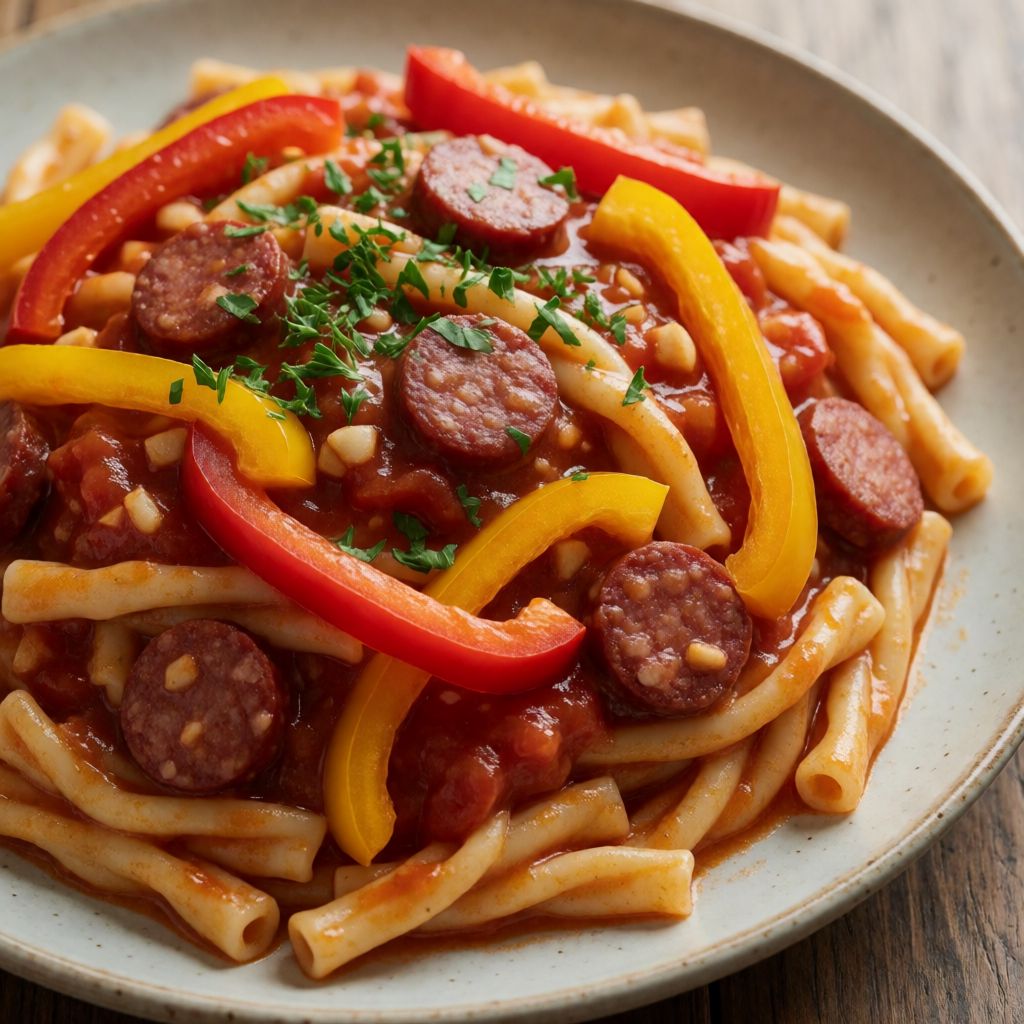
 AI photo
Pasta with Spicy Salami in Tomato Sauce
A comforting pasta tossed in a tomato sauce with spicy salami, peppers and a touch of white wine.
Labels are worked out automatically from the ingredients and can be wrong. Check the packaging if it matters to you.
Ingredients
- 500 g Pasta
- 200 g Spicy salami
- 2 pcs Red pepper
- 700 g Tomato
- 50 g Parsley
- 2 clove Garlic
- 1 pcs Carrot
- 1 pcs Onion
- 50 g Butter
- Olive oil to taste
- White wine to taste











Steps
Chop the onion, parsley and carrot, and fry in olive oil.
2 minAdd the red pepper and diced tomatoes.
Pour in 1 cup of water and the white wine, cover and simmer over medium heat.
25 minAdd the spicy salami and continue cooking, making sure it heats through to 70°C.
Add the butter and stir through.
Cook the pasta.
Drain the pasta, toss with the sauce and serve.
This is a sauce built the way most tomato sauces that actually taste of something are built: a soffritto first, then liquid, then the thing that gives it personality — here, spicy salami standing in for the usual guanciale or pancetta. What decides whether it works is restraint at two points: how finely you cut the vegetables, and how long you let the tomato sit over heat before it turns from "stewed fruit" into "sauce".
Onion, carrot and parsley chopped small and softened in oil is the base of half the savoury cooking in Europe — the French call it mirepoix, the Italians soffritto, and both exist for the same reason: a knife, unlike a flame, can't be rushed evenly. Cutting the vegetables fine means more surface touches the oil at once, so sugars start caramelising before the onion burns. Skip this and you're boiling vegetables in oil, not building flavour.
The salami does the job bacon does in a carbonara or amatriciana: it renders fat and salt into the sauce as it heats, and the chilli in it seasons without you adding a separate spice. Some say you should fry the salami first to "release the flavour" — no, because at this thickness of slice it's already cured and cooked; what it needs is gentle reheating in the sauce, not a sear, or the fat splits out and sits on top as grease instead of binding in.
Tomato, 700 g of it, is the backbone, so buy it for ripeness, not shape — a tomato that gives slightly under your thumb has sugar developed; one that's hard and perfectly round off a supermarket shelf in January has neither. If good fresh tomatoes aren't to be had — and in a UK winter they often aren't — a tin of plum tomatoes does the job better than a sad fresh one; that's not a compromise, that's just buying the tomato already at its best moment, tinned at peak ripeness months ago.
The spicy salami is doing double duty: fat and chilli heat. Any cured, chilli-flecked salami works — Italian salame piccante, Spanish-style chorizo if you want more smoke, even a good spicy pepperoni from the deli counter. What you're choosing for is a sausage that's dry-cured, not fresh and raw, because raw sausage needs real cooking through, not the gentle warming this sauce gives it. The 70°C mentioned isn't a food-safety instruction for raw meat here — the salami is already cured — it's simply "hot through", the point where the fat has softened and spread into the sauce rather than staying locked in cold lumps.
Red pepper adds sweetness and body rather than heat — that job belongs to the salami. Dice it rather than slice into strips; the smaller it is, the more it breaks down and thickens the sauce instead of sitting in it as separate pieces of vegetable.
Garlic isn't in the step list with a moment to add it, which tells you something: it's meant to go in early with the onion and carrot, not thrown in raw at the end, because garlic added to a long-simmering sauce has time to mellow instead of staying sharp and biting through everything else.
White wine: splash it in for acidity and to lift the fond — whatever has caught and browned on the pan base — into the sauce. Use what you'd drink, nothing marked "cooking wine," since a wine too thin or too sweet shows up in the finished dish. No wine in the house? A spoon of wine vinegar in water gets you the acidity, if not quite the depth.
Olive oil here is "to taste", which really means: use enough to coat the vegetables and stop them catching, and don't fuss over extra virgin versus ordinary — this isn't a dish where you taste the oil raw at the end, it's cooked into a base.
On the stove: a wide pan, not a pot, lets the tomato reduce by evaporation rather than just sitting and stewing — more surface area exposed to air means the water leaves faster and the flavour concentrates rather than thins. Medium heat under a lid for 25 minutes is a floor, not a deadline: you're watching for the sauce losing its watery sheen and the oil separating slightly at the edges, which tells you the tomato has actually broken down, not just heated up.
And have the pasta water salted and already boiling by the time the salami goes in — cooking 500 g of pasta badly, in too little water or unsalted, undoes forty minutes of sauce work in the last five.