
Meat & fish
Salami
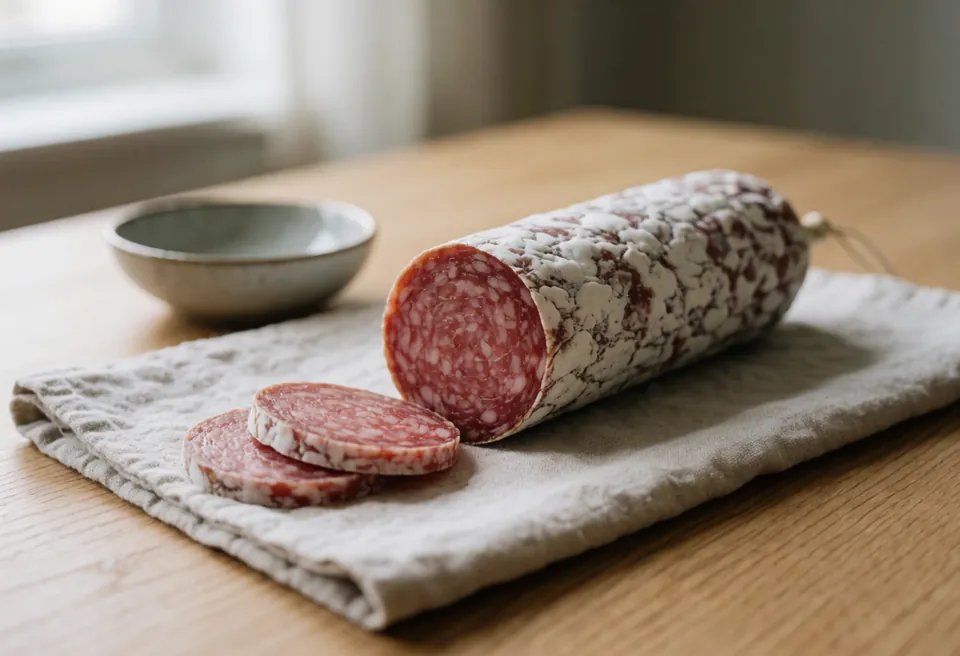
Salami is a dry-cured sausage with a robust, aged flavor. It's thinly sliced for charcuterie boards, sandwiches, and pizza.
378 kcal per 100 g
Nutrition per 100 g
378 kcal
| Protein | 21.1 g |
|---|---|
| Fat | 31.6 g |
| Carbs | 0.7 g |
| Fiber | 0 g |
Source: USDA FoodData Central, 2026-09-21. Per 100 g of product.
Good to know: Salami
Let me tell you what really happens inside a stick of salami while it hangs there, weeks on end, doing nothing — or so it seems.
It is not doing nothing. Press a finger into a properly dried salami and it gives almost nothing back — firm, dense, with a little spring to it. That firmness tells you the salami has done its time.
So choose it the way you choose a good knife — by what your senses tell you, not by the label. The slice should feel firm, almost springy, never mushy. Smell it close: clean, meaty, pleasantly tangy. If you catch ammonia, or anything that makes you pull your nose back — leave it. Fat should sit in neat flecks, not greasy streaks.
Now, some people say salami is "basically ham, just spicier." No! Plenty of ham is dry-cured and eaten raw too, so cooking isn't the line between them. The real difference is in the making: salami is minced, seasoned, packed into a casing and left to cure; ham is a whole cured muscle. This mix-up leads cooks to think salami needs cooking "to be safe." It doesn't. A few slices crisped on a hot pizza are fine — the fat renders a little and the flavour holds. But for a plate, keep it thin, cold, and let it speak for itself.