
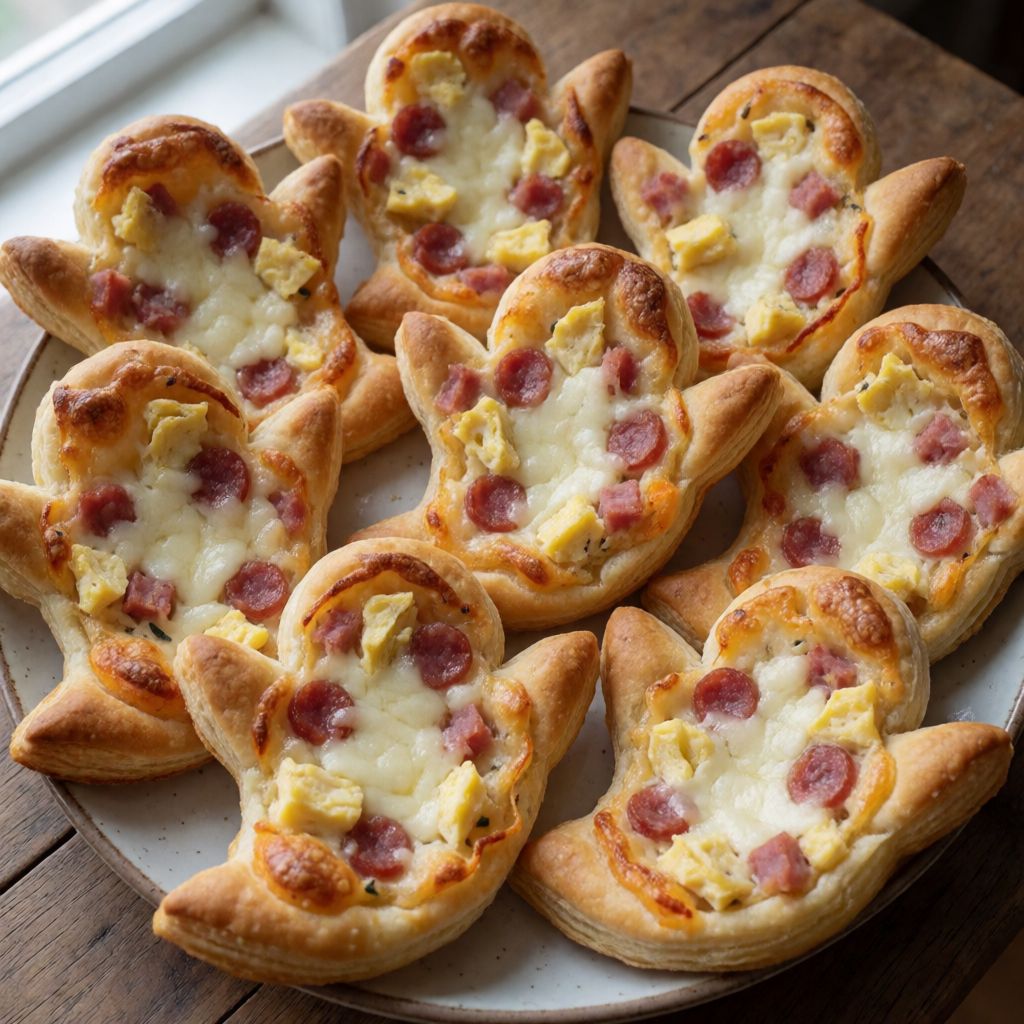
 AI photo
Mini Ghost Pizzas
Playful puff-pastry mini pizzas topped with melted cheese ghosts, a fun Halloween treat.
Labels are worked out automatically from the ingredients and can be wrong. Check the packaging if it matters to you.
Ingredients
- Ready-rolled puff pastry
- 6 pcs Mozzarella that melts and stretches, for the ghost shapes
- Salami
- Vegetable frittata
- Ham
- Frankfurter-style sausage
- Tomato sauce
- Salt to taste
- Olive oil







Steps
Prick the puff pastry all over with a fork, cut it into six equal pieces, and place them on a baking tray lined with baking paper.
Mix the tomato sauce with the olive oil and salt to taste.
Using a spoon, spread the sauce over all six mini pizzas.
Bake at 200°C for 12–13 minutes, until the mini pizzas turn golden.
13 minWhile the mini pizzas are baking, use a knife to cut ghost shapes out of the mozzarella.
When the mini pizzas are almost ready, fill them: two with salami, one with vegetable frittata, two with ham and one with sausage.
Place a mozzarella ghost on each mini pizza, and shape the eyes from slices of sausage.
Bake again until the cheese has melted.
What was changed
The curd cheese was swapped for Mozzarella, which can be cut into ghost shapes and melts nicely for the topping.
This is children's party food dressed up for Halloween: six little pizzas, each one a crisp disc of puff pastry carrying a mozzarella ghost. Nothing clever happens in the flavour — salami, ham, a frittata, a sausage, tomato sauce, the usual pizza cast. The trick is entirely mechanical, and it sits in two places: the base has to be properly baked before anything heavy goes on it, and the mozzarella has to be firm enough to be cut into a shape and still hold that shape once it melts.
Some say pricking the pastry with a fork is a fussy, pointless habit left over from someone's grandmother. No — puff pastry rises because the butter layered through the dough turns to steam in the oven and pushes the sheets of dough apart. Fork holes give that steam somewhere to escape in small amounts instead of in one big dome under your sauce. Skip it and you get a pizza base shaped like a swimming pool, sauce pooling in the middle, soggy where it should be crisp.
So the pastry bakes bare first, sauce only, no toppings. That's not a style choice, it's damage control: puff pastry under a layer of wet sauce and raw filling from the start would never crisp on top, it would steam itself soft from above while the bottom tried to brown. Bake it near-naked first, let it actually go golden — the pale, floury look turning to something closer to biscuit colour, edges lifting slightly — then load it. Twelve to thirteen minutes is where that usually happens in a home oven, but the colour is the instruction, the clock is just where to start checking.
Puff pastry here does one job: be flat, even and reliable, so use the ready-rolled sheet rather than rolling your own unless you've got time to spare and a steady hand with butter. The ready-made sheet is rolled to a consistent thickness by machine, which matters more than it sounds — uneven thickness means uneven steam-lift, and one corner of your little pizza puffs while another stays flat and tough. Six equal pieces from one sheet is the right call for six people wanting one each; cut them generously, because puff pastry shrinks a little as the layers separate and lift.
For the mozzarella, don't reach for the soft ball sitting in its own whey, the kind you'd tear over a salad. That mozzarella is wet on purpose, full of moisture to keep it tender, and it will not hold a knife-cut ghost shape — it'll tear, slump, and lose the edges the moment it warms. What you want here is the firmer, drier block type, sold for grating or slicing, the kind that keeps a clean edge under a knife. Flavour-wise it's blander than the fresh stuff; that's the trade you make for a shape that survives the oven. If you can't get it, any firm, low-moisture melting cheese that stretches rather than oils out will do — a mild firm cheddar-adjacent cheese or a block mozzarella substitute, just test a small offcut in the oven first to see how it behaves before you commit all six.
Tomato sauce is just tomato sauce, mixed with a little olive oil and salt — the oil is there so the sauce doesn't dry to a skin in the first bake, carrying some fat across the surface the way a proper pizza sauce would if you'd simmered it down yourself. Use any oil without a smell of its own if you haven't got olive oil to hand — sunflower, rapeseed, whatever sits quiet in the pan — the point is moisture and a bit of shine, not flavour.
The fillings — salami, ham, frittata, sausage — are there to give six identical bases some variety, nothing more, and you can swap any of them for what's already in the fridge: a bit of leftover Sunday roast chicken instead of ham, cold cooked bacon instead of salami, anything already cooked through, since the second bake is too short to cook raw meat properly. The frankfurter-style sausage earns its place twice — once cut into whatever filling it's doing, and again sliced thin for the eyes, because it's firm enough to cut into neat little discs that won't collapse in the heat the way something softer would.
Patience is the real ingredient in the first bake. It's tempting to pull the bases out the moment they look done enough, especially with six of them and an oven that heats unevenly near the edges — a domestic oven at 200°C often runs hotter at the back or near the fan, so turn the tray round partway through rather than trust every corner equally. Give the pastry the full stretch of colour before you load it, and the second, short bake will behave the way it's meant to.