
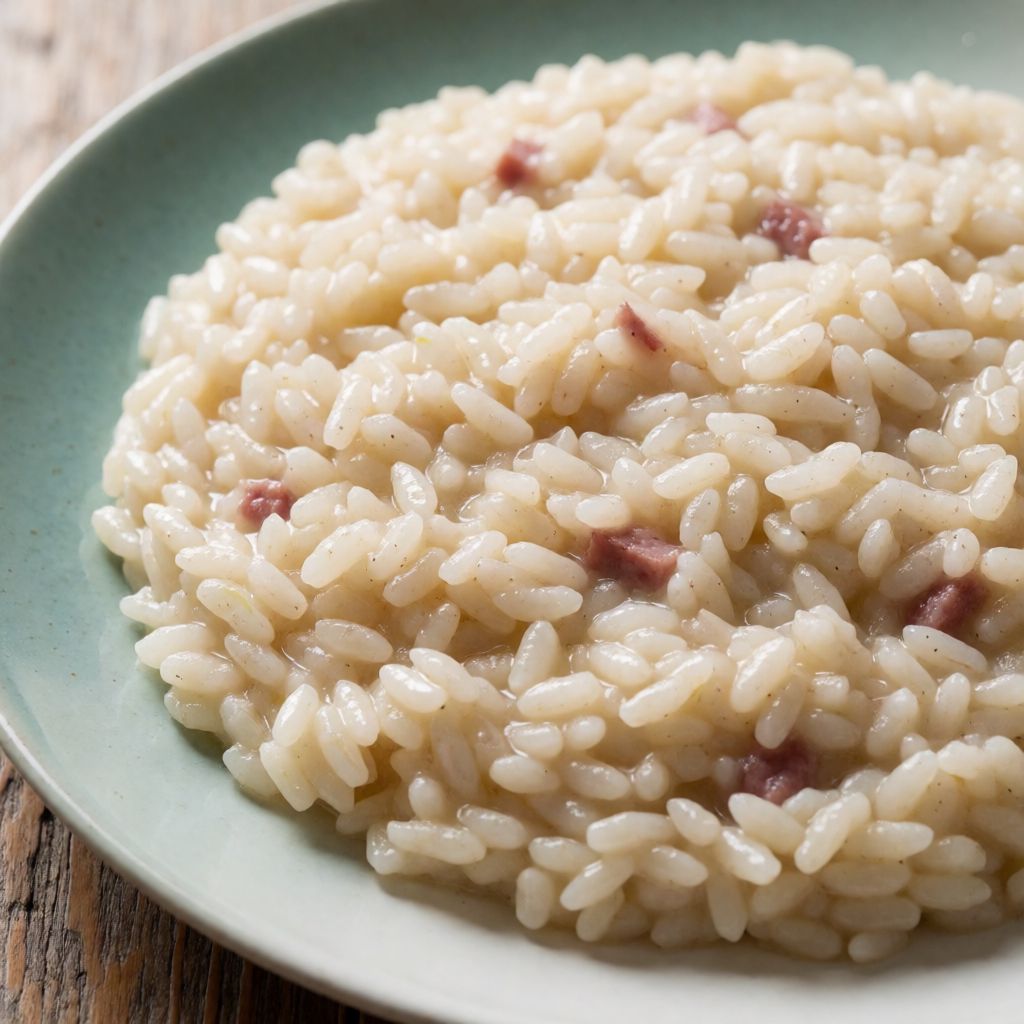
 AI photo
Leek, Sausage and Barbera Wine Risotto
A creamy risotto with leek, Italian-style sausage and a splash of red wine.
Labels are worked out automatically from the ingredients and can be wrong. Check the packaging if it matters to you.
Ingredients
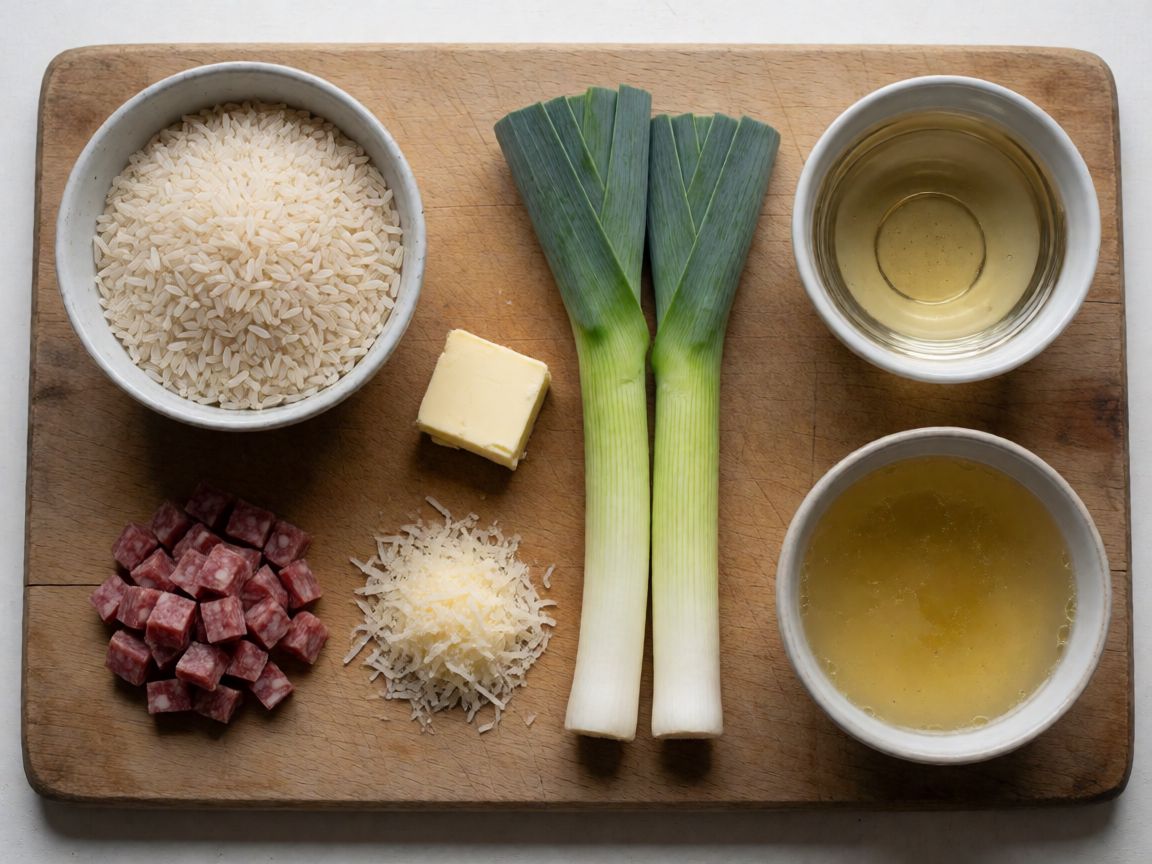
- 350 g Rice
- 120 g Sausage (Italian-style, salsiccia)
- 2 pcs Leek
- Olive oil to taste
- Salt to taste
- Black pepper to taste, ground
- 120 ml Red wine
- Beef stock as needed
- 20 g Butter
- 2 tbsp Parmesan










Steps
In a dry frying pan, brown the sausage until golden and set aside.
In two tablespoons of olive oil, fry the leek so it stays slightly crisp.
Add the rice and toast it together with the leek until the grains turn translucent.
Pour in the red wine and let it evaporate completely.
Continue cooking the risotto, gradually adding the beef stock.
When the risotto is about half cooked, add the browned sausage.
Finish cooking the risotto, adding more stock as needed. Doneness: 70°C inside.
Season with salt to taste and add ground black pepper.
Remove the pan from the heat, stir in the butter and Parmesan until creamy, and serve.
Risotto is not a rice dish, it's a starch-release dish. Everything in this recipe exists to answer one question: how do you coax the outside of each grain into a creamy slurry while the centre stays with a bit of bite. That's it. Sausage and leek and Barbera wine are flavour decisions on top of a mechanism that doesn't change.
Here's what actually decides whether it works: the rice has to be toasted dry-ish first — in fat, with the leek, until the grains go translucent at the edges and keep a chalky white dot in the middle. That toasting seals the outer layer just enough that when you add liquid, it releases starch slowly, a spoonful at a time, instead of dumping it all at once into a pot of mush. Skip that step and you've made rice soup, not risotto.
The second thing that decides it is how you add the stock. Some say you must stir constantly and add stock one ladle at a time, never more. That's not superstition, that's physics: too much liquid at once drowns the starch exchange and the grains cook by boiling instead of by slowly giving up and taking back moisture. On a British hob, which runs cooler and less evenly than a restaurant burner, you've got more room for error here — go a little slower, not faster.
The sausage browns separately in a dry pan first because that's where the flavour lives, in the fat it renders and the crust it forms on contact with hot metal, not in the meat itself. Add it too early into the rice and it just stews; add it at the halfway mark and it keeps some texture while still giving the risotto its backbone.
Rice: use a short-grain, high-starch variety — Arborio, Carnaroll, whatever supermarket own-brand says "risotto rice" on the bag. That's not snobbery, it's chemistry: long-grain rice like basmati has a different starch structure and simply won't release enough amylose to go creamy, it'll just go soft and separate. If you genuinely can't get risotto rice, pearl barley is the nearest substitute in behaviour, though it takes longer and the result is nuttier, not the same dish but the same mechanism.
Leek: two of them, fried in oil so they stay "slightly crisp" — meaning don't let them collapse into mush before the rice even goes in. Leek here plays the role onion usually plays in risotto: sweetness and a base aroma, but milder, so it doesn't fight the wine. If you've only got onion, use it, just expect a sharper, more assertive backdrop.
Sausage: Italian salsiccia means fennel, garlic, sometimes chilli, coarse-ground pork. A good British pork sausage with high meat content and minimal rusk will do the job, but squeeze it out of the skin first and break it into rough chunks in the pan — don't slice it, you want ragged broken-up pieces that brown unevenly, because that unevenness is where the flavour sits.
Red wine: Barbera specifically because it's got real acidity and not much tannin, so it cuts through the fat of the sausage and butter without turning bitter as it cooks down. Any dry, acidic red stands in for it — Chianti, a cheap Côtes du Rhône, even a Beaujolais if that's what's open. What you want to avoid is anything sweet or heavily oaked; it'll throw the whole balance toward dessert wine rather than cooking wine. And yes, let it evaporate completely before adding stock — that's not ritual, it's removing raw alcohol taste and concentrating what's left into something closer to a glaze.
Beef stock: "as needed" because the rice tells you how much it wants, not the recipe. Keep it hot in a separate pan — adding cold stock to hot rice shocks the cooking and stalls the starch release, you'll taste the stop-start in the texture. If you're using a stock cube or bouillon paste because that's what's in the UK cupboard, go light on salt elsewhere until the end; cubes are salted hard and you can't take salt back out once it's in.
Butter and Parmesan go in off the heat, right at the end, stirred hard — this final beating is called mantecatura and it's the step that actually makes risotto look like risotto rather than wet rice. The heat's already done its job; now fat and cheese emulsify into the starch that's floating in the liquid and turn it glossy. Do this over heat and the butter splits, the cheese goes stringy and grainy instead of silky — a defect you can't fix afterwards, only avoid.
"70°C inside" as your doneness marker for the sausage sitting in the pot sounds oddly clinical for a kitchen without a thermometer, so use your senses instead: by the time the rice has gone from chalky-centred to tender-with-a-whisper-of-resistance, the sausage pieces, having sat in simmering liquid for that whole second half of cooking, are well past any safety concern. Trust the rice's texture as your clock for everything else in the pan.