
 AI photo
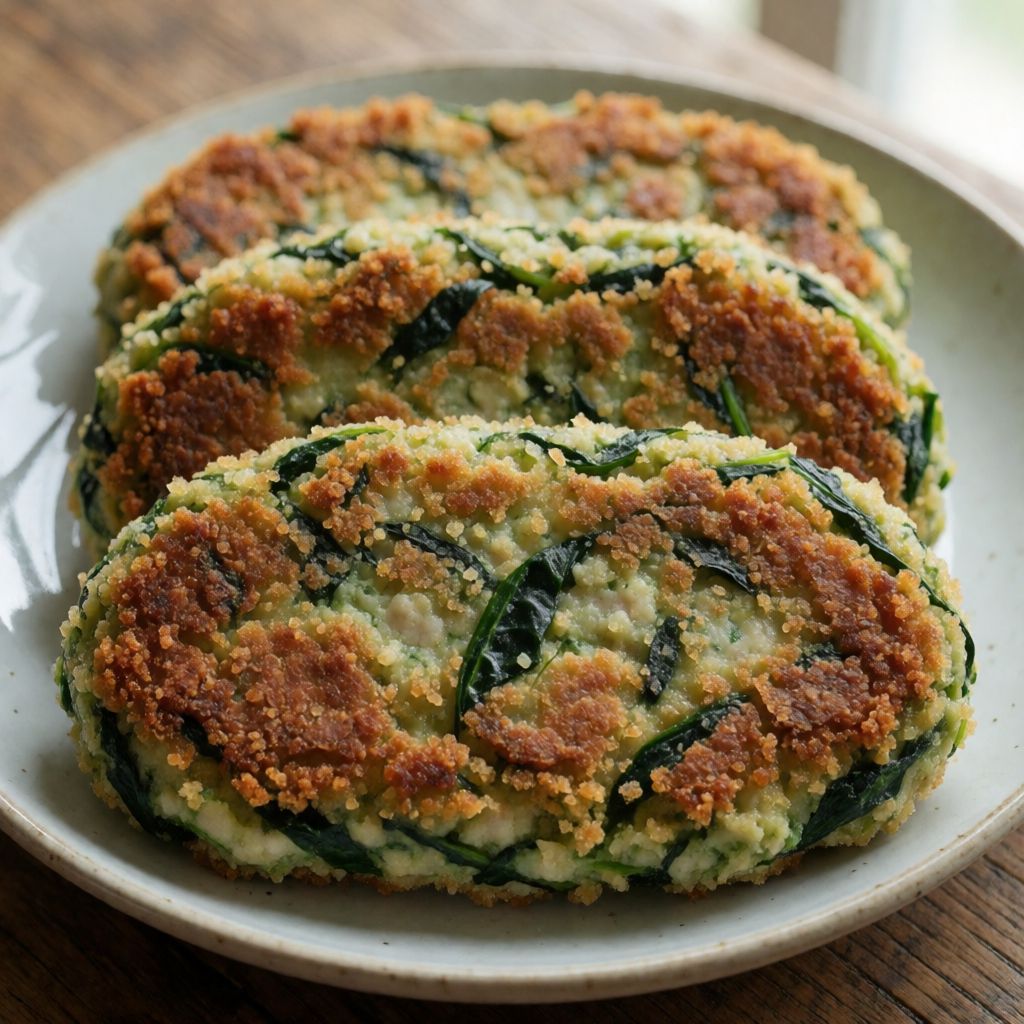
Spinach and Tofu Cutlets
Simple spinach and tofu cutlets, seasoned with ginger and black pepper, baked until lightly crisp.
Labels are worked out automatically from the ingredients and can be wrong. Check the packaging if it matters to you.
Ingredients
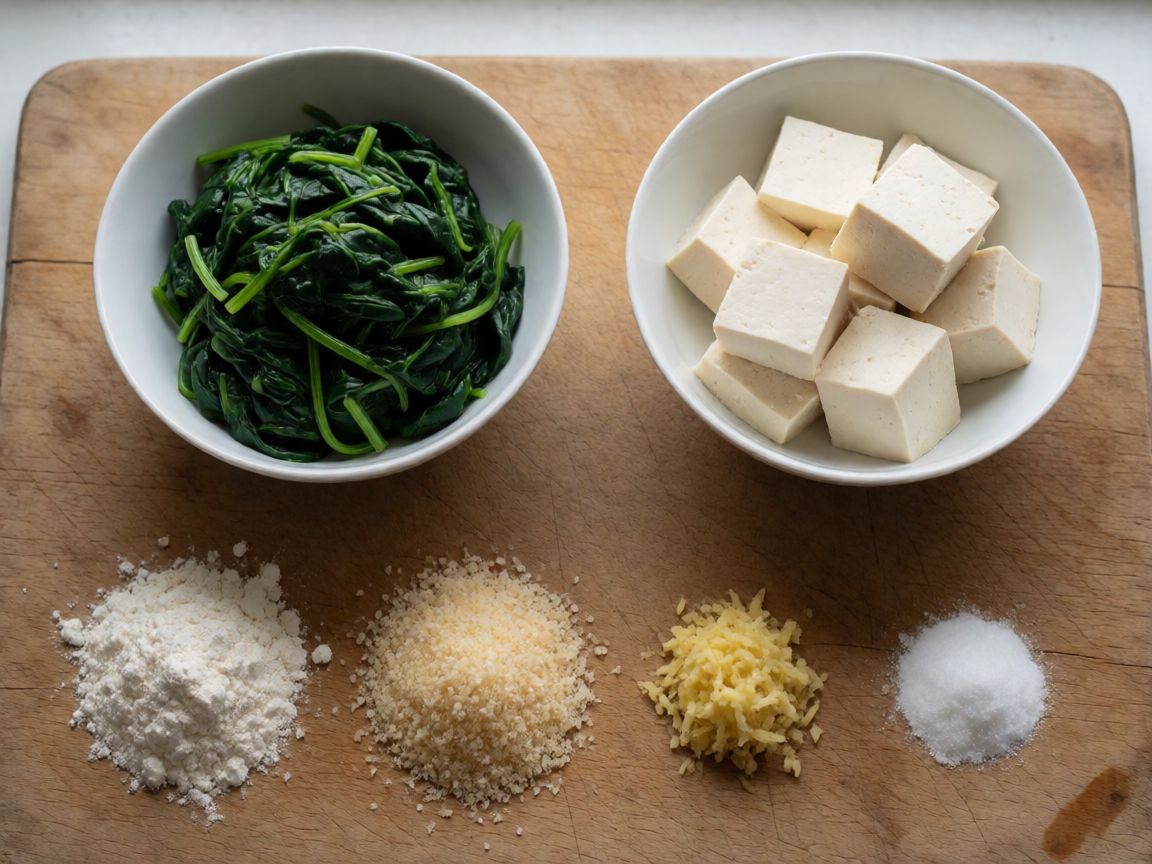
- 400 g Spinach
- 300 g Tofu
- Plain flour
- Breadcrumbs dried
- Salt to taste
- Black pepper to taste
- Ginger freshly grated, to taste
- 1 pinch Bicarbonate of soda
- Olive oil to taste









Steps
Rinse the spinach and boil it in salted water until soft.
10 minDrain the spinach in a colander and press out the excess water with a fork.
Chop the spinach finely with a knife or blitz it in a blender.
Drain any excess water from the tofu, crumble it, combine with the spinach and mix well.
Season with salt, black pepper and ginger to taste.
Add the breadcrumbs so the mixture becomes easy to shape.
Shape the mixture into small cutlets.
Coat the cutlets in flour and place them on a baking tray lined with parchment.
Drizzle with olive oil and bake at 180°C with the fan setting.
23 minServe the cutlets warm and fragrant.
These are not cutlets in the Sunday-roast sense — nothing is fried, nothing is meat, and the "cutlet" shape is really just the most practical way to turn a wet, crumbly mash of spinach and tofu into something you can pick up with your fingers. What decides whether they work is water: spinach holds an enormous amount of it, tofu holds more again, and if you don't get rid of enough of it before baking, you get warm green mush with a crust, not a cutlet that holds its shape.
The fork-pressing after boiling isn't fussiness — it's the one step that saves the dish. Spinach leaves are mostly water held in cell walls that collapse the moment they're cooked. Squeeze lightly and you've barely touched it; squeeze properly, with real pressure, and you'll be amazed how much liquid a modest heap of leaves lets go of. Skip this and no amount of breadcrumbs later will dry the mixture out — you'll just be diluting flavour with starch to compensate for water you should have removed at the source.
Tofu adds its own water and almost no flavour of its own, which is exactly its job here: it's a blank, protein-rich filler that takes on whatever salt, pepper and ginger you give it, and it binds the spinach into something with a bit of body instead of just wilted leaves. Press it too — "drain the excess water" is doing the same work as the fork on the spinach, for the same reason.
Spinach is the body of the dish and also its main problem. 400 g of raw leaves collapses to a fraction of that once boiled — this is simply what happens to leaf vegetables, almost all water held in a thin structure that gives way with heat. Boiling here isn't about flavour, it's about softening the leaf quickly in bulk; if you don't have a pot big enough, do it in two batches rather than cramming the pan, or the leaves on top won't wilt evenly. Some say spinach should be steamed to "preserve nutrients" — no, because you're going to squeeze most of the water (and whatever dissolved in it) out anyway, so the difference is marginal and boiling is simply faster and easier to manage in a standard kitchen pan.
Tofu is there for protein and for a neutral base that lets the spinach and ginger speak. Choose a firm or extra-firm block — silken tofu will add nothing but more water you don't need. If tofu isn't something you keep in, a well-drained ricotta or even mashed butter beans will do a similar binding job, though the flavour and texture shift: the common thread you're looking for in a substitute is "something bland, crumbly, and with some body to hold moisture and bulk without tasting of itself."
Ginger is the one ingredient here doing real seasoning work rather than structural work — fresh, grated, not ground, because ground ginger has a flatter, dustier heat and loses the bright top note fresh ginger gives raw vegetable mixtures like this one. If you don't have fresh ginger, a pinch of ground will do in a pinch, but go gently; dried ginger is more concentrated and stronger by weight.
The bicarbonate of soda is a small thing but it isn't decorative — a pinch helps keep the cooked spinach a fresher green rather than that dull khaki colour spinach turns when its acids react with chlorophyll over heat. It's the same trick behind why restaurant greens look brighter than home-cooked ones. Don't overdo it: too much and you get a soapy taste and a slightly slimy texture, because bicarbonate also breaks down the leaf's cell walls further than you want.
Breadcrumbs and flour are both doing the same job from different ends — the breadcrumbs go into the mixture itself to soak up remaining moisture and give it enough structure to shape by hand, the flour coats the outside afterwards to give the surface something to dry and firm against in the oven, rather than steaming inside its own moisture. Dried breadcrumbs work better than fresh here specifically because they're already dehydrated and will pull water out of the mix rather than add any.
On the oil: "to taste" here really means "enough to stop the surface drying to cardboard and to help it colour slightly" — a light drizzle, not a bath. Use any oil without a strong smell of its own if olive oil isn't to hand; a neutral vegetable or rapeseed oil will do the physical job just as well, you'll only lose the faint grassy note olive oil adds at this low-ish baking heat.
Patience matters twice here — once while squeezing water out properly rather than rushing it, and once while letting the baked cutlets sit a minute before you try to lift them off the tray, since they firm up slightly as they cool from oven-hot, and moving them too soon is how they fall apart on the spatula rather than in the pan.