
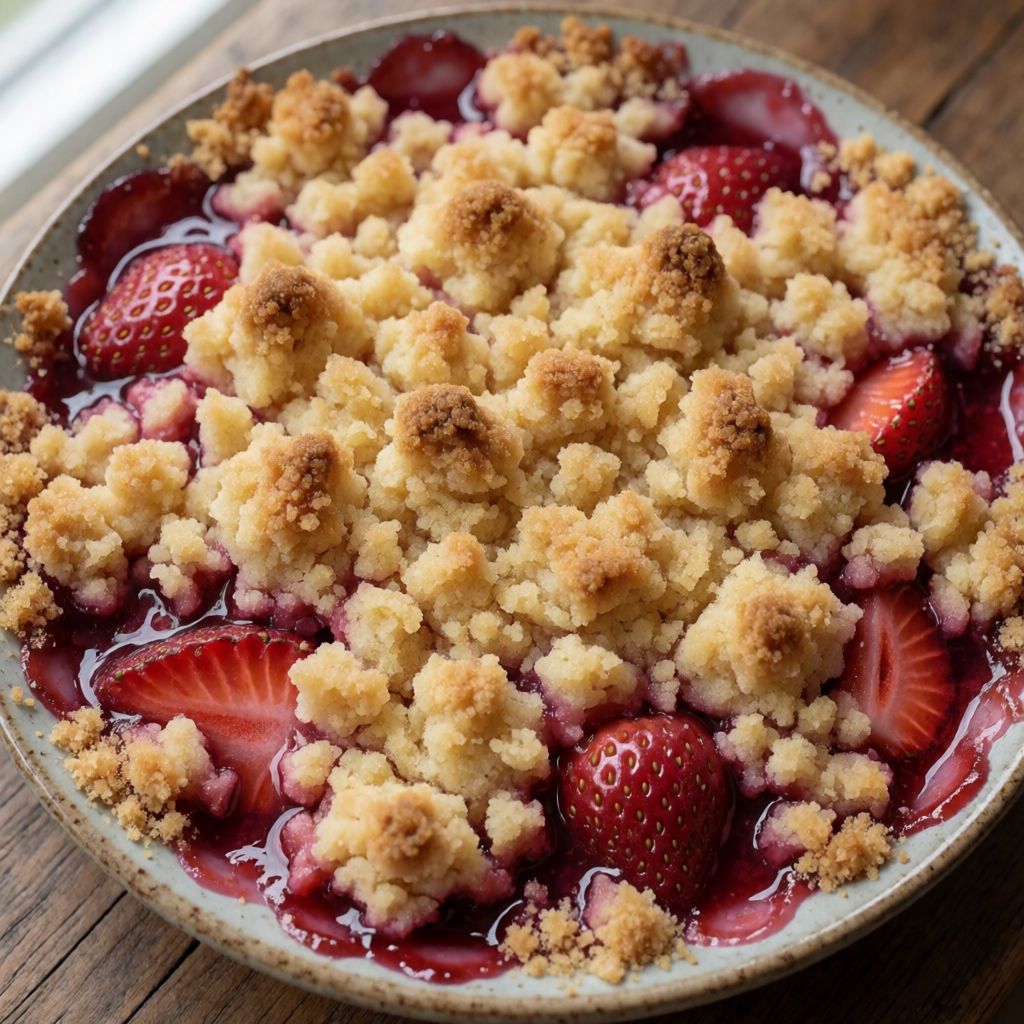
 AI photo
Strawberry Crumble
A simple strawberry crumble with a buttery almond topping, baked until golden and bubbling.
Labels are worked out automatically from the ingredients and can be wrong. Check the packaging if it matters to you.
Ingredients
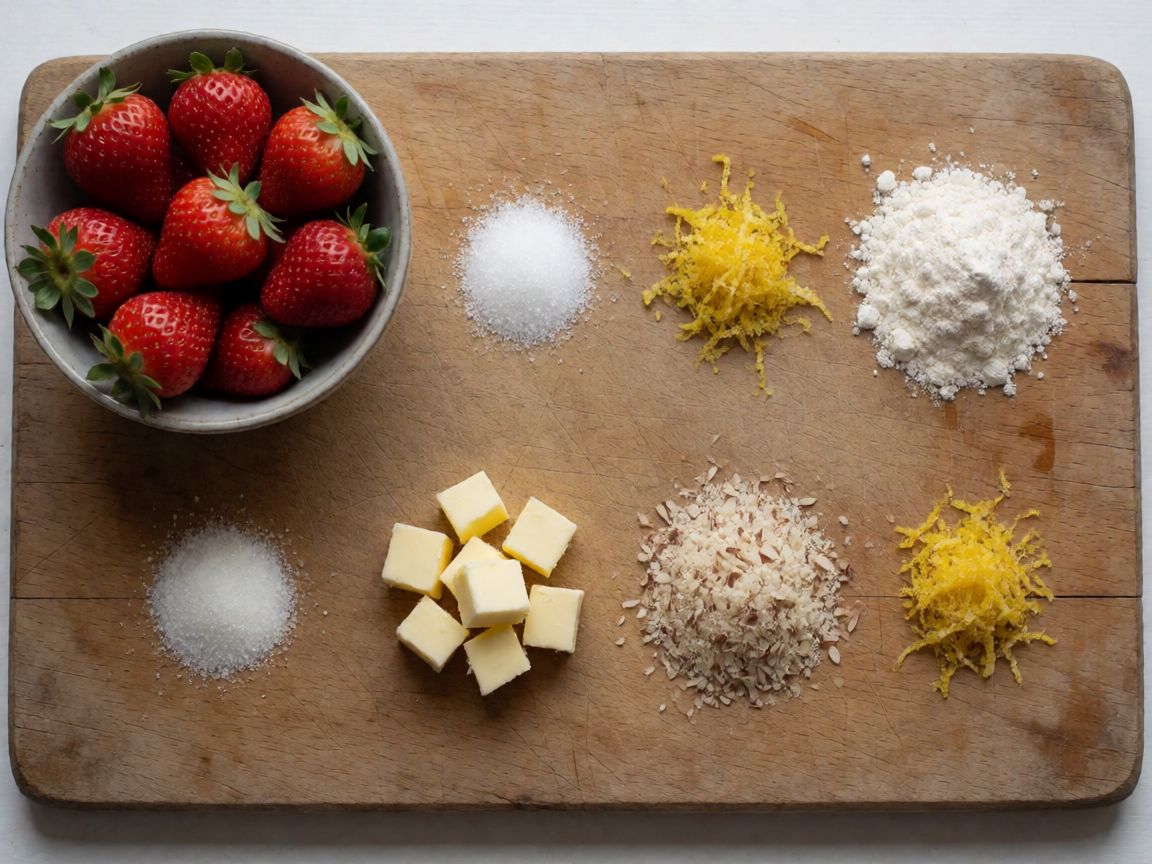
- 400 g Strawberries
- 2 tbsp Sugar
- Lemon zest to taste
- 80 g Plain flour
- 75 g Caster sugar
- 70 g Butter cold, cut into cubes
- 80 g Ground almonds
- Lemon zest to taste
- pinch Salt





Steps
On a sheet of baking paper, combine the flour, ground almonds, sugar, salt, lemon zest and cold butter, cut into cubes.
Using a fork, work the butter into the dry ingredients, then rub together with your fingertips until it forms a crumbly texture. Chill in the fridge.
Wash the strawberries thoroughly, pat dry with a towel, remove the stalks and cut the berries into cubes.
In a bowl, mix the strawberries with the lemon zest and sugar. Stir well.
Divide the filling among four individual ramekins and top with the crumble mixture.
Bake in a preheated oven for 30 minutes at 180°C.
30 minAllow to cool slightly and serve.
A crumble is really two separate events cooked in the same dish at once: fruit turning to syrup underneath, and a layer of fat-and-flour drying into gravel on top. The whole trick is keeping those two things from merging. If the top goes gluey instead of gritty, you haven't made a crumble — you've made a strawberry cobbler with ambitions.
What decides the texture up top is temperature, and specifically the temperature of your hands. Cold butter stays as separate little lumps when you rub it into the flour. Each lump holds its shape until the oven heat hits it, melts on its own, leaves a tiny gap, and the flour around that gap toasts instead of steams. Warm hands, or butter left out too long, turn those lumps into paste before they ever see the oven — and paste bakes flat, not crumbly. That's why the recipe tells you to chill the mix again after rubbing it: insurance against your own kitchen being warmer than you think.
On the butter: cold and cubed is the criterion, not a brand. Any butter that's genuinely cold and holds its shape when cut will do the job — a higher-fat, Continental-style butter gives a slightly crisper result because there's less water in it to turn to steam and soften things on the way. Margarine will rub in the same way but carries more water, so expect a muddier crumb, not a disaster.
Plain flour, not self-raising — there's nothing here that needs to rise, the job is to dry and crisp, not to lift. The ground almonds do two things at once: they add fat, which helps the crumb stay short rather than elastic, and they add flavour that plain flour hasn't got. The substitution rule is any ground nut with no loud smell of its own — hazelnuts work fine, walnuts will fight the strawberry. No nuts in the cupboard at all? Use rolled oats instead for crunch, or just a little extra flour if you want a plainer result, knowing you'll lose some of the richness the almonds were giving you.
Caster sugar in the crumble matters more than it looks — it's fine enough to distribute evenly while you're rubbing the fat in, so you don't end up with gritty pockets of undissolved sugar in one bite and none in the next. The sugar on the strawberries doesn't need the same fineness, because it isn't rubbed into anything — it's just resting on wet fruit, dissolving on its own time.
Lemon zest appears twice for two different reasons. On the fruit, it cuts the one-note sweetness of strawberries, which on their own can taste flat once cooked. In the crumble, it does the same job to the fat. Zest, not juice — juice adds water, and water is exactly what you don't want near a topping whose whole purpose is staying dry and crisp.
Choose strawberries by smell, not size or colour. A berry that smells of strawberry through the punnet has juice worth drawing out; a pale, odourless one has almost nothing to give, and you'll end up baking dry paste under a dry topping — no sauce, no point. Ramekins rather than one big dish aren't a style choice either: more edges means more crumble-to-fruit ratio per mouthful, and the heat reaches every portion's centre evenly, so there's no soggy, underdone middle the way there can be in one deep dish. No ramekins at home — teacups or small pie dishes on a tray do exactly the same job, just keep the fruit the same depth so the timing still holds.
At 180°C the butter in the topping melts, the sugar on top caramelises, and the almond pieces toast — that's your browning, not magic, just heat doing what heat does to fat and sugar. Underneath, the strawberry juice simmers down into syrup on its own schedule. Thirty minutes is a floor, not a ceiling — the real sign is bubbling at the edges and a top that's gone from pale to properly golden. And give it a few minutes once it's out before anyone eats it: straight from the oven the syrup is thin and runs everywhere; a little patience lets it thicken, and patience here is as much an ingredient as the butter.