
 AI photo
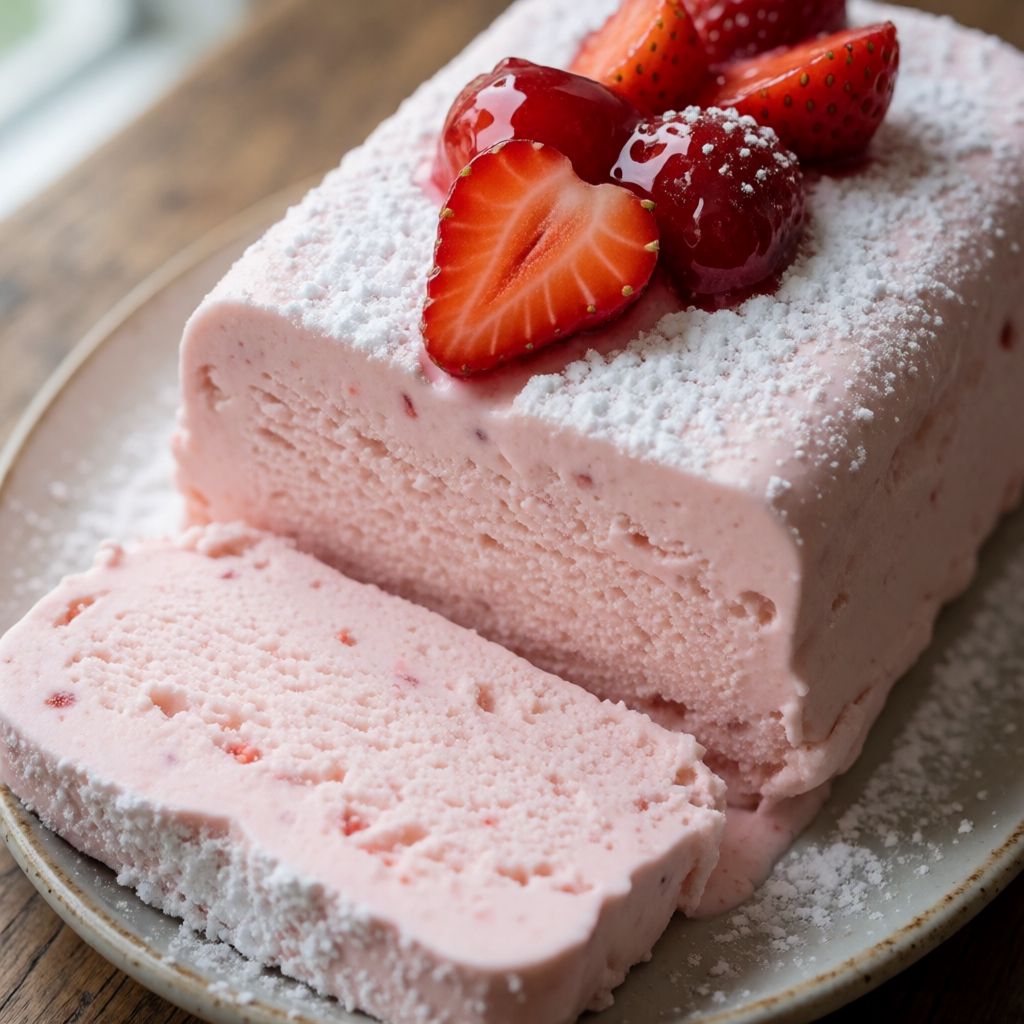
Strawberry Semifreddo
A chilled strawberry semifreddo with a soft sponge-finger base, light and creamy.
Labels are worked out automatically from the ingredients and can be wrong. Check the packaging if it matters to you.
Ingredients
- 250 g Strawberries
- 80 g Caster sugar
- 5 g Gelatine
- 250 g Double cream
- 300 g Strawberry yogurt
- 20 g Icing sugar
- Milk to taste
- Sponge finger biscuits as needed







Steps
In a small saucepan, combine the washed and chopped strawberries with the sugar, mix and cook over low heat until the mixture thickens.
Mash the strawberry pieces with a fork, pour the compote into a bowl and let it cool completely.
Soak the gelatine in cold water.
10 minSqueeze out the gelatine and combine it with 50 g of the hot double cream, stirring until fully dissolved.
Whip the remaining 200 g of double cream with the icing sugar until fluffy, then add the strawberry yogurt, the cooled strawberry compote and the melted gelatine, and mix until smooth.
Pour the mixture into a mould lined with cling film, level it out and form a base with sponge finger biscuits soaked in milk.
Place the semifreddo in the freezer.
300 minBefore serving, decorate with a few strawberry slices.
Semifreddo means half-cold, half-frozen — and that word is the whole mechanism. This is not ice cream pretending to be clever. Ice cream is churned while it freezes, so a machine beats air in continuously and keeps crystals small. Semifreddo skips the machine: you beat the air into the cream first, while it's still liquid, then freeze the whole thing still and quiet. The air stays trapped because cream, sugar and gelatine set around it like scaffolding. That's why you can cut a slice straight from the freezer and it gives under the knife instead of shattering.
What decides whether it works is water. Strawberries are mostly water, and water is the one thing that freezes hard and grainy no matter what you do to it. Cooking the berries down with sugar before anything else isn't a flavour step dressed up as a technique — it's water management. You're driving off the thin, watery part of the fruit and keeping the concentrated, sugared part, because sugar lowers the freezing point and keeps things soft, while plain water just makes ice.
Some say semifreddo needs eggs — the classic Italian version does, whipped with sugar over heat like a loose custard. This one doesn't bother, and it isn't a shortcut out of laziness: yogurt does a similar job of adding body and a little acidity, without the business of tempering yolks over a pan you don't have a double boiler for. It's a sensible swap for a flat kitchen, not a lesser one.
Strawberries: fresh, ripe, the kind that smell like strawberries before you cut them — because you're reducing them, and reduction concentrates whatever is already there, good or bland. Frozen strawberries work fine here and sometimes better, since they release juice fast once thawed, which speeds the thickening. You'll know the compote is ready not by a clock but by behaviour: drag a spoon through it and it should leave a trail that takes a second to close up, not flood back instantly. That's the water gone far enough.
Caster sugar in the compote does two jobs — sweetens, and binds water into syrup so it can't form big ice crystals later. Icing sugar in the whipped cream is a different choice for a different reason: it's fine enough to dissolve the moment it touches the cream, so you're not beating for an extra minute trying to chase down sugar grains, which is exactly the minute that turns cream from soft and glossy to grainy and on its way to butter. If you only have caster sugar, it'll do, just whisk a little longer and watch the cream rather than the clock.
Double cream, not single, not whipping cream from the lighter end of the shelf — you need the fat content to hold air once whipped and still support the weight of yogurt and compote folded in afterwards. Whip it to soft folds, not stiff peaks: overwhipped cream has already started separating its fat from its water, and once you fold in more liquid it collapses instead of lightening. Any cream with enough fat to hold a ribbon shape briefly will do the job — this is the test, not a percentage on a label you have to trust blindly.
Gelatine: soak it in cold water first, not hot — cold water lets the sheets or granules hydrate evenly, so when you melt them into the warm cream they dissolve clean, with no little rubbery threads left floating. If you need a vegetarian stand-in, agar-agar will set the mixture, but it sets firmer and doesn't melt as softly on the tongue — use less than you'd think, and expect a slightly cleaner cut, slightly less creamy give.
Strawberry yogurt carries two jobs at once: body, standing in for part of what eggs would otherwise do, and acidity, which cuts through the sugar and cream so the whole thing doesn't taste flat and sweet. If you've only got plain yogurt, use it and add a spoonful more of the cooled compote to make up the strawberry flavour you've lost — the acidity matters more than the flavour, so don't skip it in favour of a sweeter substitute.
Sponge fingers soaked in milk make the base, and the soaking matters more than it looks: a dry biscuit frozen solid is unpleasant to bite into, closer to a wall than a dessert. A quick dip — not a swim — softens it just enough that freezing leaves it tender rather than soggy or concrete. Any milk works, the same one that goes in your tea; just don't let the biscuits sit in it, drowned biscuits fall apart and give you no base at all, only crumbs at the bottom of the mould.
Five hours in the freezer is a floor, not a target — a flat's freezer runs warmer and slower than you'd think, and a deep container takes longer to set through than a shallow one. Choose a container this amount fills without standing more than a couple of fingers deep; that's less about the recipe and more about how freezers actually work at home. Judge it by pressing the centre through the cling film before you unmould: it should give slightly, like a firm mattress, not sit rigid under your finger. If it doesn't give yet, leave it — there's no fixing a semifreddo that comes out too early, only patience that comes out too late.