
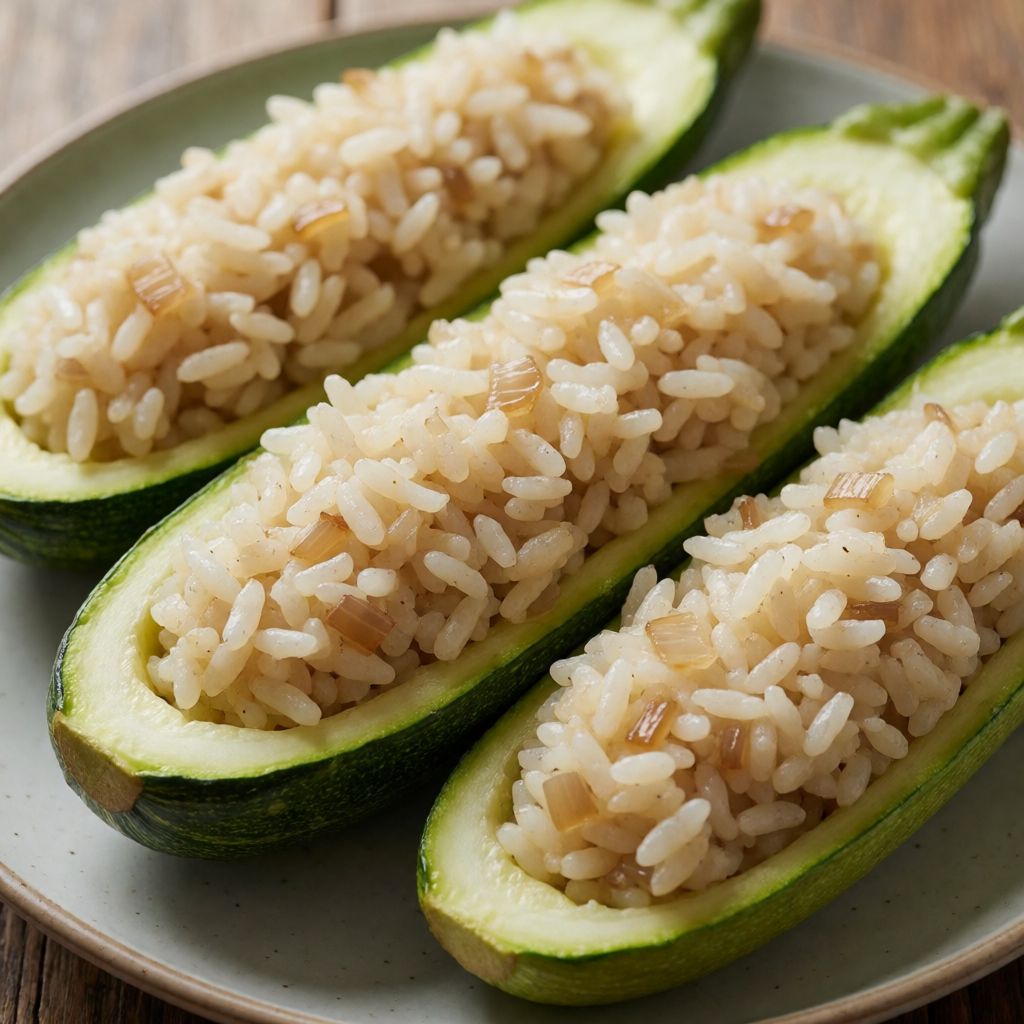
 AI photo
Courgettes Stuffed with Rice
A comforting side of courgettes stuffed with rice, parmesan and butter, baked until golden.
Labels are worked out automatically from the ingredients and can be wrong. Check the packaging if it matters to you.
Ingredients
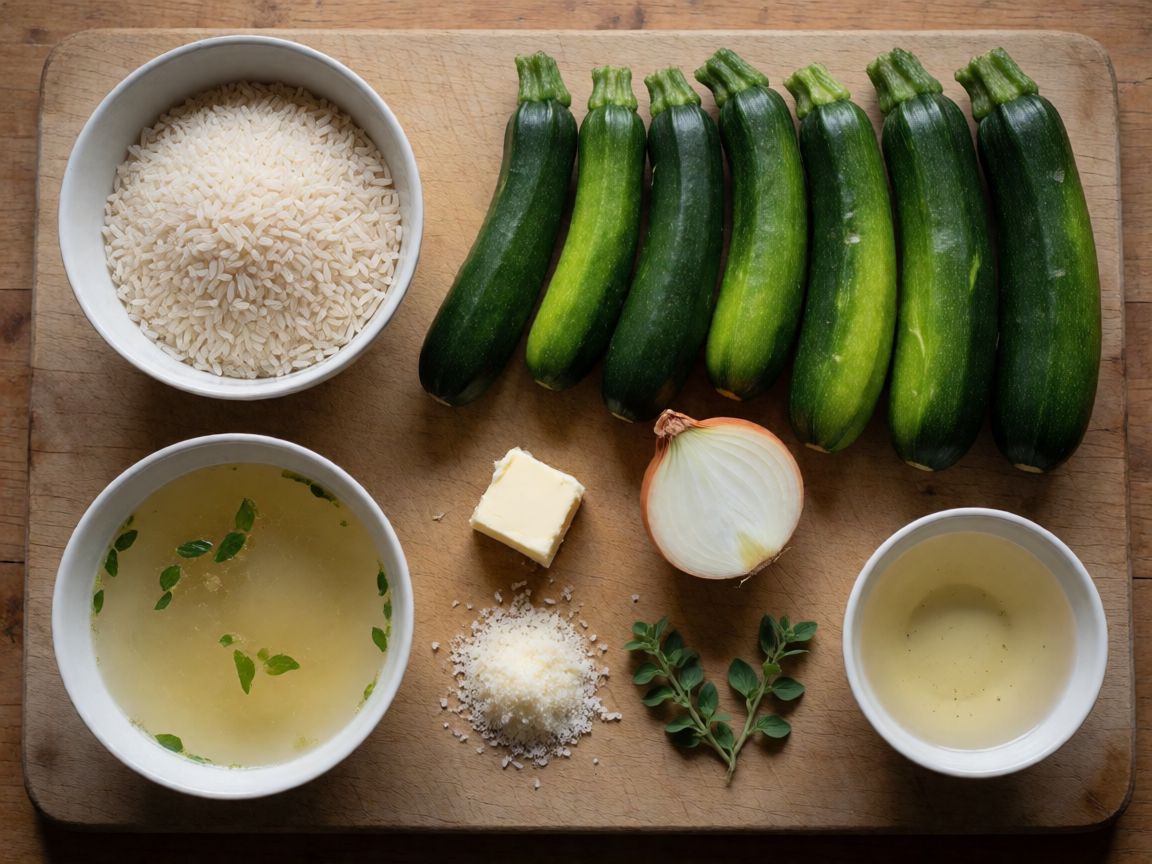
- 200 g Rice
- Vegetable stock as needed
- 6 pcs Courgette
- 1/2 pcs Onion
- Salt to taste
- Olive oil to taste
- 20 g Butter
- 30 g Parmesan
- 2-3 pcs Marjoram fresh
- 125 ml White wine










Steps
Wash the courgettes thoroughly and trim the ends.
Boil the courgettes for 6-7 minutes until soft.
7 minDrain, let cool, then halve lengthways: scoop out the flesh and set it aside.
Heat olive oil in a pan and fry the chopped onion until golden.
Add the rice and toast it, stirring constantly with a wooden spoon.
Pour in the dry white wine and let it evaporate completely.
Lower the heat and gradually add the vegetable stock in small amounts.
About halfway through cooking, add the chopped courgette flesh.
Season with chopped fresh marjoram and salt to taste.
Stir in the parmesan and butter, mix well and let cool.
Place the courgettes on a baking tray and fill them with the prepared rice.
Sprinkle with parmesan, drizzle with olive oil and bake at 180°C.
20 min
This is a courgette boat holding a risotto, and the two halves need each other. The courgette is a vessel first and a vegetable second — it's cooked twice, boiled then baked, and if you don't understand why, you'll end up with either raw rice or baby food instead of a vegetable.
What decides whether it works is the risotto technique inside those boats, not the stuffing itself. Rice toasted in oil, deglazed with wine, fed stock gradually — that's the mechanism that gives you grains that are creamy on the outside and still have a bite in the centre. Skip the toasting and the rice just boils in liquid; skip the gradual stock and you get soup or a brick, nothing in between.
Some say you can just mix raw rice with the scooped-out flesh and bung it in the oven. No — rice needs to release its starch slowly, in contact with liquid added a little at a time, or it won't cook evenly: the outside turns to mush while the centre stays chalky. That's why the rice is cooked separately first, almost finished, before it ever goes near the oven.
The boiling of the courgettes before stuffing isn't about softening them for eating — it's about making them hollow-able without tearing, and it pre-cooks them just enough that the final bake is really about melting cheese and setting the filling, not cooking a raw vegetable through.
Rice: you want a short or medium grain that holds structure while releasing starch — the Italian risotto rices (Arborio, Carnaroli) are built for exactly this job, which is why Italian kitchens reach for them without thinking twice. If you only have a long-grain rice from the cupboard, it'll cook through fine but won't give you that creaminess — it just won't bind the stuffing together the same way, so season it a touch more assertively to compensate.
The courgette flesh you scoop out isn't waste — it's half your filling's bulk and most of its moisture. Chop it and add it halfway through cooking the rice, not at the start, because it's wet and soft and would just collapse into the stock if it went in too early; added late, it keeps some texture and flavours the rice from the inside rather than disappearing into it.
White wine's job here is acid and aroma, not alcohol. Letting it evaporate completely before you add stock matters — if you don't, the raw wine taste sits in the dish and you taste vinegar-adjacent sharpness instead of depth. If you've no wine open, a splash of dry vermouth does the same work, or a spoon of lemon juice in a pinch, though you lose the aromatic lift wine gives.
Parmesan and butter stirred in at the end, off the heat, is the mantecatura — the step that makes risotto glossy rather than just wet rice with cheese on top. The butter, melting in the residual heat, coats every grain; do it over direct heat and you just get an oily sauce instead of that cling. Any hard, savoury aged cheese that melts into fat rather than clumps will do if parmesan's not to hand — a mature Cheddar won't taste the same but will behave similarly enough.
Marjoram is doing a herbal job that basil or oregano could also do — pick something soft and leafy rather than woody, because woody herbs (rosemary, thyme) want longer cooking to release flavour, and this dish doesn't give them that time.
On an ordinary UK hob: "gradually add the stock" means standing at the pan with a ladle, not walking off to put the kettle on. The whole point of adding liquid in small amounts is that the rice absorbs it before the next addition, which only happens if you're there watching and stirring — leave it unattended on a strong ring and you'll either scorch the bottom or flood the rice and lose the texture entirely.
The bake at the end is short because everything inside is basically ready — you're melting the parmesan topping, warming the filling through, and letting the courgette shell soften that last bit at the edges. Watch for the top going from pale to properly golden rather than counting minutes religiously; ovens vary more than recipes admit, and a tray near the top of a hot oven will colour faster than one lower down.