
 AI photo
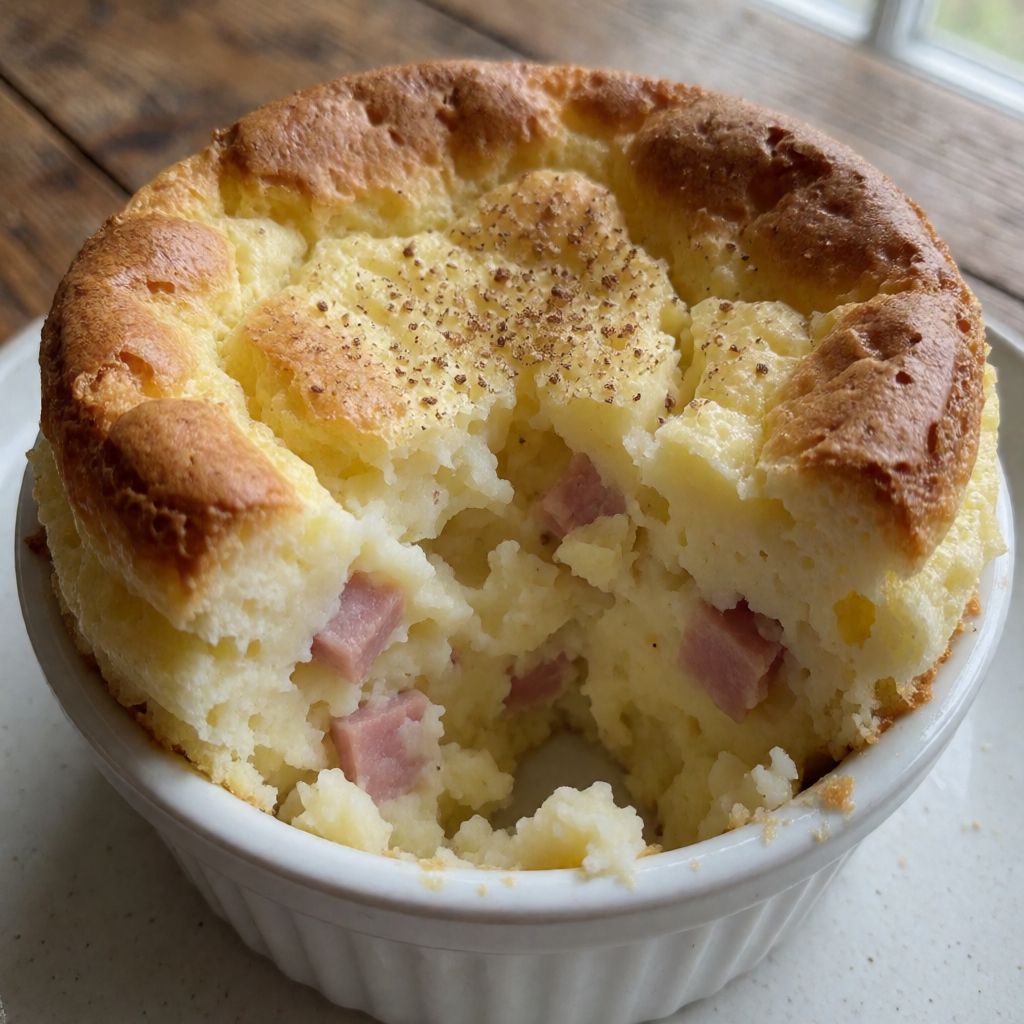
Potato and Ham Soufflé
A light baked soufflé of mashed potato, ham and eggs, golden and crisp on top.
Labels are worked out automatically from the ingredients and can be wrong. Check the packaging if it matters to you.
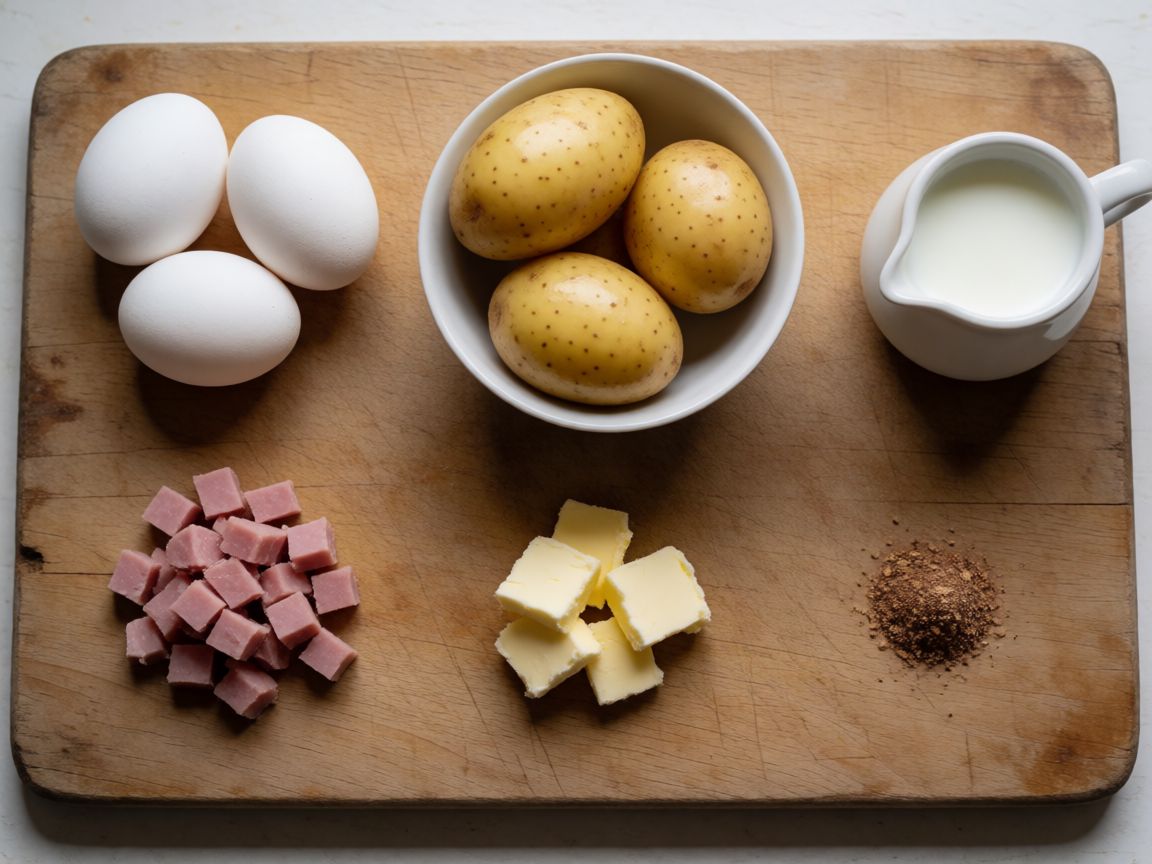
Ingredients








Steps
Wash the potatoes thoroughly under running water to remove any traces of soil.
Boil the potatoes in plenty of salted boiling water until soft enough.
15 minLet the potatoes cool slightly, peel and mash into a smooth purée.
Crack the eggs and separate the yolks from the whites. Whisk the whites lightly with a mixer.
Whisk the yolks with a fork, add salt, pepper and nutmeg, then gradually pour in the milk.
Combine the mashed potato with the egg-and-milk mixture, stirring until smooth.
Melt the butter and let it cool to a warm temperature.
Cut the ham into small cubes.
Add the warm butter to the mixture, add the ham cubes and gently fold in the whisked egg whites.
Pour the mixture into a buttered baking dish.
Bake the soufflé in an oven preheated to 180°C until the surface is golden and crisp.
30 min
This isn't really a soufflé in the French, trembling, collapse-the-moment-it-leaves-the-oven sense. It's a potato gratin that's borrowed the soufflé's trick — whipped egg whites — to lighten what would otherwise be a dense, stodgy mash-and-ham bake. Call it a soufflé because the whites do lift it, but don't expect the drama of a cheese soufflé at a dinner party. It's sturdier than that, and that's exactly why it survives a home oven and a trip to the table without sulking.
What decides whether it works is two separate things done right: the potato must be dry and smooth, and the egg whites must go in gently, not stirred to death. Wet mash means a soggy base no amount of baking fixes — the water just steams inside the dish instead of cooking off, so you get a soufflé that's heavy at the bottom and fine on top. And if you beat the whites into the potato mixture like you're making a cake batter, you knock the air straight back out, and the whole point of separating the eggs was wasted.
Some say you must bake a soufflé the second the mixture is ready, or it dies. No — because this is held together by potato starch and egg yolk, not just whipped air. You have a little more leeway here than with a classic cheese soufflé. But don't push your luck: the longer the whites sit folded into a wet mixture, the more they weep and flatten, so get it into the oven within a reasonable time, not next week.
Start with the potato. You want a floury, starchy variety — the kind that falls apart when boiled rather than holding its shape, the same type you'd choose for roasties that go soft inside, not the waxy salad kind. A waxy potato gives you a gluey, wallpaper-paste mash instead of something that fluffs. Boil them whole or in big chunks in well-salted water — salting the water now, not after mashing, means the potato seasons itself from the inside, not just on the surface.
Here's the step people skip and shouldn't: let the potato cool slightly before mashing, and mash it dry, with no extra milk or cream poured in at that stage. All the moisture in this dish — the milk, the egg — gets added later, deliberately measured. If you load wet mash with more liquid on top of the 500ml of milk already coming, you'll flood the dish and it won't set; it'll bake into something closer to potato soup with a crust.
The eggs do two jobs and that's why they're split. The yolks go in with the milk and seasoning to bind and enrich — yolk is fat and emulsifier, it's what makes the mixture smooth rather than grainy. The whites, whisked separately, are pure air. Folding them in gently — not stirring, folding, cutting through with a spatula and turning — keeps that air trapped as little bubbles that expand in the oven's heat and lift the potato instead of it baking into a brick. This is the actual mechanism of "soufflé": heated air expanding inside a setting protein structure. Lose the air by overmixing, and you've just made a potato cake.
Butter here isn't just richness — melted and cooled to warm (not hot, which would start cooking the yolks when they meet it, giving you scrambled bits in your mash) it coats the starch and carries flavour through the whole mixture evenly, the way fat always does better than liquid alone. Any neutral fat with no smell of its own could stand in — a flavourless oil at a pinch — but butter also browns on top in the oven and that's part of what you're after: a crisp golden surface, not just a cooked one.
Ham is the one ingredient here with real freedom. Diced ham off the bone, the leftover end of your Sunday joint, a thick-cut gammon, even good bacon fried first for a smokier note — any cured or cooked pork that holds its shape when cubed will do. The cubes should be small enough to distribute through every spoonful, not so small they disappear and leave you wondering where the ham went.
On doneness: 180°C and thirty minutes is your lower bound, not a deadline. What you're actually watching for is the surface turning from pale and wet-looking to golden and set with a slight crust, and the dish no longer wobbling like liquid when you nudge it — it should move as one mass, not slosh. Ovens vary, baking dishes vary in how they hold heat, and a shallow dish in a British oven that runs a bit cool will need longer than a deep one in a fan oven running hot. Open the door, look, trust what you see over the clock. And once it's out, don't leave it waiting around — like any soufflé, however sturdy, it settles the longer it sits, so get it to the table while it still remembers being tall.