
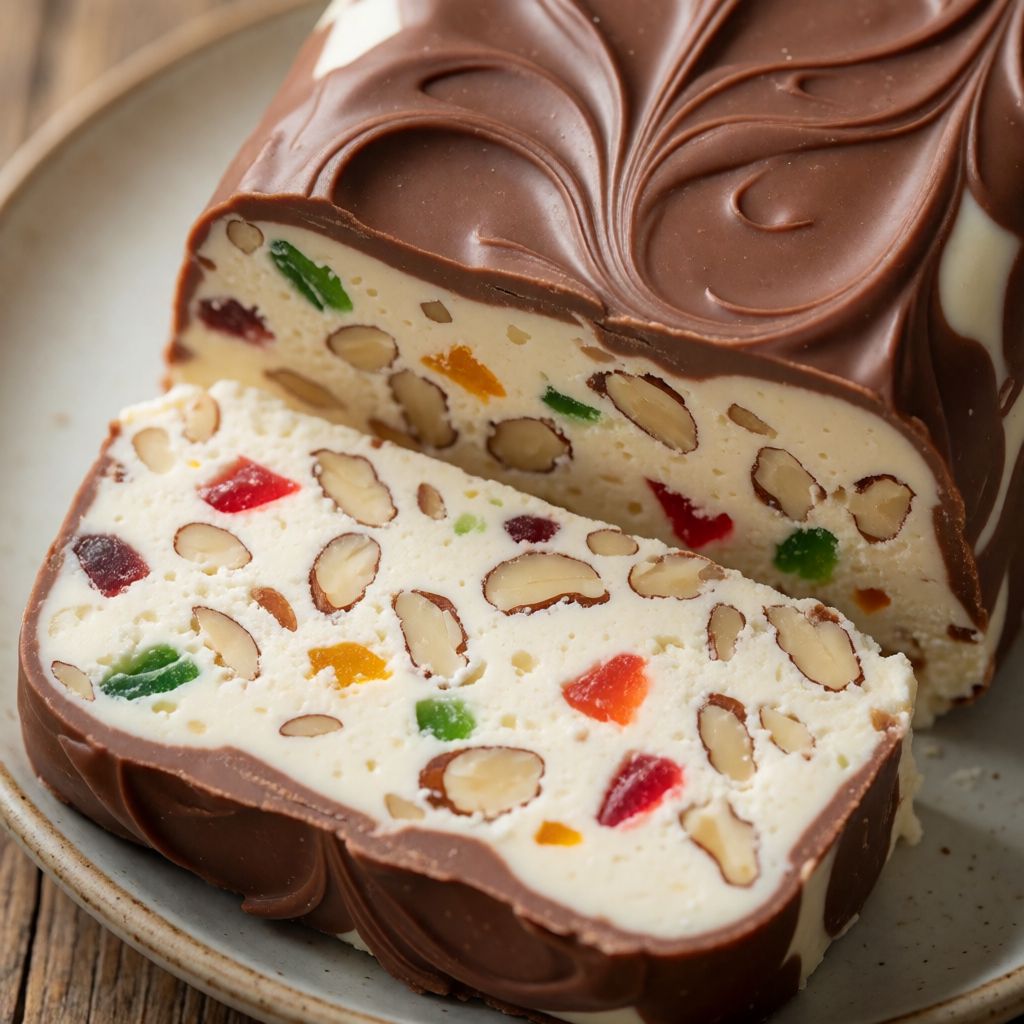
 AI photo
Summer Soft Torrone
A creamy frozen Italian-style torrone with almonds, chocolate, raisins and candied fruit, perfect for summer.
Labels are worked out automatically from the ingredients and can be wrong. Check the packaging if it matters to you.
Ingredients
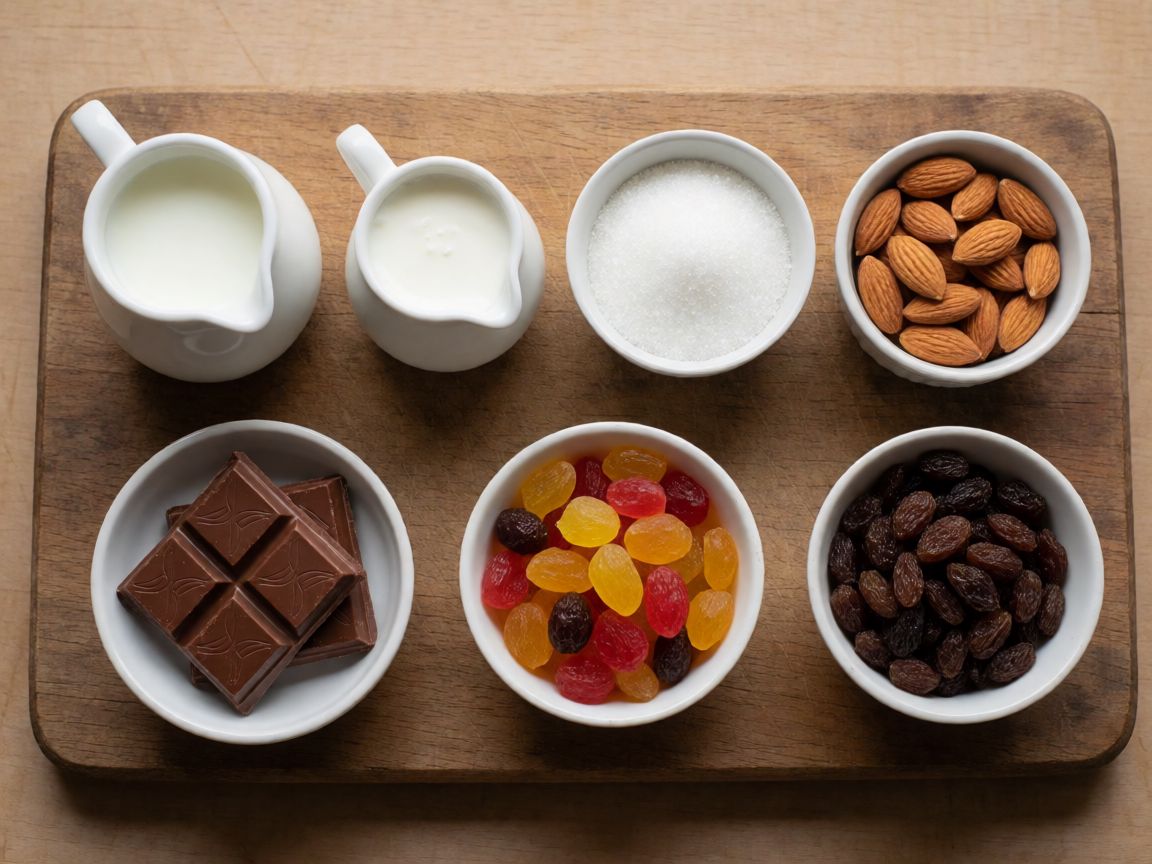
- 2 l Milk
- 1 l Whipping cream
- 450 g Caster sugar
- 300 g Almonds
- 200 g Milk chocolate
- 200 g Mixed candied fruit
- 200 g Raisins






Steps
Melt the sugar until caramelised, let it cool, then add the milk and cook until the mixture turns into a custard.
10 minChill the custard in the fridge.
30 minWhip the cream halfway, until it reaches a soft, semi-liquid consistency.
5 minAdd all the other ingredients to the torrone mixture, then gently fold in the cream at the end.
5 minPour the mixture into moulds and place in the freezer to set.
Slice and serve with caramel sauce and a dollop of whipped cream.
Forget the Christmas-cracker image of nougat you need a hammer for. This is that same festive flavour - almonds, milk chocolate, candied peel, raisins - frozen into a soft block you slice like a terrine. The trick, and it is a trick, is that it borrows the taste of proper torrone without the hour of whisking honey and egg white over a water bath. Someone worked out you can get the same mouthful from a milk custard set hard in the freezer, studded with the same sweet shrapnel. That's the economics of the whole dish: festive flavour, summer method, no stove-side vigil, no oven at all.
What decides whether it holds together or turns into a watery brick comes down to three moments. First, the caramel - you want it the colour of strong tea, off the heat and allowed to stop seething before the milk goes in, warm still, never stone cold, or it seizes into a shard that refuses to dissolve. Second, the custard here has no eggs in it at all - the body comes purely from reducing two litres of milk down with that caramel until it coats the back of a spoon like a thin dulce de leche. Push that reduction with fierce heat to save time and the milk catches on the bottom of the pan before it ever thickens properly, and you taste burnt long before you taste caramel - patience here isn't a virtue, it's the only thing standing between you and a scorched pan. Third, how and when you fold in the cream, which is where most people lose the word "soft" from soft torrone.
Your freezer is not a blast chiller, and that's worth saying plainly rather than pretending otherwise. A loaf tin lined with cling film, or any old plastic tub that fits in the freezer door, will do as a mould - but the middle of a dense block like this takes real time to go from slushy to sliceable, longer than any stated time implies. Treat the freezer stage as a lower bound: cut into the centre before you trust it. If it gives like firm fudge under the knife, it's set. If it's still wet or grainy in the middle, it isn't, and no amount of wishing changes that.
On the nuts: almonds hold their bite even frozen solid, which is the actual job they're doing here - texture against the smooth custard, not just flavour. The criterion for a substitute is the same: a nut firm enough to resist the teeth once frozen through. Hazelnuts or pistachios pass that test; cashews don't, they go soft and lose the point of being there.
Milk chocolate is doing a similar job in miniature pieces through the block. The criterion for any chocolate here is simple - it should snap cleanly when you break it, not bend. That tells you it has real cocoa fat in it and will stay as distinct, slightly brittle flecks in the freeze rather than smearing into the custard.
Candied fruit and raisins are the part of this recipe most British kitchens already have an answer for without buying anything new - the mixed peel and glacé cherries left in the back of the cupboard after Christmas baking are exactly what torrone was built around in the first place. Candied citron and orange peel were, centuries back, a way of showing off that you could afford imported citrus and sugar; now it's the bits nobody finished off the Christmas cake. Raisins can become sultanas, chopped dried figs, whatever soft dried fruit you have - the criterion is that it stays bitable once frozen, not that it's a specific fruit. A dried fruit gone hard as a pebble in the bag will stay hard as a pebble in the block.
Caster sugar melts evenly for the caramel because the grains are fine; granulated sugar works too, it just melts in patches, so swirl the pan more or you'll get scorched crystals sitting next to unmelted ones. For the cream, double cream is a perfectly good stand-in for whipping cream and arguably easier to control at the half-whipped stage - its higher fat content makes it more forgiving if you go a few seconds too far before it tips into butter. And no, you don't need an ice-cream machine anywhere in this - that's a separate myth worth killing. Churning exists to keep ice crystals small as something freezes; here the fat in the cream, the sugar in the custard, and frankly the sheer amount of nuts and dried fruit do that job by interrupting the freeze physically. That's also why the result has the slightly chewy, not perfectly smooth character of actual torrone rather than gelato - it's meant to, not a failure of equipment.