
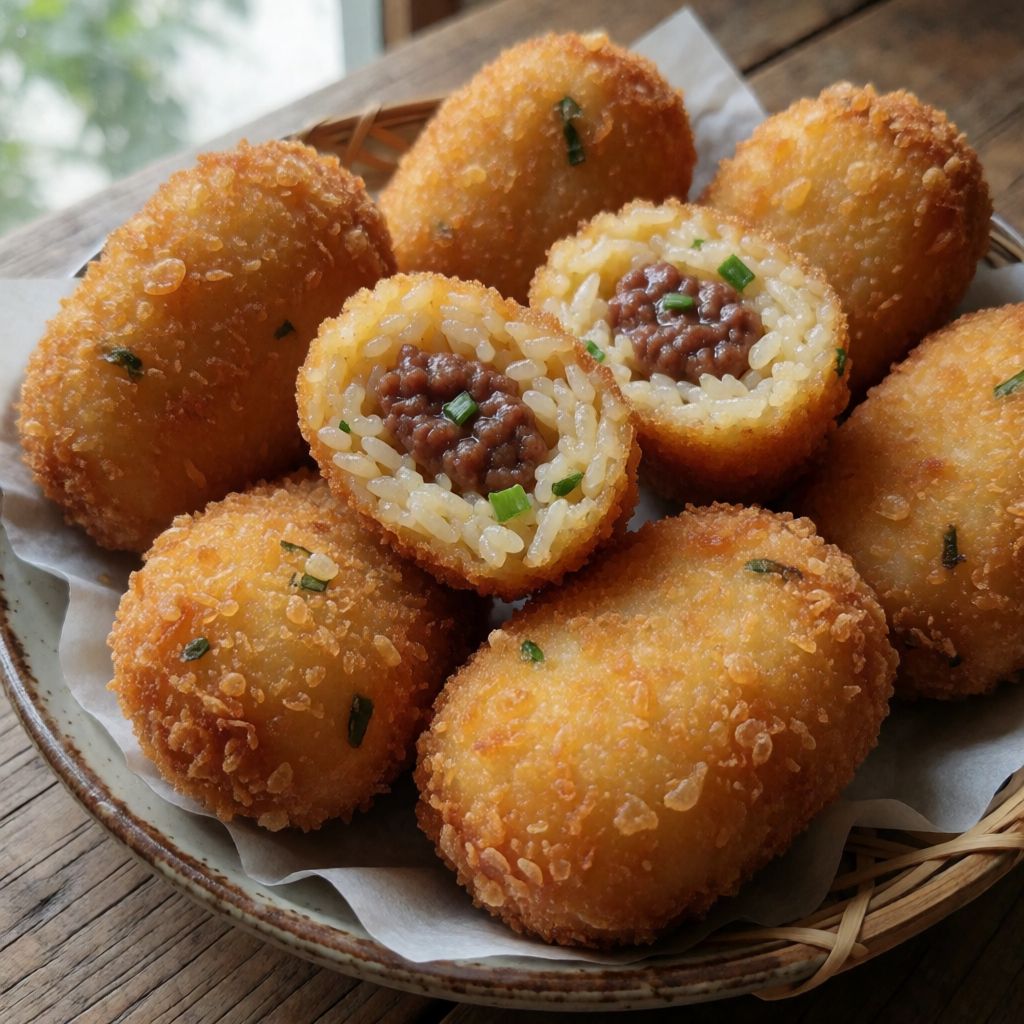
 AI photo
Rice Suppli
Crisp fried rice balls with a melting mozzarella centre, made from a slow-cooked tomato and meat ragù.
Labels are worked out automatically from the ingredients and can be wrong. Check the packaging if it matters to you.
Ingredients
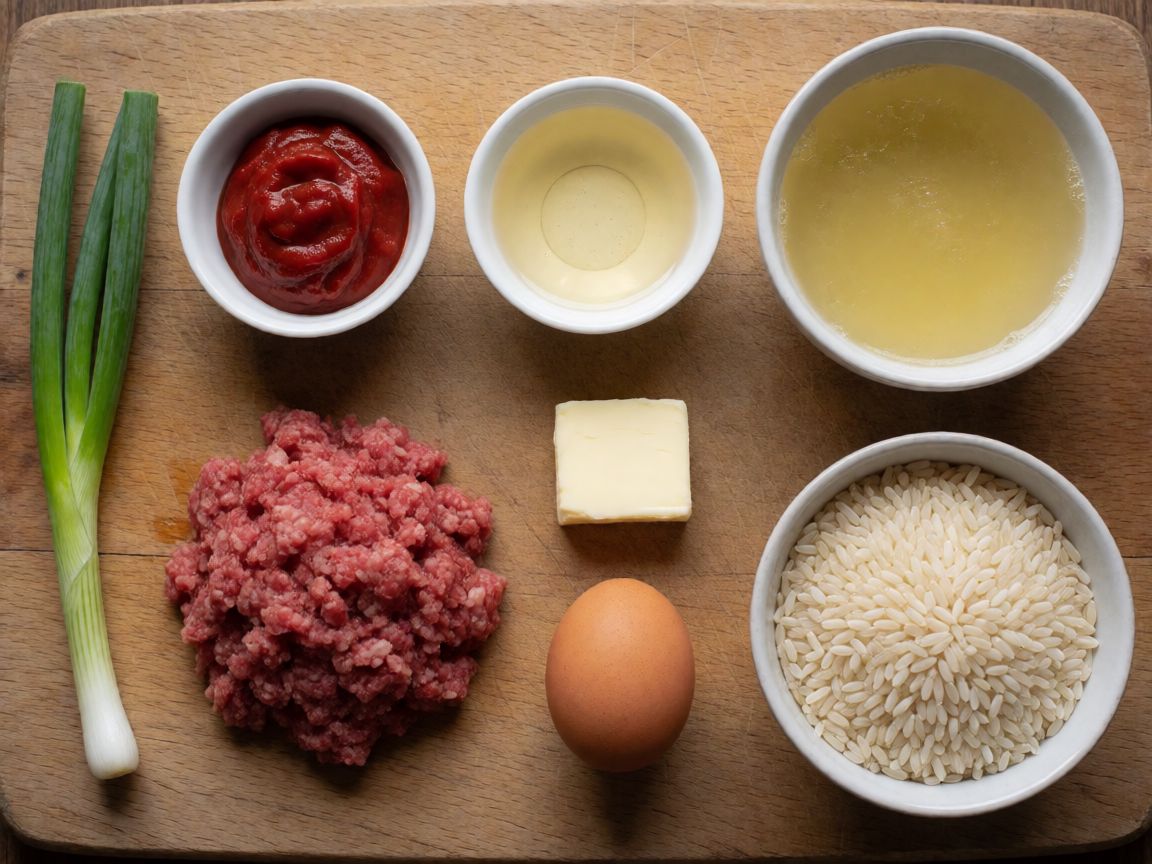
- 150 g Mixed minced beef and pork
- 1 pcs Spring onion
- 300 ml Tomato passata
- 50 ml White wine
- 1 pcs Butter a knob
- Salt to taste
- Vegetable stock to taste
- 250 g Risotto rice
- 1 pcs Eggs
- 40 g Pecorino Romano
- 180 g Mozzarella or provolone
- 2 pcs Eggs
- Breadcrumbs to taste, dried
- Groundnut oil to taste












Steps
In a saucepan, melt the butter and fry the chopped spring onion until soft.
Add the minced meat and fry on high heat until browned, then pour in the white wine and let it evaporate.
Add the tomato passata. Cook the sauce for about 30 minutes on low heat with the lid on. Ready when it reaches 71°C inside.
Add the rice. Cook the rice to tenderness, gradually adding a ladleful of hot vegetable stock at a time, as for a risotto.
Remove from the heat and stir in the pecorino until smooth. Stir the rice in the pan from time to time with a spatula.
After 10–15 minutes, tip the rice into a wide, shallow bowl. Add the egg and mix until smooth.
12 minTake a handful of rice and shape into a suppli by hand, pressing a dent in the centre for the mozzarella.
Shape the suppli by rolling the rice between your hands into a slightly oval shape.
Roll the suppli first in beaten egg, then in breadcrumbs.
Fry two or three suppli at a time in a deep pan of groundnut oil at 180°C until golden.
Drain on a paper towel to remove excess oil. Serve hot.
Suppli are Rome's answer to the question "what do we do with yesterday's ragù and rice." Fried, golf-ball-to-egg-sized, and when you pull one apart the mozzarella inside stretches into a thread — that stretch is called "al telefono," because it looks like an old telephone cord strung between the two halves. If the cheese doesn't stretch, you've either used the wrong cheese or fried it wrong. Both are fixable, and I'll tell you how.
What decides whether this works isn't the frying — it's two things that happen long before the oil is hot: how wet the rice is when you shape it, and how cold the mozzarella is when it goes in. Rice that's too loose won't hold a ball; it'll collapse into the oil and leave you with a ragù-flavoured soup and regrets. Mozzarella that's warm and wet will bleed its whey into the rice as it fries, and instead of a clean stretchy pull you get a soggy centre and a suppli that bursts.
The base is a risotto, but a risotto with a job to do, not a dish in itself — it's cooked a shade firmer than you'd want to eat on its own, because it still has to be shaped, breaded, and fried, and a risotto cooked to perfect creaminess will never hold its shape in hot oil. This is also why day-old rice works even better than fresh: some say suppli must be made with fresh risotto — no, because the whole dish was invented to use up rice that had sat in the fridge overnight and gone firm and sticky, which is exactly the texture you want.
Start with the ragù, because it's the flavour engine and everyone skips past it to get to the frying. Mixed beef and pork mince, not lean beef alone — the pork brings fat that beef mince in the UK (often sold quite lean, 12–15%) doesn't have enough of, and that fat is what carries flavour into the rice later. Fry it hard, on real heat, until it browns and the pan floor goes dark and sticky — that colour is the meat's own sugars catching, and it's where half the savouriness of the finished sauce comes from. If you only "cook it through" without that colour, the ragù tastes of boiled mince, not of anything.
The wine isn't for taste so much as for cleaning: it lifts that browned, stuck-on residue off the pan and dissolves it back into the sauce, and it needs to actually evaporate — if you can still smell raw alcohol, the sauce will taste sharp and thin later. Thirty minutes on low with the lid on isn't a magic number, it's how long it takes passata to stop tasting like tinned tomato and start tasting like sauce; the sense-cue is that it goes from bright red and watery to a darker, matte, slightly jammy look, and a spoon dragged through leaves a track that doesn't immediately flood back.
The rice itself must be a risotto variety — Arborio, Carnaroli, Vialone Nano, whatever your shop stocks — because these are starchy, short-grain rices that release amylose as they cook, and that starch is the glue holding your suppli together once it's shaped. Long-grain or basmati will not do this job; it stays separate and your suppli falls apart in the oil. Add the stock a ladle at a time and let the rice drink each ladle before adding the next — this isn't ritual, it's how you control the rice's hydration instead of flooding it, and flooded rice never develops that glue-like starch properly.
Pecorino goes in off the heat so its fat doesn't split in the residual heat of the pan — stir it through while the rice is still hot but not boiling, and it should melt into a sheen, not go stringy and separate. If pecorino's too sharp or you can't get it, parmesan works as a straight swap; the criterion is a hard, salty, aged grating cheese, not a particular brand name.
Letting the rice sit 10–15 minutes before mixing in the raw egg matters more than it looks: hot rice would half-cook the egg on contact, turning it lumpy instead of binding smoothly through the mix, and an unevenly bound mix is exactly what gives you suppli that crack open in the fryer. The egg is binder, not flavour — once it's in, the rice should look slightly glossy and hold together when you squeeze a handful, not crumble apart.
For the mozzarella centre: use a block type meant for cooking, drained and patted properly dry, not the wet fresh ball sold floating in its own liquid for salads — that extra moisture is exactly what turns your centre watery instead of stretchy. Provolone is the honest substitute, slightly firmer and less watery to start with, which if anything makes shaping easier for a first attempt. Press your dent deep enough to bury the cheese completely in rice — any cheese touching the surface will find the breadcrumb coating's weak point and leak out as it melts, and that's usually the real cause of a "burst" suppli, not bad luck.
For frying, you want a deep pan with enough oil to submerge the suppli — in an ordinary flat without a fryer, a decent-sized saucepan and a thermometer or a cube of bread (it should sizzle and colour steadily, not instantly blacken) are how you judge 180°C honestly, since most domestic hobs won't hold a dial-set "medium-high" at a stable number the way a gas ring in a Roman kitchen might. Groundnut oil is chosen for having no flavour of its own and a high smoke point; any neutral oil that can take real heat without smoking does the same job — sunflower or a plain vegetable oil, not olive oil, which will smoke and turn bitter at this temperature and was never cheap enough in Rome's history to fry in bulk anyway, which is half of why this is an oil-fried, not olive-oil-fried, dish.
Frying only two or three at a time isn't fussiness — drop in too many and the oil temperature collapses, and a suppli sitting in oil that's dropped to 140°C just soaks up fat instead of sealing its crust, giving you a greasy, pale result instead of a crisp golden one. Patience here is the ingredient that actually matters: rushing the batches undoes everything the ragù and the rested rice built up to that point. Eight people, roughly one or two suppli each as a starter, more if this is the whole meal — and they're better eaten hot, within minutes of the paper towel, while that cheese is still a thread and not a set lump.