
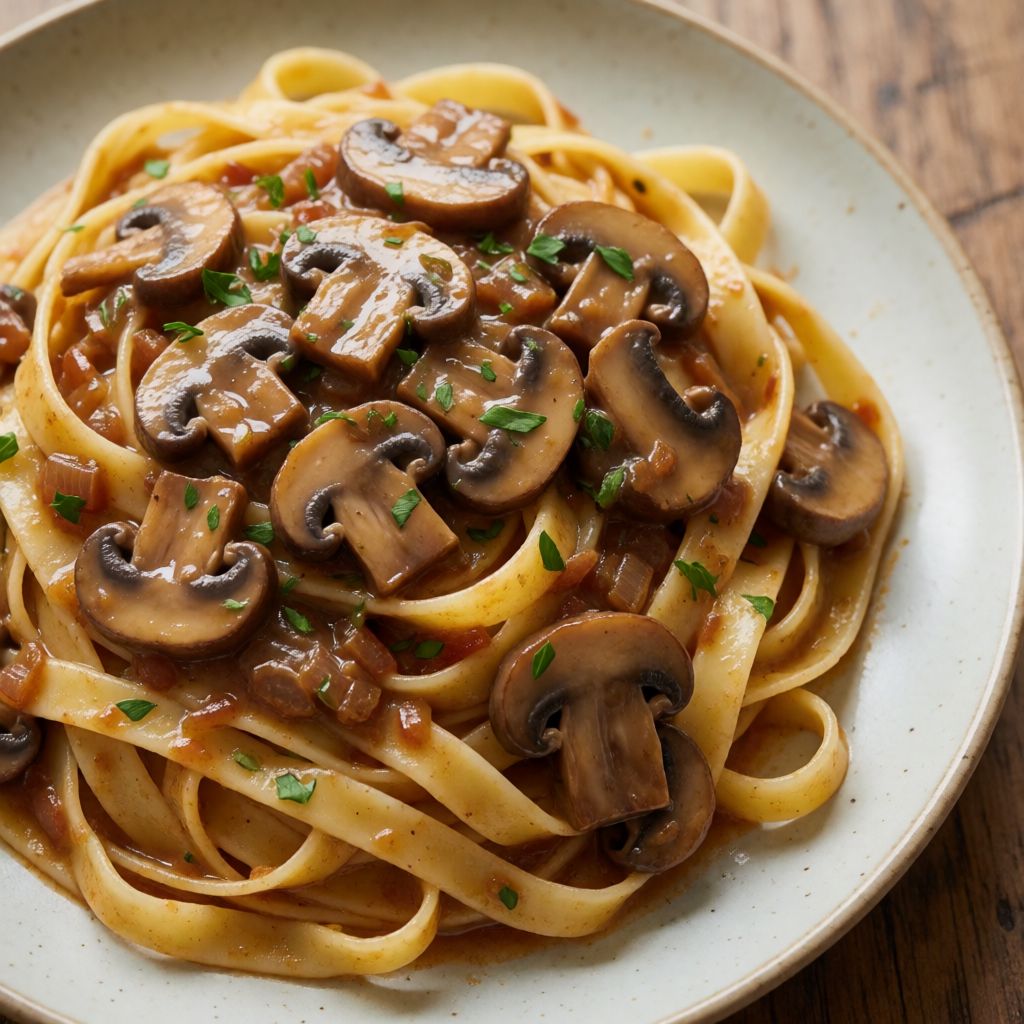
 AI photo
Tagliatelle with Mushrooms
A simple pasta dish with mixed mushrooms, a hint of tomato and white wine, finished with fresh parsley.
Labels are worked out automatically from the ingredients and can be wrong. Check the packaging if it matters to you.
Ingredients
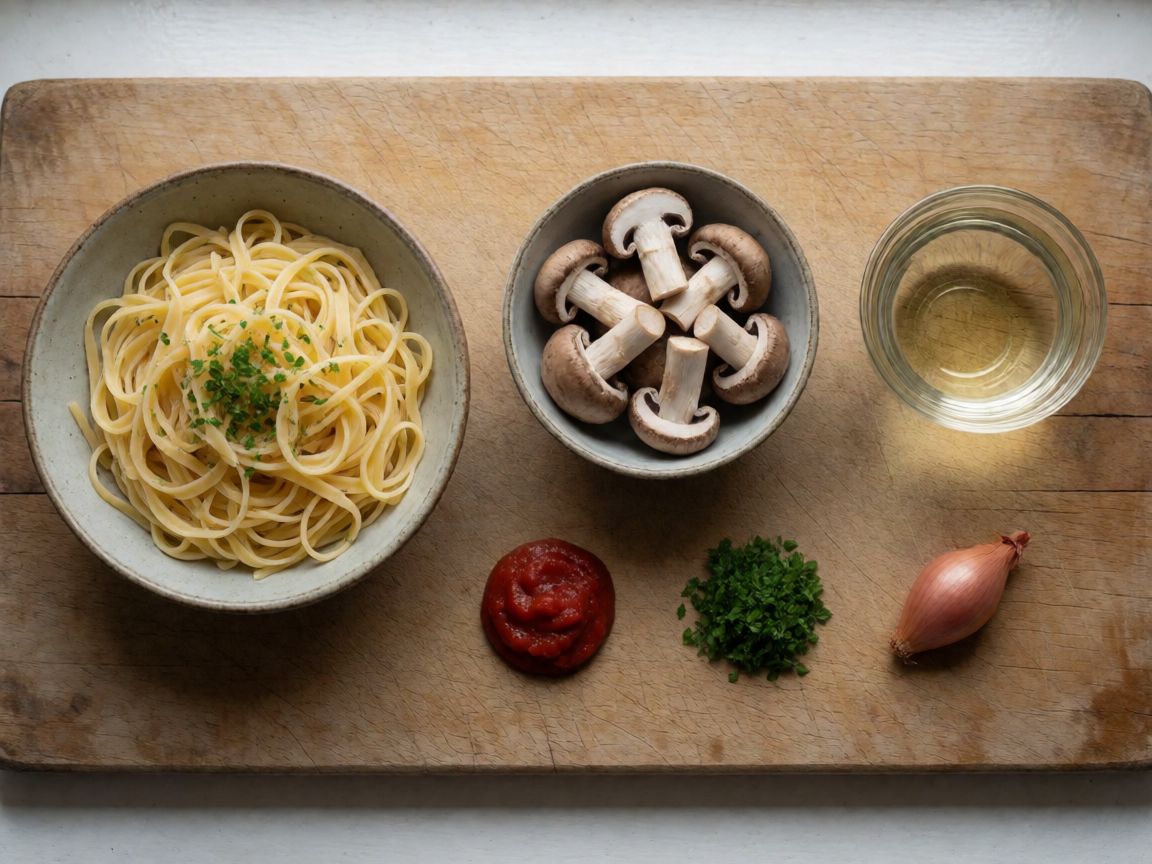
- 250 g fresh tagliatelle
- 450 g mixed mushrooms
- 20 g tomato purée
- 1 bunch parsley
- 100 ml white wine
- 30 g shallot
- 1 tbsp olive oil for frying
- 1 pinch salt to taste





Steps
In a non-stick pan with a little olive oil, fry the shallot until golden.
5 minAdd the mushrooms, after rinsing, cleaning and cutting them into small pieces or thin slices.
5 minPour in about 100ml of white wine and let it evaporate, stirring.
3 minAdd salt to taste and the tomato purée, mixing well.
2 minAdd finely chopped parsley.
1 minCook the tagliatelle in salted boiling water until done.
8 minDrain the pasta, keeping a few tablespoons of the cooking water, and transfer it to the pan with the mushrooms.
1 minOver low heat, gently stir so the sauce coats the pasta evenly.
2 minServe garnished with parsley leaves.
This is not really a sauce poured over pasta — it's mushrooms cooked down into something thick enough to cling, with tomato purée doing almost nothing except deepen the colour and round off the edges of the mushroom liquid. Call it a ragù if you like the word; the Italians who make this every week in fifteen minutes don't bother with the word at all.
What decides whether it works is not the pasta, it's what happens in the pan before the pasta ever touches it. Mushrooms are mostly water held inside cells. Heat them hard and fast in a little oil and that water runs out and hisses away, leaving behind browned, concentrated flavour. Heat them gently, crowd them, or add them to a pan that's already wet, and they steam in their own juice instead — you get grey, slippery, flavourless mushroom instead of something with a bit of chew and a savoury edge. So the fry in steps one and two isn't a formality. It's the whole dish deciding its character in about ten minutes.
The wine isn't there to get you tipsy or to make the dish "fancy" — some people think the alcohol has to fully cook off before you're allowed to eat it. No: what you're actually doing is using the acid in the wine to cut through the sweetness the shallot and mushrooms have built up, and using the heat to drive off enough liquid that it concentrates instead of just thinning everything out. You'll see it happen — the pan goes from wet and sloshing to glossy and tightened, and that's your cue, not a clock.
Mushrooms, 450g mixed — the word "mixed" is doing real work here. One variety of mushroom, especially the watery, mass-grown button kind, gives you volume without much character. Mix in something firmer and more flavourful — chestnut mushrooms, oyster, a few dried porcini soaked back to life in hot water (keep that soaking liquid, it's free flavour, use it instead of some of the wine) — and you get texture as well as taste: some pieces holding a bite, some collapsing into the sauce. On washing them: some say never wash a mushroom, it drinks the water like a sponge and goes soggy. No — a quick rinse and a proper dry with a cloth or paper towel does nothing of the sort in the few seconds it takes. What actually ruins mushrooms is adding them to the pan still wet and crowded, so they can't shed their own liquid fast enough. Dry them, give them room in the pan — your hob ring is not a restaurant burner, so don't ask one domestic pan to do the work of a wok over a flame three times as strong. If your pan is small, fry the mushrooms in two batches rather than one overloaded one.
Shallot, 30g — fried first and alone, in oil, until it turns gold, not brown. This isn't decoration, it's the sweet backbone the rest of the dish leans on. Shallot is gentler and sweeter than onion, which is why it's chosen over the bigger, sharper vegetable for a dish this quiet — but if you've only got onion, use less of it, finely chopped, and give it the same patience: gold, not caramel-brown, because past that point it turns bitter and fights the mushrooms instead of supporting them.
Olive oil, a tablespoon, for frying — the amount tells you its job is to carry heat and a little flavour, not to make a pool of sauce. Any oil with no strong smell of its own will do the frying job; but olive oil also leaves its own quiet flavour behind, which suits this dish, so don't swap it for something neutral unless you have to.
Tomato purée, 20g — a small, concentrated amount, not enough to call this a tomato sauce. Its job is to deepen colour and add a background savouriness, nothing more. If you only have whole tinned tomatoes, you'd need to cook far more of them down to get the same concentrated effect — a different, wetter dish. A spoon of sun-dried tomato paste gets you closer to the same job than fresh tomato ever will.
White wine, 100ml — any dry white works; what matters is acid, not vintage. No wine in the house, no problem of principle: a splash of water with a little lemon juice does the acid-and-liquid job, just without the particular flavour wine leaves behind.
Parsley, a bunch, split between stirred-in (chopped, for flavour) and whole leaves scattered at the end (for freshness and a bit of brightness that cooking would kill). Dried parsley isn't a substitute here, it's an omission — it has none of the sharp, grassy smell that's the actual point of using it fresh.
On the pasta itself: fresh tagliatelle is not dried pasta, and the clock in the recipe is a floor, not a verdict. Fresh pasta cooks fast because it hasn't been dried out — taste a strand well before the stated time is up, and judge by bite, not by minutes: it should have give, not crunch, and shouldn't yet feel soft all the way through. Overcook it even slightly and it goes from tender to pasty, because there's no dried structure left to hold it up once it's past done. That's patience working the other way — not waiting longer, but checking sooner. Four people, one portion of pasta each roughly palm-to-palm-and-a-half in dried weight terms, mushrooms by the generous handful — nobody's starving off this dish, but nobody's left hungry either.