
 AI photo
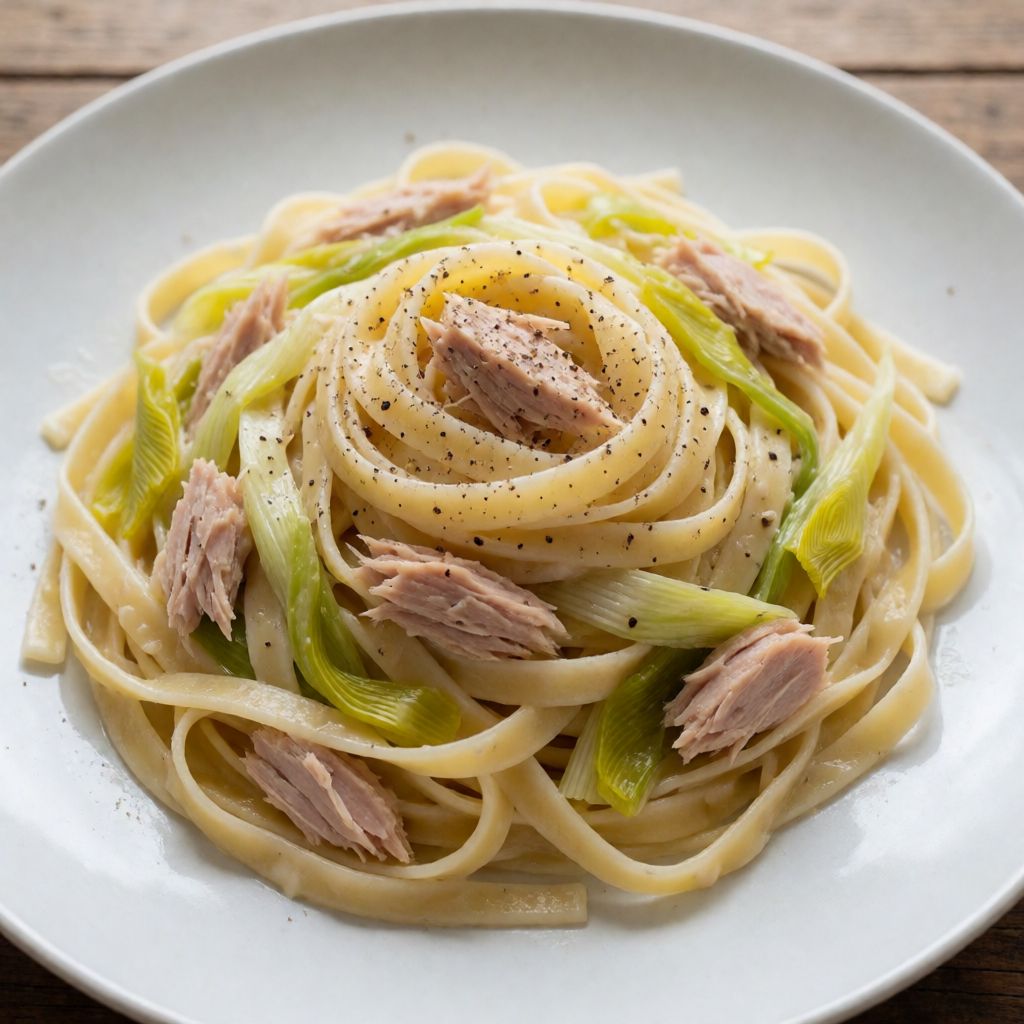
Tagliatelle with Tuna and Leek
A quick pasta dish of tagliatelle tossed with tuna, leek and a splash of white wine.
Labels are worked out automatically from the ingredients and can be wrong. Check the packaging if it matters to you.
Ingredients
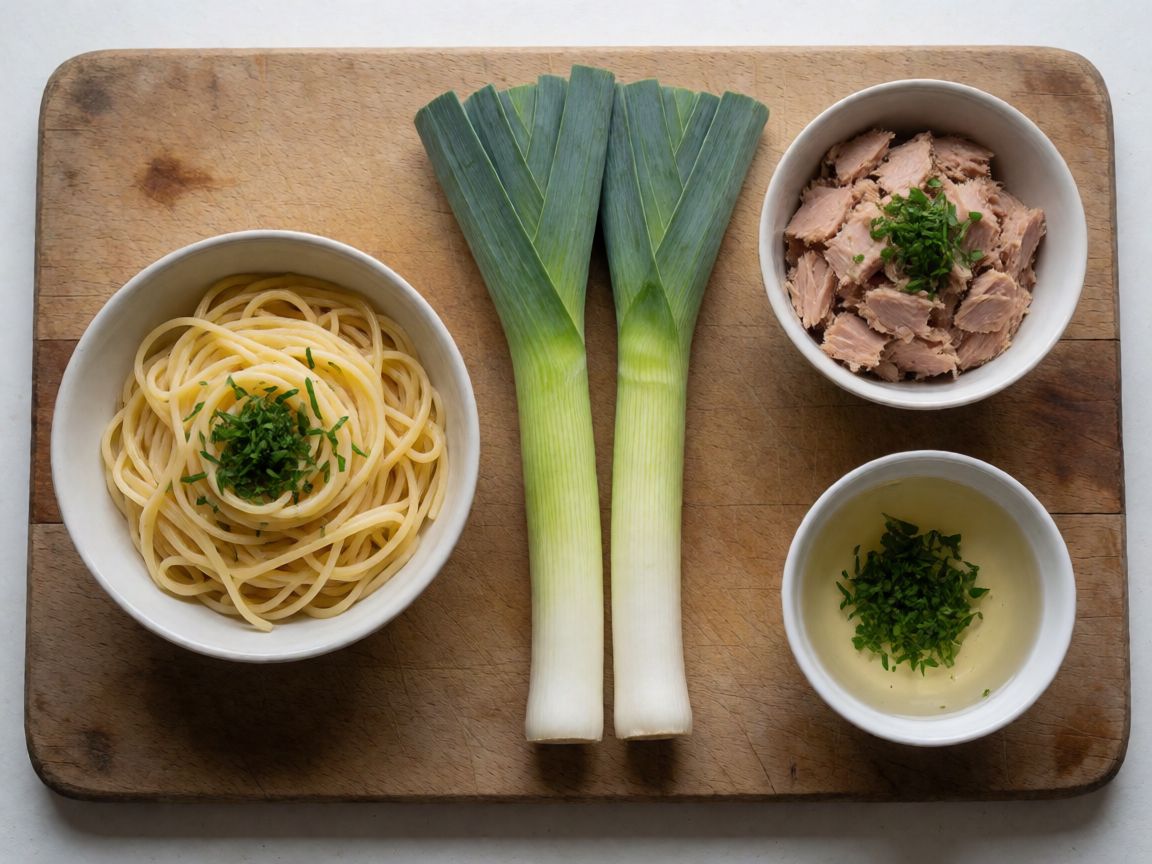
- 400 g Tagliatelle
- 2 pcs Leek
- 180 g Tuna
- Salt to taste
- Black Pepper to taste
- 2 tbsp Olive Oil
- 8 tbsp White Wine
- Parsley to taste







Steps
Heat the olive oil in a pan and sauté the thinly sliced leek until soft.
5 minAdd the drained and flaked tuna, stirring it together with the leek.
2 minPour in the white wine and let it evaporate.
3 minCook the tagliatelle in salted boiling water until tender.
10 minDrain the pasta and toss it into the pan with the sauce, season with black pepper and a generous handful of parsley.
2 minStir well and serve immediately.
This is a weekday pasta, not a showpiece — the kind you make when the fridge has little in it but a tin of tuna and a couple of leeks still look respectable. What decides whether it works is restraint: nobody here is trying to make tinned tuna taste fresh-caught, or leek taste like candy. The job is to let the leek melt into sweetness without colour, let the tuna and wine lean into each other, and let the pasta water do the one piece of "sauce-making" this dish allows itself — there's no cream, no butter, no flour anywhere near it.
The leek is the quiet half of the dish. Sliced thin and given oil and gentle heat, its cell walls break down and it turns soft and pale gold, giving off sugar instead of the sharp onion smell you'd get from a raw bite. Some say leek has to be fried until it catches brown at the edges for "flavour" — no, because that's exactly where bitterness starts, and in a dish this bare, bitterness has nowhere to hide.
The tuna doesn't actually cook here — it's already cooked, sealed in its tin months ago. What you're doing is warming it through and coaxing it to give up a little of its own oil into the pan, so it marries the leek instead of sitting on top of it like a garnish. The wine goes in to answer the tuna's fattiness with acid, and to carry off the raw alcohol smell while keeping the sharpness it leaves behind.
Start with the pasta water, because a domestic hob is the real limiting factor here, not the recipe. A single ring heating a big pot of water from cold is slow — faster to fill the pot from a boiled kettle and only then set it on the heat. Salt it properly, enough that it tastes like the sea and not like an afterthought; that salt is going into the pasta itself, there's no second chance to season it later. You don't need a lid that fits — a plate balanced over the pot holds the heat in well enough while the leek has its turn in the pan next to it.
Leek: buy it young if you can tell, meaning not fat and woody. Slice it into thin rounds, white and pale green together, and wash the grit out from between the layers first — it hides there, and no amount of cooking removes dirt, only heat removed from underneath it. If you have no leek, a mild onion sliced thin will do, but it will push harder and sweeter where leek would have stayed gentle; that's the trade, not a failure.
Tuna: a standard UK tin runs close to this weight, which tells you the dish was built around the tin, not around a fish counter. Oil-packed tuna gives the pan a little more richness and holds together in flakes; water-packed is leaner and drier, and if that's what you have, let it sit a beat longer with the leek so it can take up some of that olive oil instead of fighting it. Either way, drain it properly — any liquid left in is extra water you didn't ask for, and it will thin the sauce at the exact moment you need it to cling.
Wine: dry and white, nothing sweet, because its job is acid against fat. Three minutes won't drive off "all the alcohol" — that's not really possible in a wide pan on a home hob, and it isn't the point. The point is losing the raw, sharp smell while keeping the sourness that cuts through the tuna's oiliness. No wine in the house — a squeeze of lemon with a splash of water and a touch more oil gets you the acid without the aroma; you lose something, but not the dish.
Olive oil here isn't a neutral cooking medium, it's doing half the flavour work alongside the wine, so don't reach for a bland oil out of habit — if you must substitute, pick something with its own character, not an odourless one, or the dish goes flat. Parsley goes in at the very end, off the heat, chopped rough and added generously: a herb cooked even briefly loses its own smell and just turns green and tired, so treat it as a finish, not an ingredient you cook with.
And even though the whole thing takes twenty minutes, patience still belongs in it — mostly in those first five with the leek. Turn the heat up to hurry it and you'll get colour and bitterness instead of sweetness. There's nothing else in this dish rich enough to cover for that mistake.