
 AI photo
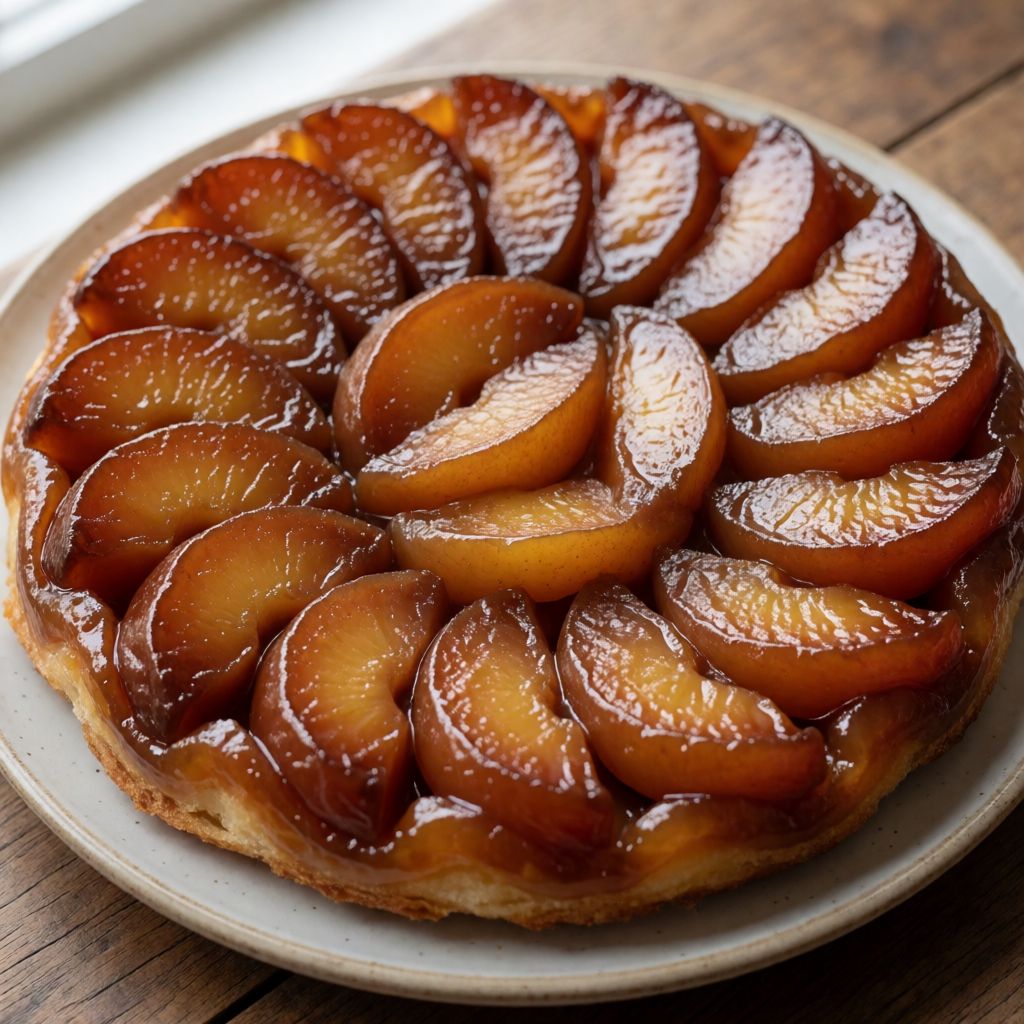
Tarte Tatin
A classic French upside-down caramelised apple tart, baked under a buttery pastry crust.
Labels are worked out automatically from the ingredients and can be wrong. Check the packaging if it matters to you.
Ingredients
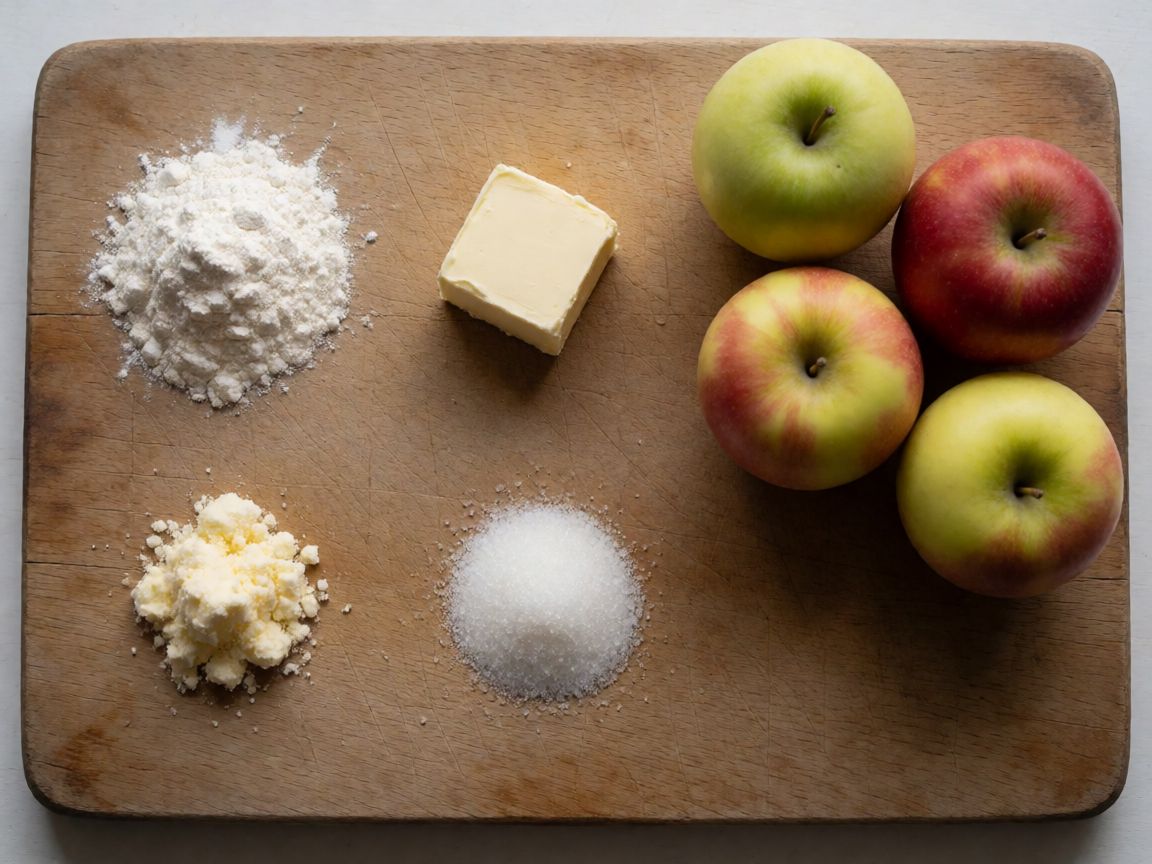
- 150 g Plain flour
- 75 g Butter cold
- 50 ml Water
- Salt to taste
- 150 g Caster sugar
- 1-2 tbsp Water
- 60 g Butter
- 4 pcs Apple
- 1 tbsp Caster sugar
- 10 g Butter






Steps
Tip the flour onto the worktop, add the cold butter cut into cubes, the water and the salt. Work into a dough, shape into a ball and wrap in cling film.
Put the dough in the fridge.
30 minIn a saucepan combine the sugar and water, melt over the lowest heat, stirring, until a caramel forms.
Peel the apples, cut into quarters, then into wedges.
When the sugar turns a deep caramel colour, remove from the heat and add the room-temperature butter. Stir quickly.
Spread the caramel over the bottom of a buttered 22 cm tin. Arrange the apples on top.
Sprinkle with sugar and dot a few pieces of butter over the apples.
Take the dough from the fridge and roll it out on a floured surface. Cover the apples with the dough, tucking the edges in.
Bake the tart at 220°C.
35 minTake out of the oven and let it rest.
22 minTurn out onto a serving plate, cool slightly and serve.
Tarte Tatin is an upside-down apple tart, and the whole dish is really just one decision made twice: do you trust the caramel, and do you trust the apples to hold their shape against it. Everything else — the pastry, the tin, the oven — is scaffolding around that decision. Serves six, because a 22cm tin only has so much floor space for apple wedges, and this isn't a dish you stretch.
The story everyone tells is that it was made by accident, a farmhouse mishap at the Hôtel Tatin that somehow became haute cuisine. Maybe. What matters to you at the hob is this: it's a tart baked with the fruit on the bottom and the pastry on top, then flipped. That's not a stylistic choice, it's a mechanical one — the caramel sits under the apples, cooks them from below, and lacquers them, which a tart baked the "right way up" never gets.
What decides whether it works is the caramel. Too pale and it's just sweet water, no bitterness to cut the apple's sweetness. Too dark and it's ash — caramel crosses from "deep amber" to "burnt" in seconds once it's rolling, because sugar syrup carries almost no water left to buffer the heat. You're not watching a clock here, you're watching colour: pale gold, amber, then that reddish-brown edge where it still tastes of caramel and not of carbon. Pull it the moment you see that colour, because the pan's residual heat keeps cooking it even off the flame.
Start with the pastry, because it's the part people rush and shouldn't. Cold butter cubed into flour, bound with cold water — the point of the cold is that butter stays in solid flecks rather than melting into the flour. Those flecks, once in the oven, turn to steam and push layers of dough apart, so you get a short, flaky crust instead of a dense biscuit. Warm your hands working the dough and you've turned pastry into dough for bread. The fridge rest after shaping isn't decoration either — it lets the gluten relax after you've handled it, so when you roll it later it doesn't fight back and shrink on you mid-bake. Some say you can skip the chill if you're in a hurry. No — because then the butter's gone soft again and you're rolling a tart, not making one.
Butter: use an unsalted, ordinary butter for the pastry, because salted butter makes seasoning the dough a guess rather than a measurement. For the caramel and the apple layer, any butter with a clean, milky flavour works — this isn't the place for a fancy cultured butter with its own tang, because that tang is wasted once it's cooked into caramel at high heat.
Sugar and water for the caramel: plain caster sugar, nothing fancier. The water's only job is to help the sugar melt evenly before it starts to colour, so it doesn't catch and burn in patches while the rest is still clear. If your sugar seizes into lumps early on, it's because the heat was too high before it dissolved — this is why "lowest heat" matters, patience here is not optional, it's the only thing standing between caramel and candy glass.
Apples: you want a variety that holds its shape through baking — something firm-fleshed and a little tart, so the sweetness of the caramel has something to argue with. A soft, sweet eating apple collapses into sauce, and you lose the layered look when you flip the tin. If you're buying British, a Bramley alone is too sharp and too soft once cooked — it's bred for sauce, not for standing up in wedges. Something firmer alongside or instead gives you structure.
The tin matters more than it looks. A metal tin conducts heat fast enough that the caramel keeps working under the apples right up until it goes in the oven; anything with poor heat transfer and you get a pale layer that never properly caramelises against the fruit. Butter the tin not for flavour but so the set caramel releases cleanly when you turn it — skip that and half your caramel stays glued to the metal instead of glossing the apples.
The rest at the end, after baking, is not laziness — it's the caramel re-setting slightly so it clings to the apples instead of running off them in a puddle the second you tip the tin. Turn it out too soon and you get a tart swimming in its own syrup rather than one wearing it.