
 AI photo
Chai Latte
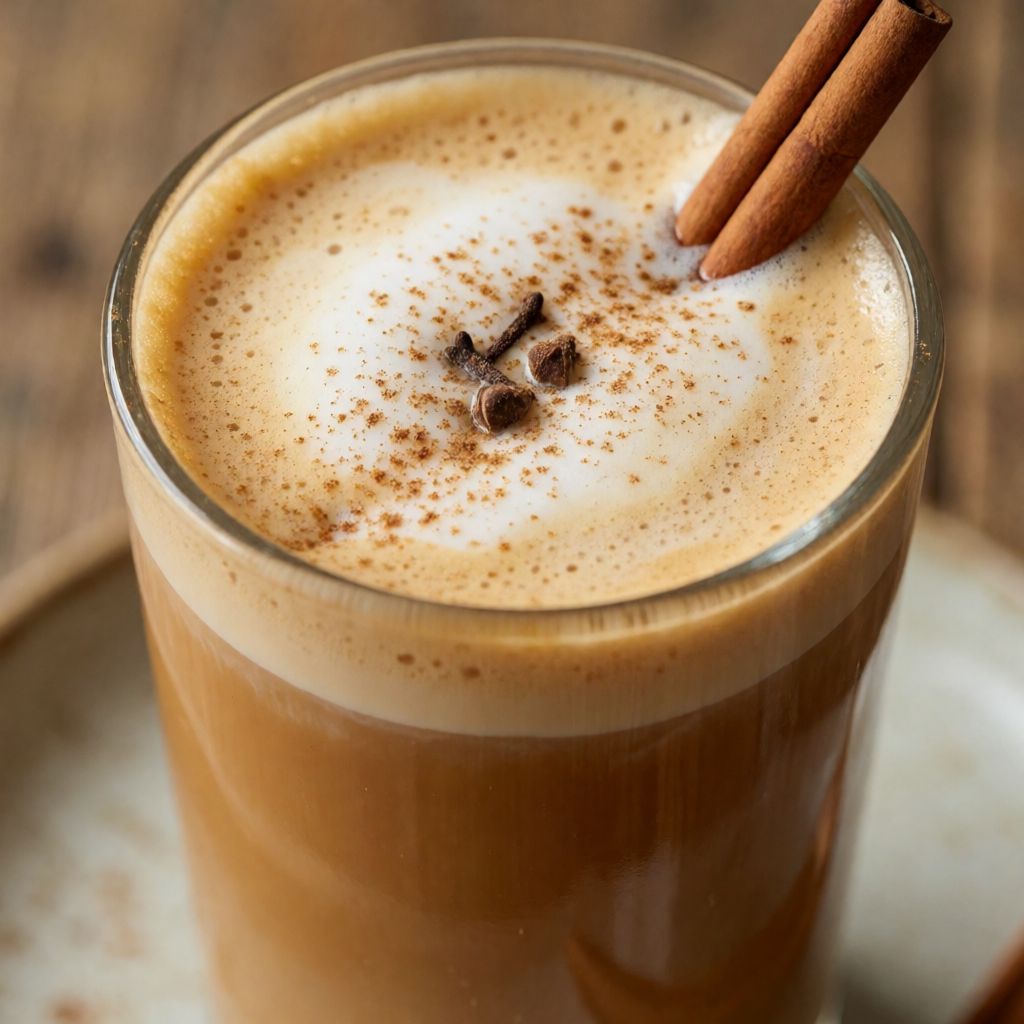
A warming spiced milk tea, brewed with cardamom, cloves, pepper and cinnamon, then topped with frothed milk.
Labels are worked out automatically from the ingredients and can be wrong. Check the packaging if it matters to you.
Ingredients
- 5 pcs Cardamom pods
- 3 pcs Cloves
- 3 pcs Black pepper peppercorns
- 2 pcs Cinnamon sticks
- 10 g Ginger thinly sliced
- 1 tsp Sugar
- 100 ml Water
- 2 tbsp Tea
- 300 ml Milk warm, preferably frothed
- 1 pinch Cinnamon ground, mixed with a little sugar










Steps
Crush the cardamom pods and remove the black seeds.
Toast the cardamom seeds with the whole cloves and peppercorns in a dry, hot pan for 2–3 minutes, shaking the pan frequently.
3 minTransfer the spices to a mortar and crush them well.
Put the crushed spices, cinnamon stick, ginger, sugar and water into a small saucepan and bring to the boil.
Remove from the heat, add the black tea, stir well and let it infuse for 3 minutes.
3 minStrain the tea into a cup and add the warm milk (preferably frothed).
Sprinkle a pinch of cinnamon mixed with sugar on top before serving.
This is spiced tea stretched out and finished with milk, done as two separate jobs instead of one. Job one: pull flavour out of whole spices into water, the way you'd make a stock. Job two: steep tea in that spiced water. Job three: warm milk, frothed if you can manage it, poured in last. Keep those three apart and the drink works. Mix them too early — boil milk together with tea and spices, the way some home versions do — and you get a skin on top, a slightly curdled look, and a flat, stewed taste. That's milk protein meeting tannin and heat all at once; separating the stages is what stops it.
Some call this 'chai tea', as if chai were a variety. It isn't — chai just means tea, in Hindi as in half of Eurasia. What you're making is masala chai, spiced tea, rebranded 'chai latte' by coffee shops that needed a name for something milkier and sweeter than a builder's cup of PG Tips. Nothing wrong with that name, just don't expect a secret ingredient behind it.
Toasting the cardamom seeds, cloves and peppercorns dry, in a hot pan with nothing in it, is not decoration. Whole spices hold their aromatic oils locked inside; dry heat wakes them — you'll smell it change, a resinous, sharper note replacing the flat raw smell. That's your cue, not the clock: 2–3 minutes is the lower bound, done is when the kitchen smells of them. Crush them after toasting, not before — toast first to concentrate the oil, crush after to expose it, so it dissolves into the water rather than burning on the pan.
Cardamom: crush the whole pod and throw the green husk away — it's just a wrapper, all the oil sits in the little black seeds inside. Buy green pods, not the black ones sold as a cheaper 'cardamom', which are a different, harsher, smokier spice meant for savoury cooking, not tea. If you've only got ground cardamom, use a smaller pinch and skip the toasting step — it's already been exposed to air and lost most of what toasting would have woken up.
Cloves and peppercorns: toasted alongside the cardamom for the same reason, oil locked in a hard shell, heat and crushing let it out. Whole peppercorns give warmth, not real heat — don't swap in chilli, it changes the drink into something else. Cinnamon stick, not ground, goes into the simmering water directly: a stick releases slowly over several minutes of contact with hot liquid, which is exactly the time you've got here; ground cinnamon would dump all its flavour in the first thirty seconds and then go on to taste like dust.
Ginger: thin slices, skin on or off, your choice — the skin carries flavour too, just brush off the dirt. Fresh, not powdered: powdered ginger is a different compound profile entirely, sharper and one-dimensional, built for baking, not for simmering into a liquid.
The tea itself: you want a strong, plain black tea with body — Assam is the classic choice because it holds up under milk and spice without disappearing, builder's-tea bags will do if that's what's in the cupboard, but don't reach for anything delicate like Darjeeling or a flavoured tea — it'll be lost under the spice before it's even steeped.
Milk: warmed, not boiled, and frothed if you want the café look — a small whisk or even a jar shaken hard with the lid on does the job on a domestic hob, you don't need a steam wand. Whole milk froths better than skimmed because the fat holds the foam; a barista-style oat milk will froth too if you're avoiding dairy, but thin dairy-free milks mostly won't.
Sugar goes in twice — once into the simmering spice water, to balance the bitterness before it even meets the tea, and again on top, mixed with a pinch of ground cinnamon, for a last hit of aroma as you drink rather than a flavour cooked into the liquid. That's the whole point of a garnish like this: it's smelled, not just tasted. This proportion makes one proper mug — for more than one, scale the spices and water up together, but keep the tea steeping at the same three minutes regardless of how much liquid you've made; tea doesn't extract faster just because there's more of it waiting.