
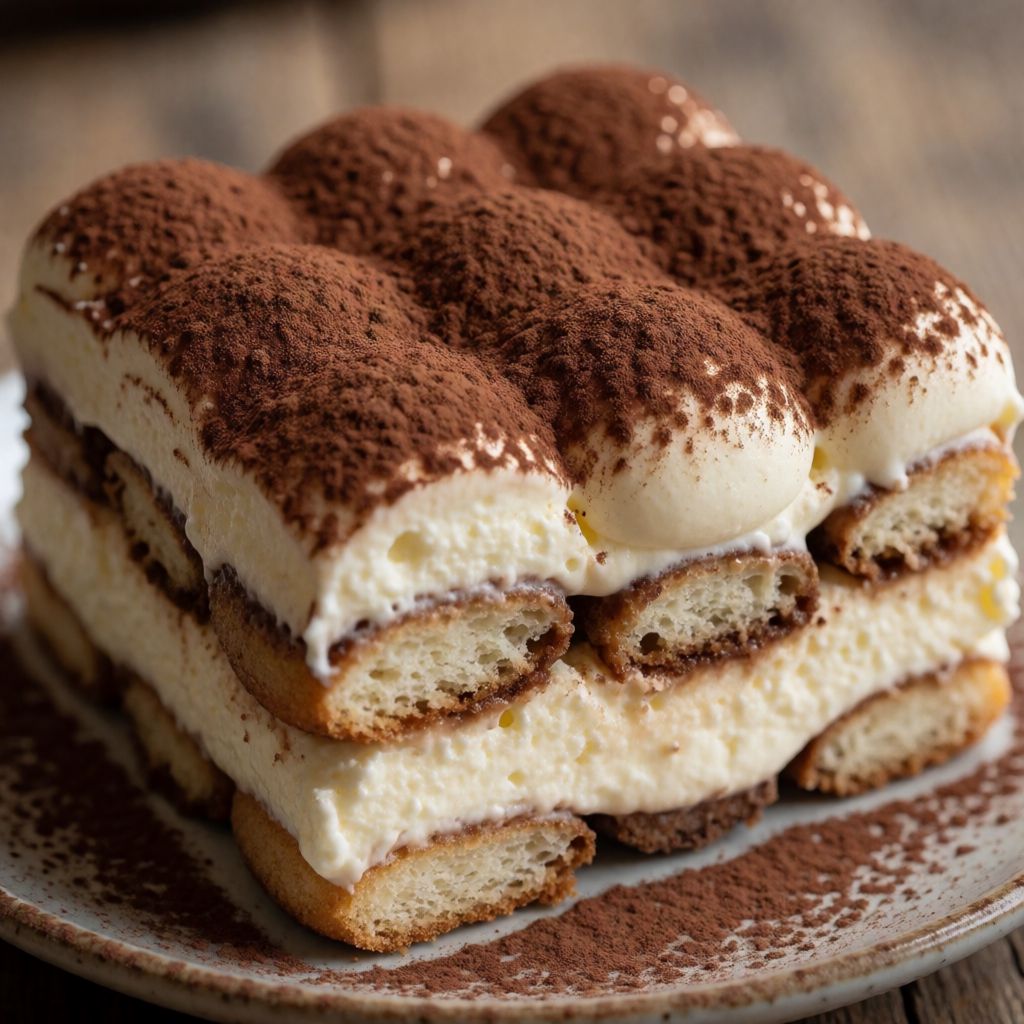
 AI photo
Tiramisu Without Mascarpone
A creamy tiramisu made with ricotta and yogurt instead of mascarpone.
Labels are worked out automatically from the ingredients and can be wrong. Check the packaging if it matters to you.
Ingredients
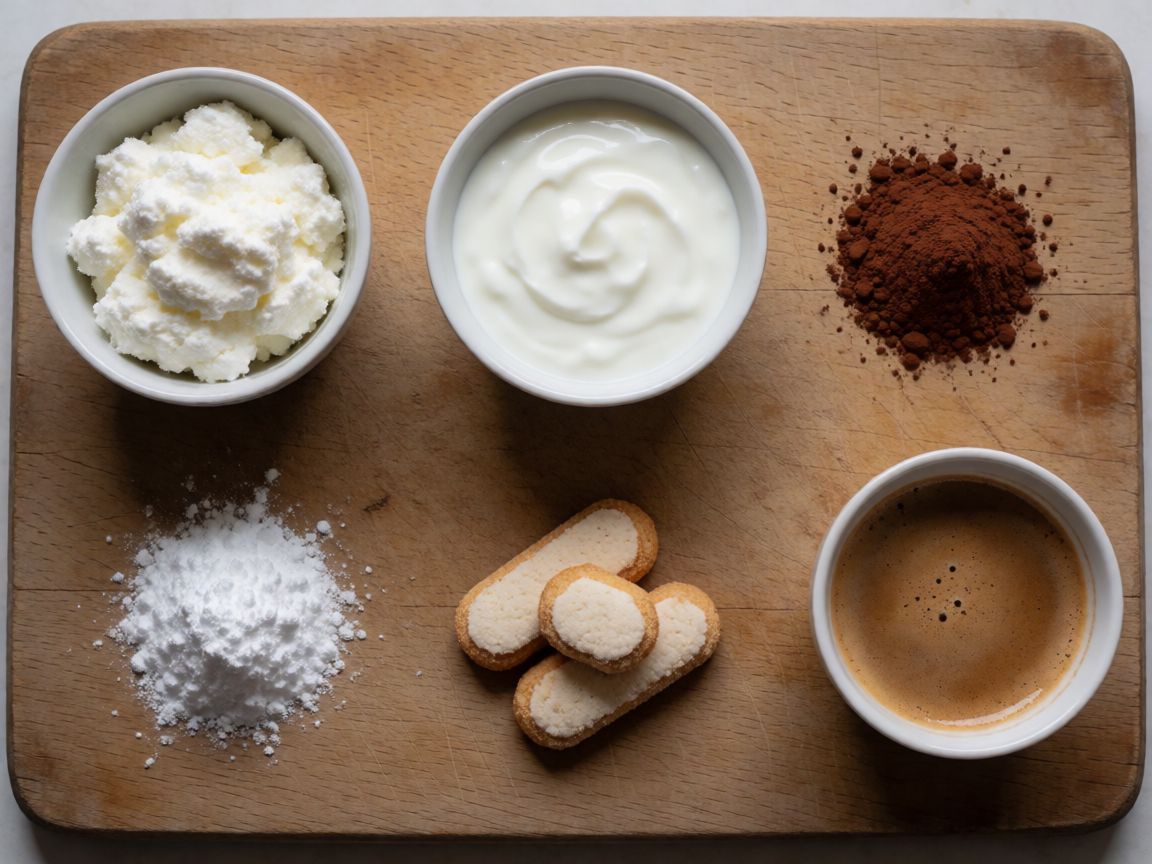
- 350 g Ricotta
- 200 g Yogurt
- 50 g Icing sugar
- 200 g Savoiardi biscuits
- Coffee to taste; use brewed coffee, enough for about 3 cups from a coffee maker
- Cocoa powder to taste






Steps
Whip the ricotta with the icing sugar using an electric mixer.
Add the yogurt and continue whisking until you have a smooth cream.
Brew the coffee and let it cool completely in a fairly large bowl.
Spoon a layer of the cream into the bottom of serving glasses or a baking dish.
Quickly dip the savoiardi biscuits into the cooled coffee and arrange them in a layer over the cream.
Cover with another layer of cream and repeat the layering until all the ingredients are used up.
Put the tiramisu in the fridge for at least 3 hours.
180 minBefore serving, dust the surface with cocoa powder, sifting it through a sieve.
This is tiramisu built on an economy argument, not a purity one. Mascarpone is just what the Veneto had in abundance — a local, cheap, high-fat cheese. Ricotta is what most people actually have in the fridge, or can get without hunting down an Italian deli. Swap one for the other and you haven't broken the dish — you've just changed its fat content, and that changes everything downstream: how smooth it whips, how firm it sets, how much tang it needs borrowed from elsewhere. That's what the yogurt is doing here — patching the gap mascarpone's fat would otherwise fill.
No eggs either. The classic build whips yolks with sugar into a custard-thick base, folds in whites for lift, and that's half of what gives tiramisu its wobble and its weight. Skip them — as this one does — and you trade some richness for one less worry: raw egg left unset in a cold dessert has been a real nervousness in British kitchens since the late eighties, and it's not irrational, it's just a risk some people decide not to take. The dish survives the trade. It just becomes a plainer, cleaner thing — closer to a set cheesecake filling than a mousse.
What actually decides whether this works: does the cream come off the whisk smooth, with no grain of ricotta left to feel on the tongue? Is the coffee stone cold before a biscuit goes anywhere near it? And did you give the whole thing real time in the fridge, not the "should be fine by now" twenty minutes? Those three things are the entire dish. Everything else is assembly.
Ricotta first. Buy the firmer kind sold in a block or tub marked ricotta, not a loose spreadable cheese labelled similarly — the wetter it is, the more water you're adding to a dessert that needs to set, not pool. If what you've got looks watery, tip it into a sieve lined with a paper towel over a bowl and let it sit in the fridge an hour before you start; that water has to leave the cheese before it goes in, not after, because once it's mixed with sugar and yogurt there's no taking it back out. No ricotta at all — well-drained cottage cheese blitzed smooth in a blender does the same job, so does quark, so does cream cheese loosened with a splash more yogurt. The criterion is a mild, low-moisture fresh cheese that will take a beating and come out silky, not grainy.
Yogurt is doing two jobs at once, not one. It loosens the ricotta's texture after whipping — ricotta on its own whips to a curd, never to cream, no matter how long you go at it — and it brings back the gentle sourness that egg yolks and mascarpone would otherwise have supplied. Use something thick, full-fat, properly tangy: Greek-style or a strained natural yogurt. Thin, watery yogurt undoes the draining work you just did on the ricotta.
Icing sugar dissolves on contact, which matters more here than in most baking — there's no cooking step to melt grittiness away later. If all you've got is granulated sugar, give it thirty seconds in a blender or spice grinder first; skip that and the finished cream carries a faint sandy crunch that reads as a mistake, because it is one.
The coffee has to be properly cold — not lukewarm, cold — before a biscuit touches it. Hot coffee melts the fat in the cream the moment the biscuit layers meet it, and what should set firm in the fridge weeps liquid at the bottom of the dish instead. A UK filter coffee maker, three cups' worth, is entirely sufficient; you want strength, not crema, there's no espresso machine requirement hiding in this recipe. Savoiardi themselves are built dry on purpose — a quick in-and-out, not a soak, because the whole architecture of the dessert depends on a biscuit that still has some backbone left after it's wet.
Cocoa goes on last, through a sieve, right before serving — not before the fridge, not even an hour before. Dust it early and the moisture rising off the cream pulls it in and turns it to a grey smear instead of a dry bitter top note, which is the one place in this dessert actual bitterness is supposed to live, since there's no espresso crema and no dark chocolate anywhere else to carry it.
The three hours in the fridge aren't a suggestion with some slack in it — that's the minimum time the fat and protein in the cream need to firm up without any egg or gelatin helping them along, and the minimum time the biscuits need to let their moisture spread evenly instead of leaving you one soggy mouthful and one dry one in the same glass. Overnight is better than three hours, and this is one of those desserts where saying so out loud is the only honest thing to do — patience isn't a virtue here, it's an ingredient you either put in or you don't.