
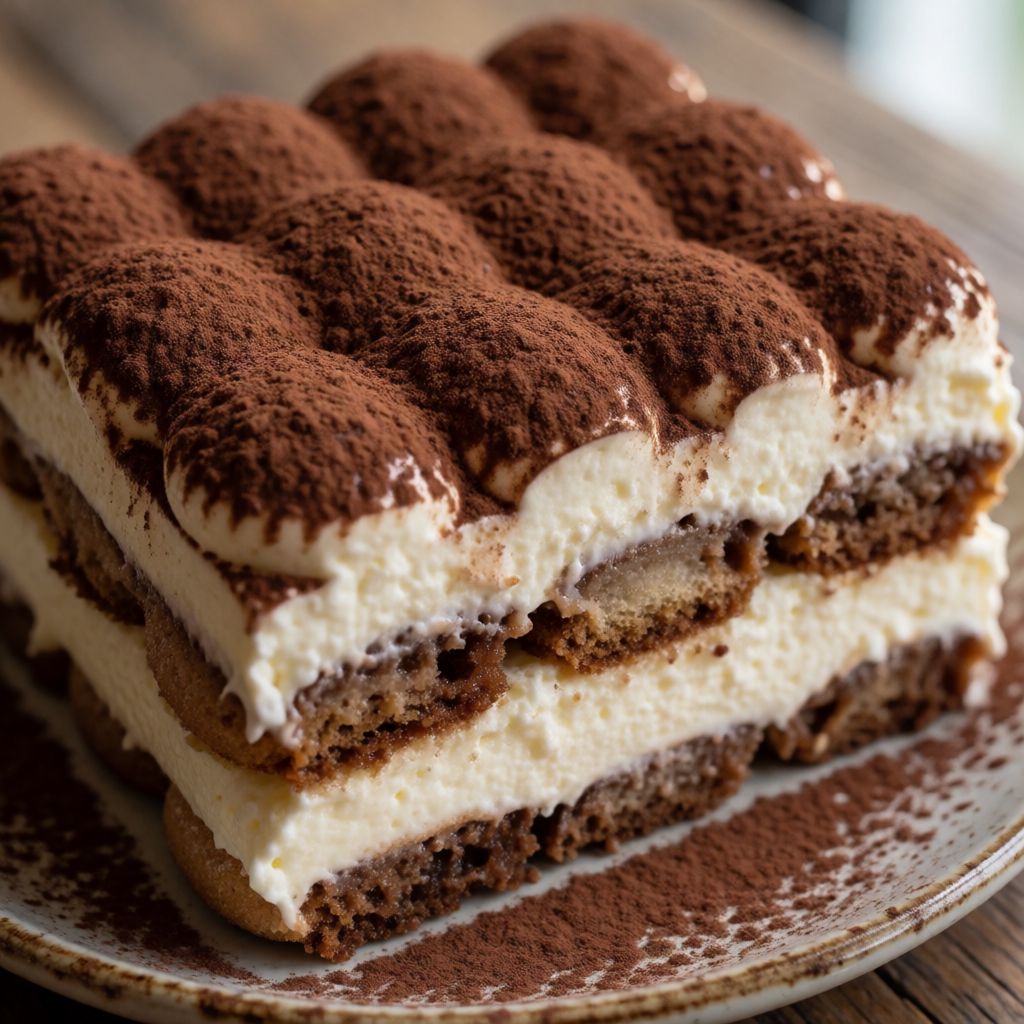
 AI photo
Tiramisu with Pasteurised Eggs
A classic Italian coffee-flavoured dessert, made here with a safely pasteurised egg yolk cream for a worry-free treat.
Labels are worked out automatically from the ingredients and can be wrong. Check the packaging if it matters to you.
Ingredients
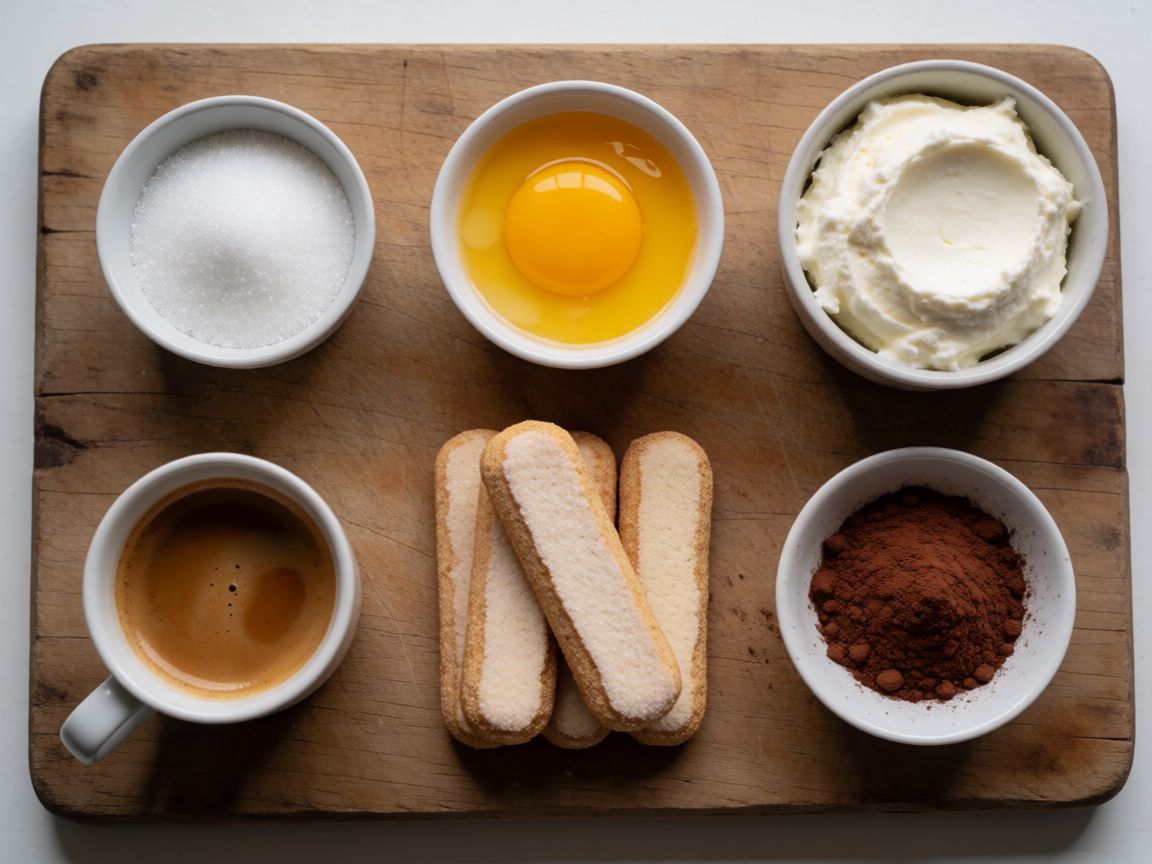
- 150 g Sugar
- 50 ml Water
- 5 pcs Egg yolk at room temperature, about 75 g
- 500 g Mascarpone
- 300 g Savoiardi biscuits (sponge fingers)
- Coffee to taste, or milk for a children's version
- Cocoa powder to taste







Steps
In a small saucepan, combine the water and sugar and heat gently, without stirring, until a syrup forms.
Using a kitchen thermometer, keep cooking the syrup until it reaches 121°C.
Whisk the egg yolks in a bowl, and when the syrup reaches 121°C, slowly pour it onto the yolks in two additions.
Keep whisking the mixture until it becomes pale, light and airy.
15 minIn a separate bowl, whisk the mascarpone until smooth and lump-free.
Gently fold in the pâte à bombe cream and mix with a whisk until the cream is smooth, thick and velvety.
Put the cream in the fridge, make the coffee and let it cool completely.
Spread the first layer of mascarpone cream over the bottom of a baking dish.
Quickly dip the savoiardi biscuits in the cold coffee and arrange them side by side to form the first layer.
Cover the biscuits with cream, then add another layer of biscuits and another layer of cream.
Chill the dessert in the fridge for about 3 hours.
180 minBefore serving, generously dust the whole surface of the tiramisu with cocoa powder.
Tiramisu isn't a cake, it's an argument between hot sugar and raw egg, settled at exactly 121°C. That number is the whole point of this version: it's the temperature at which sugar syrup is hot enough to cook egg yolk through, instantly, the moment you pour it in — not "cooked" in the sense of scrambled, but pasteurised, safe, and transformed into a thick, pale, mousse-like base called pâte à bombe. Skip the thermometer and you're just making a sweet custard that might carry salmonella; hit the number and you're making something structurally different — a foam stable enough to hold mascarpone without turning to soup.
Some say tiramisu must use raw eggs beaten with sugar, full stop, because that's "authentic". No — that's just the version Italian grandmothers made when eggs from the farm next door were trusted and the dish was eaten the same day. Commercial eggs, shop-bought, sitting in a fridge for a week before you buy them, are a different risk profile. The 121°C syrup method is the professional kitchen's answer to the same dessert when you can't vouch for the eggs — it's not a betrayal of tradition, it's tradition updated for a supply chain nobody in 1960s Treviso had to think about.
Sugar and water, cooked to 121°C: this isn't a vague "boil it a bit", it's the hard-ball stage, hot enough that when it meets egg yolk it cooks the protein through in seconds rather than curdling it into lumps. In a British kitchen without a dedicated candy thermometer, a reliable digital probe thermometer (the kind you'd use for a Sunday roast, checking the lamb's done rather than guessing) does the job fine — don't eyeball syrup colour as a substitute, because sugar syrup looks almost the same at 110°C and 130°C, and the ten degrees either side is the difference between raw egg and scrambled egg. If you truly have no thermometer: drop a bead of syrup into cold water — it should form a firm ball you can press slightly, not dissolve, not shatter. That's the old way, and it works, but a thermometer removes the guessing.
Egg yolks, five of them, at room temperature — not from the fridge. Cold yolks seize slightly when hot syrup hits them, cooking unevenly in patches rather than smoothly all at once. Leave them out while the syrup heats; it's one less thing fighting you. Whisk them as the hot syrup goes in, in two pours, not one — pouring it all at once dumps heat too fast into one spot and you get cooked specks floating in liquid yolk instead of an even pale cream. The fifteen minutes of whisking afterwards isn't busywork either — it's cooling the mixture down while aerating it, and that's what turns yolk-and-syrup into something light enough to fold into mascarpone without weighing it down.
Mascarpone: whisk it smooth before the cream goes in, because mascarpone left straight from the tub is lumpy and those lumps don't dissolve later, they just sit in your finished dessert as little dense pockets. If mascarpone isn't available or is expensive where you are, a very thick double cream cheese or a mix of full-fat cream cheese loosened with a spoon of double cream gets you close in texture, though you lose some of mascarpone's particular sweetness and fat content — mascarpone is roughly 45% fat, most cream cheeses sit lower, so the result will be slightly less rich and slightly more tart. Fold, don't beat, the pâte à bombe into it: beating knocks the air back out of the very foam you just spent fifteen minutes building.
Savoiardi: look for the dry, slightly ridged, finger-shaped sponge biscuit, not a soft Swiss-roll-style sponge — the dryness is deliberate, it's what lets them absorb coffee without disintegrating. If you can't find them in the UK (most big supermarkets stock them in the Italian aisle now, but corner shops often don't), a dry, plain sponge finger biscuit or even stale slices of plain Madeira cake, cut to size, will behave similarly — dry it slightly in a low oven if it's too soft and fresh. Fresh, soft sponge has no structure to survive a coffee dip at all.
Coffee: make it properly strong and let it go fully cold before dipping — warm coffee melts the cream layers it touches, cold coffee doesn't. For a children's version, milk instead of coffee isn't a compromise, it's just a different dessert built on the same mechanical principle: a liquid the biscuit can drink without falling apart. Don't use weak filter coffee thinking it'll be gentler — weak coffee just means you need more of it to get flavour, and more liquid means softer, soggier biscuits.
Cocoa powder on top, right before serving, not hours before. Dust it early and it sits on the cream, draws moisture, and turns from powder to a thin wet skin — it needs to go on at the last minute to stay as a clean bitter contrast to the sweetness underneath, which is really the whole job cocoa does here: it's not decoration, it's the bitter note the rest of the dish doesn't have anywhere else.