
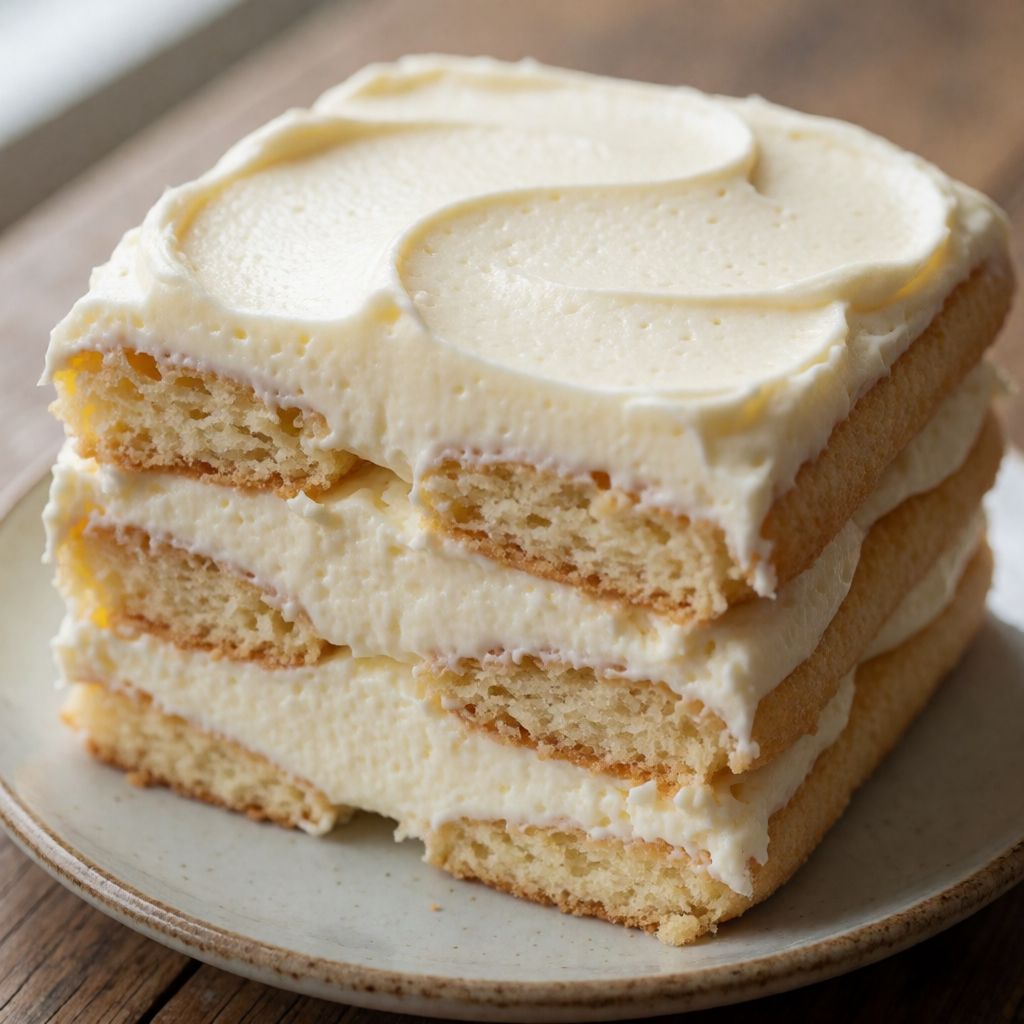
 AI photo
Orange Tiramisu
A citrussy twist on tiramisu, with orange soaking the sponge fingers instead of coffee.
Labels are worked out automatically from the ingredients and can be wrong. Check the packaging if it matters to you.
Ingredients
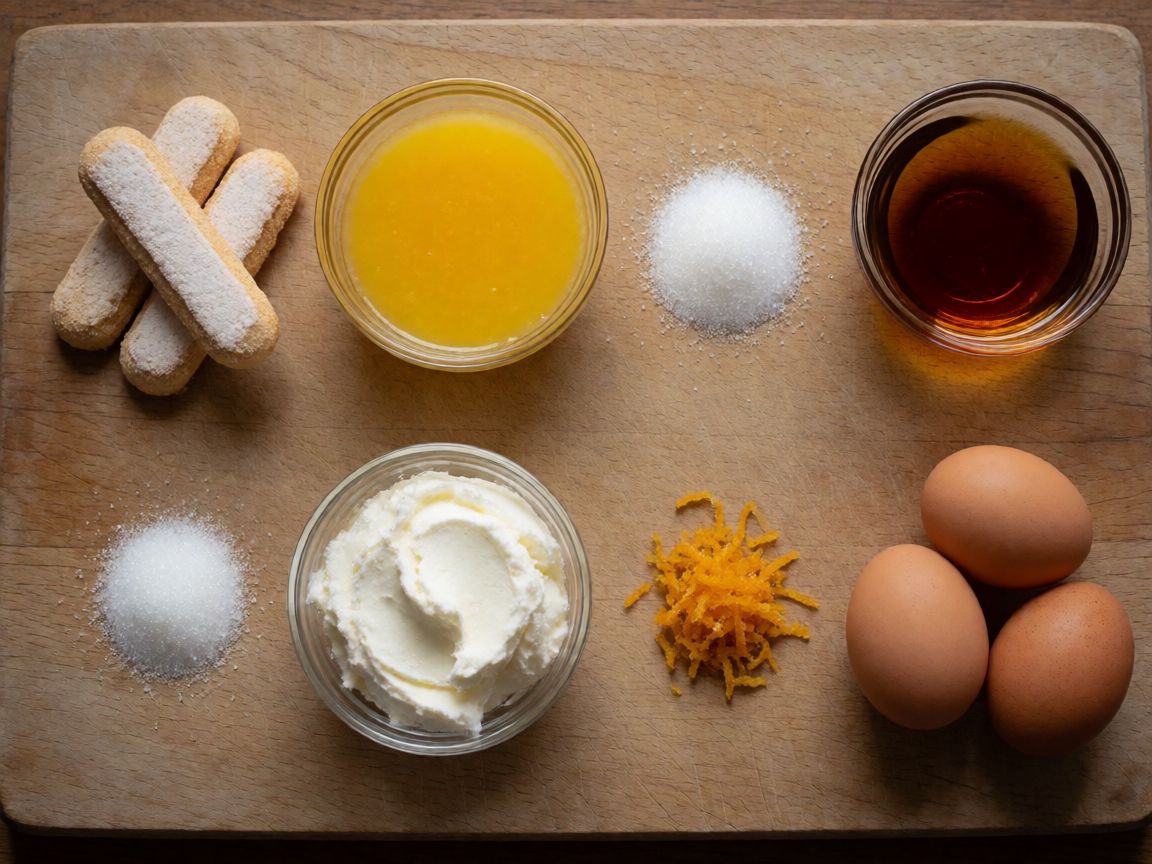
- 300 g sponge finger biscuits
- 1 pcs orange juice juice of 1 orange
- 250 ml water
- 60 g caster sugar
- 60 ml amaretto liqueur
- 500 g mascarpone
- 120 g caster sugar
- 3 pcs eggs
- 1 pcs orange zest zest of 1 orange
- cocoa powder to taste







Steps
Wash the orange and remove its zest — you'll need this for the cream.
Squeeze the juice from the orange and pour it into a small saucepan with the water, sugar and amaretto liqueur.
Place over low heat and warm, stirring with a spoon, until the sugar fully dissolves.
Remove from the heat and let the soak cool completely.
Separate the eggs into yolks and whites in two separate bowls.
Add the sugar to the yolks and beat with a mixer until light and fluffy.
Add the mascarpone and mix until smooth and creamy.
Whisk the egg whites to stiff peaks and gently fold them into the mascarpone cream.
Dip the sponge finger biscuits in the orange soak and arrange the first layer on the bottom of the dish.
Cover the layer of biscuits with cream, smooth it out, and alternate layers of biscuits and cream to the top.
Finish the dessert with a final layer of mascarpone cream.
Put the dish in the fridge for at least 1 hour.
60 minBefore serving, decorate with orange zest and dust with cocoa powder.
This is tiramisu with coffee pulled out and orange put in its place — same architecture, different mood. Coffee tiramisu works because espresso is bitter and strong enough to cut through sweet mascarpone. Orange juice isn't bitter, so the whole balance shifts: you need the amaretto's edge and the zest's oils to stop it tasting like a trifle in disguise. That's the real difference, not just "a citrus version."
What decides whether it works is the soak, not the cream. Mascarpone and egg yolks beaten with sugar is close to foolproof — it's a cold custard, no cooking, no curdling to worry about. The soak is where people go wrong: dunk the biscuits too long and they turn to paste, the whole dessert collapses when you cut it. Dunk too briefly and you get a dry streak down the middle that tastes of nothing. You're aiming for a biscuit that's gone soft right through but still holds its own shape — a quick in-and-out, not a bath.
Some say tiramisu must rest overnight. No — because what you're actually waiting for is the biscuit layer finishing its job of absorbing moisture evenly and the cream firming up enough to slice cleanly, and that's largely done in an hour in a cold fridge. Overnight doesn't hurt, but it's not what makes or breaks this dessert; a rushed 20 minutes is what breaks it.
Sponge fingers (savoiardi) aren't just "biscuits that happen to be long." They're baked dry and airy specifically so they can soak up liquid without dissolving — that's their entire design brief. A soft sponge cake would turn to mush in the same soak; a digestive biscuit would barely take on any liquid at all. If you can't find proper sponge fingers, the honest substitute is a dry, egg-based sponge cut into fingers — something with structure and air pockets, not density.
The soak itself is doing two jobs: carrying flavour and controlling moisture. Orange juice alone would be thin and one-note, so sugar gives it body and lets it cling to the biscuit rather than running straight through, and the amaretto brings a bitter-almond backbone that stands in for the role coffee usually plays — something sharp enough to argue with the sweetness of the cream. No amaretto to hand? Any orange liqueur with real bitterness works, or a splash of strong tea for body without the booze — but skip the liqueur altogether and you'll taste why it was there in the first place: flat, syrupy, one-dimensional.
Mascarpone is the cream's whole personality — high fat, barely any tang, which is exactly why it takes whatever flavour you give it (here, orange and sugar) without fighting it. Cream cheese is tangier and wetter and will pull the dessert toward cheesecake territory; if that's all you have, drain it first and expect a sharper result. Don't beat the mascarpone itself hard or warm it — it can split into something grainy and loose, and there's no rescuing that texture once it's gone.
The eggs are split for a reason: yolks beaten with sugar go pale and thick because the sugar is dissolving into the fat and trapping air, which is what gives the cream its richness without adding liquid. Whites beaten separately to stiff peaks and folded in afterwards do the opposite job — they add volume and lightness without diluting that richness. Folding, not stirring, matters here: stir hard and you knock the air straight back out, and the cream sits heavy instead of holding its shape when you cut the dessert.
Zest and cocoa at the end aren't decoration for decoration's sake. Zest carries orange's aromatic oils, which the juice alone doesn't hold onto, so it's your last chance to remind the eater what fruit they're eating. Cocoa adds a bitter dusting on top for the same reason the amaretto's in the soak — the dessert needs something to cut the sweetness, and without it the final mouthful can taste cloying rather than finished.
For a UK kitchen, nothing here needs special kit — a wide glass or ceramic dish, a hand mixer or balloon whisk, and a fridge that actually gets cold is all you need. Feeds 8 as a dinner-party pudding, which makes it a sensible make-ahead for a Sunday when the oven's busy with the roast and you want dessert sorted before anyone sits down.