
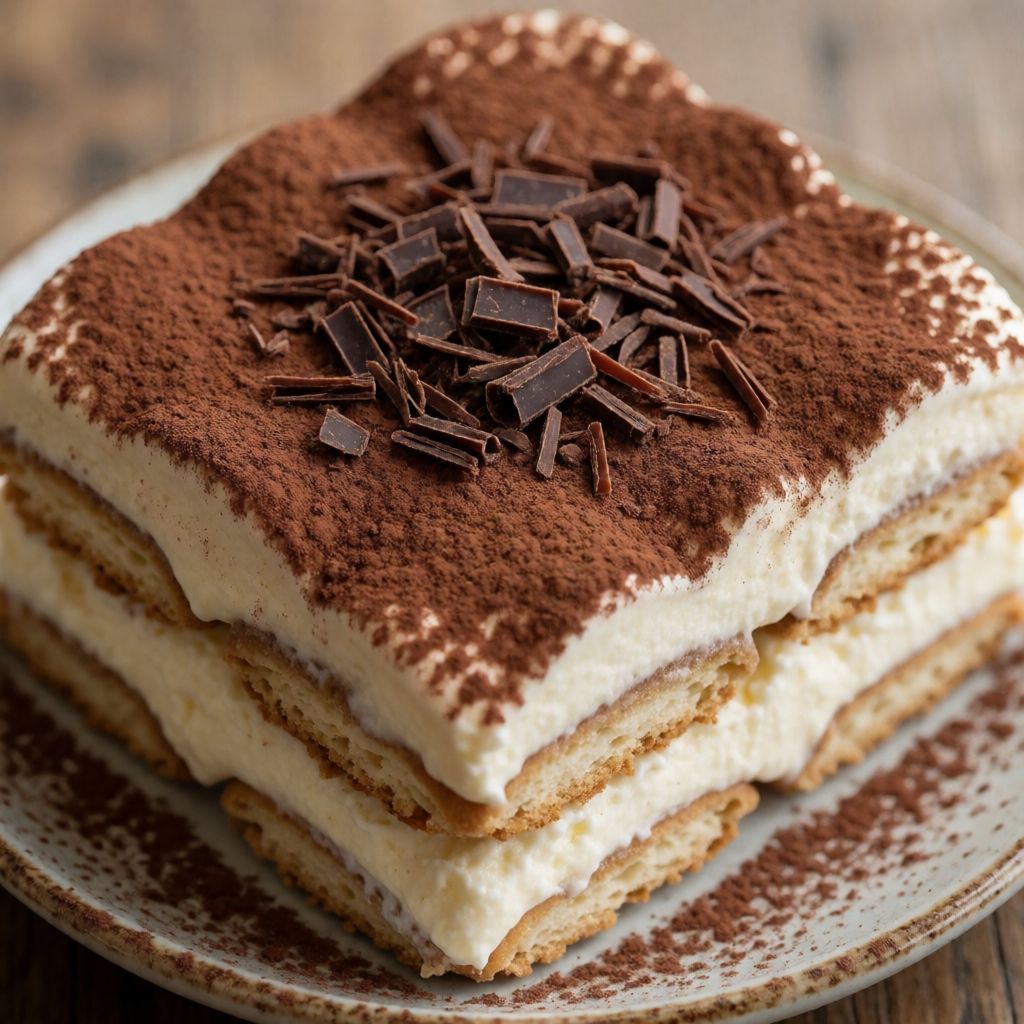
 AI photo
Tiramisu with Pavesini Biscuits
A classic Italian tiramisu made with pavesini biscuits, coffee and a silky mascarpone cream.
Labels are worked out automatically from the ingredients and can be wrong. Check the packaging if it matters to you.
Ingredients
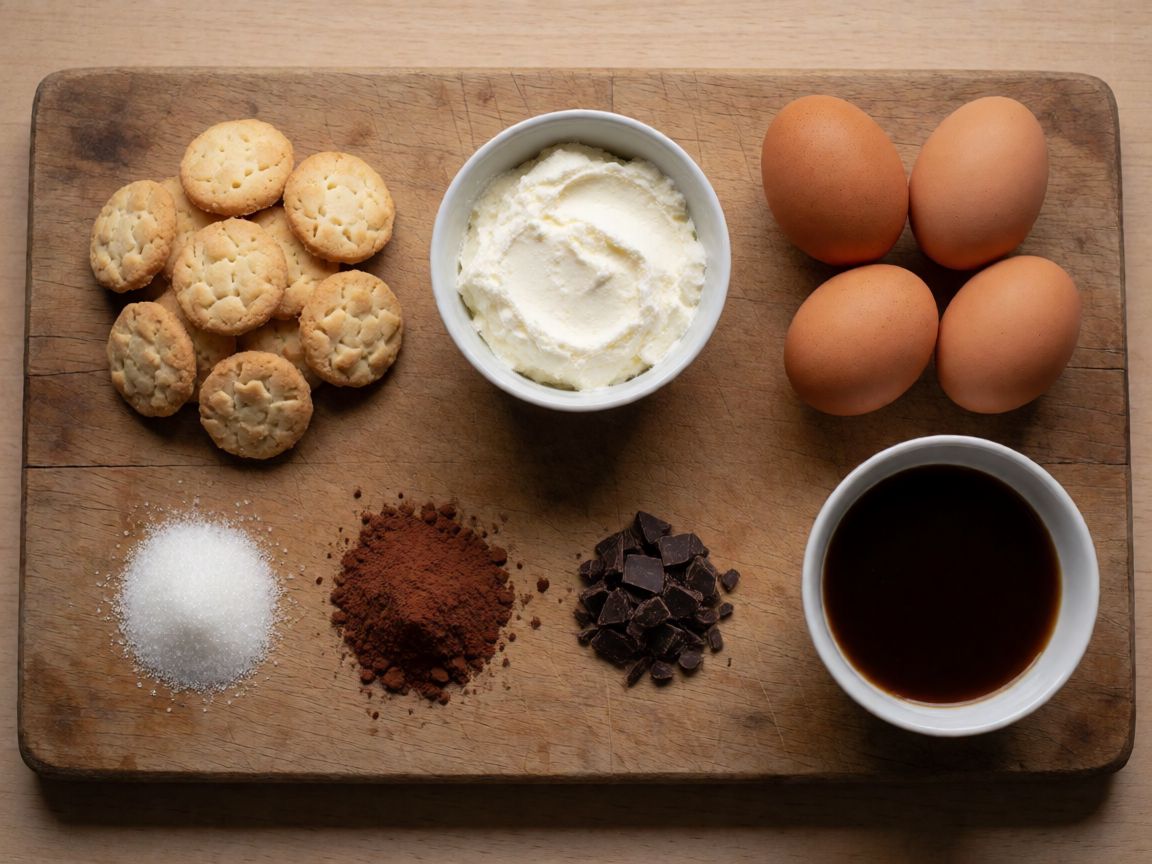
- 1 package Pavesini Biscuits
- 400 g Mascarpone
- 4 pcs Eggs
- 120 g Caster Sugar
- 50 g Cocoa Powder
- 100 g Dark Chocolate
- 950 ml Coffee brewed and cooled
- 1 pinch Salt








Steps
Separate the egg yolks from the whites, put the yolks in a bowl, add the sugar and beat with a mixer until light and fluffy.
Whisk the egg whites with a pinch of salt until stiff peaks form.
Add the mascarpone to the whites and mix thoroughly.
Combine this mixture with the previously prepared egg yolk cream and gently fold together for a few minutes.
Brew the coffee, pour into a shallow dish and let it cool, then finely grate the dark chocolate.
Cover the bottom of a rectangular dish with the cream, quickly dip the pavesini biscuits in the warm coffee and arrange them in an even layer.
Sprinkle the biscuits with grated chocolate and continue alternating layers of cream, coffee-soaked biscuits and chocolate pieces until the dish is full.
Finish with a layer of cream, dust the surface with cocoa powder, place the dish in the refrigerator and let the tiramisu chill.
Tiramisu is not a baked dessert pretending to be a trifle — there's no oven step at all. It's a construction job: biscuit soaked briefly in coffee for flavour and a bit of give, layered with a mascarpone-and-egg cream that will only set to a soft, sliceable mousse in the cold, over hours, not minutes. Whether it works comes down to two things: how much air survives in that cream once you've finished folding, and how long the biscuit actually sat in the coffee before you moved on.
Beat in air you don't want to lose — that's the first rule. The yolks and sugar whisked until pale and ribbon-thick aren't decoration; that stage is where the sugar actually dissolves into the fat and starts to hold shape. The whites beaten to stiff peaks are the dessert's real rising agent, the only thing stopping this from tasting like sweet mascarpone on a spoon. Fold with patience, because every stir past "combined" knocks air back out, and a flat tiramisu sits on the plate like wet cake instead of standing in clean layers when you cut it.
Some say the biscuit must soak properly, the way a sponge soaks for a trifle — no, because that's exactly how you get a soggy, sunken middle and cream bleeding straight through. A pavesino is thin and porous; it drinks coffee the moment it touches it. In, out, done — the coffee you want is flavour on the surface and a softening at the edges, not biscuit gone to mush all the way through. Half a second too long is the real cause of the "watery tiramisu" people blame on bad mascarpone.
Tiramisu's name does the explaining for you — "pull me up" — and it tells you exactly what it is: a trattoria dessert built from coffee and sugar for a jolt, not a patisserie showpiece. It grew out of home kitchens in the Veneto using what was cheap and local — mascarpone from the dairy down the road, day-old sponge biscuits that needed using up, coffee because every kitchen had some on the go. There's nothing mysterious about why it's assembled rather than baked: nobody was firing up an oven for a family pudding on a Tuesday.
Pavesini are a particular kind of sponge biscuit — thinner and lighter than the more familiar savoiardi (ladyfingers), with a drier, more open crumb. That's exactly why they take coffee in a heartbeat: more surface, less biscuit to saturate. If all you can find is savoiardi, use them — the real criterion is "a dry, porous sponge biscuit that holds its shape wet" — just give them a beat longer in the coffee, since they're thicker. Either way, what you're avoiding is a biscuit left so long in the liquid that it loses its structure and turns the whole layer to paste.
Mascarpone does the heavy lifting here, for both flavour and body — it's essentially cream with almost no moisture to speak of, which is why the finished thing sets instead of running. There's no true substitute; if you're stuck, double cream whipped with a little cream cheese gets you close in taste, but it won't hold a cut edge the way mascarpone does. Don't reach for a low-fat version — the whole structure depends on that fat content.
The eggs do two separate jobs, which is why they're split. Yolks with sugar give the cream richness and a little stability; whites give it lift. Use the freshest eggs you've got, because raw egg is exactly what it sounds like here — nothing in the recipe cooks it. If that worries you, look for pasteurised eggs, easy enough to find on a UK supermarket shelf, and you lose nothing in texture for the peace of mind.
Caster sugar dissolves into the yolks fast because the crystals are small; granulated gets there eventually but drags the beating out and risks a slightly grainy cream, so blitz it first in a grinder if that's what you've got.
Cocoa powder goes on dusted at the very end, not folded in — it's there to cut the sweetness the moment it hits your tongue, a bitter top note rather than a flavour mixed through. Grated dark chocolate does similar work between the layers, a bit of snap and bitterness against all that soft cream — the higher the cocoa percentage, the sharper that contrast. Skip milk chocolate here; it just melts into more sweetness and loses the point of it.
Coffee needs to be properly cooled before it meets anything else — hot coffee against raw egg cream starts cooking it on contact and melts the mascarpone's fat where it touches, and you'd lose the clean layers before you'd even built them. Some say it has to come from an espresso machine to count — no, because what matters is strength, not the machine. A strong stovetop brew, even a good instant coffee made double-strength, does exactly the same job once it's properly cold.