
 AI photo
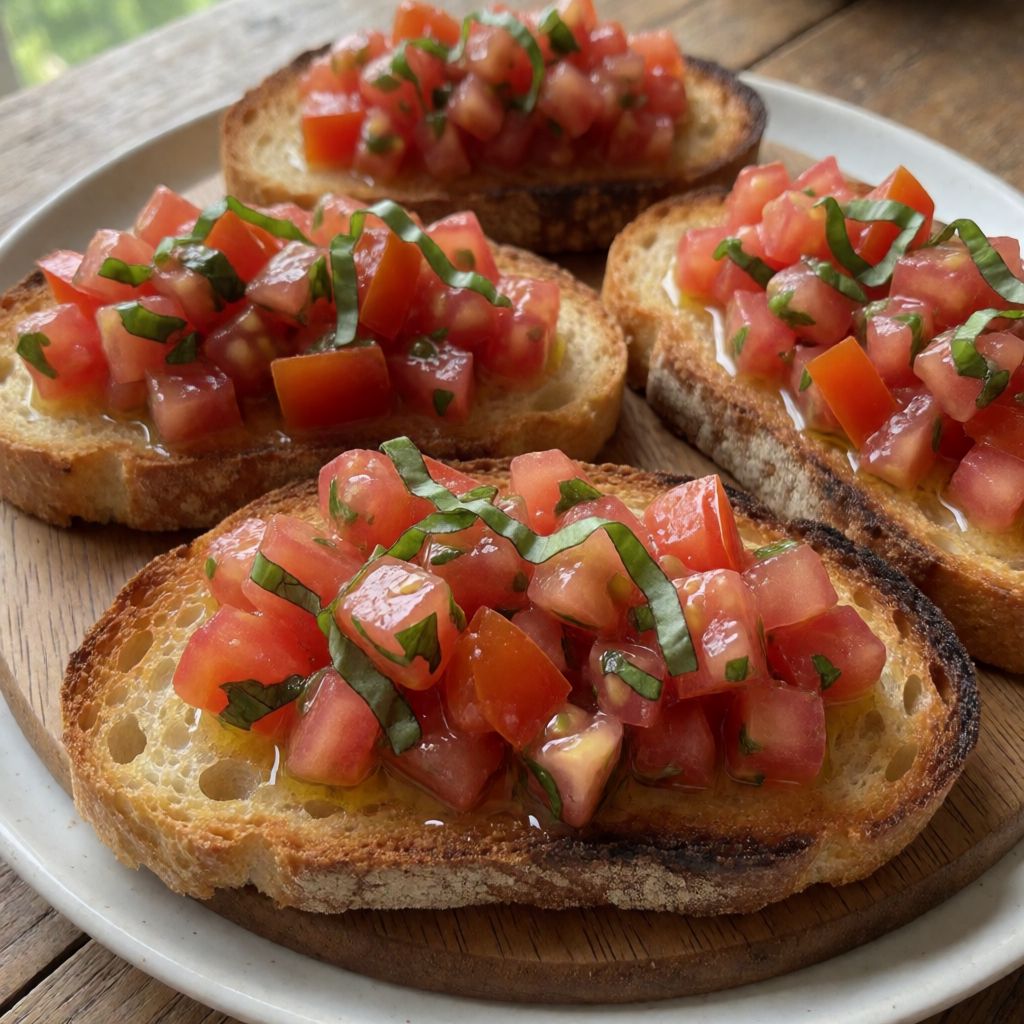
Tomato Bruschetta
Toasted bread topped with diced fresh tomatoes, garlic, olive oil and basil.
Labels are worked out automatically from the ingredients and can be wrong. Check the packaging if it matters to you.
Ingredients





Steps
Cut a country-style loaf into medium-thick slices.
Heat the oven to 180°C, rub the bread slices with garlic and put them in the oven.
Take the bread out as soon as it turns golden.
Wash the tomatoes, remove the stem, peel and dice them finely.
Spoon the tomato mixture onto the toasted bread slices and sprinkle with salt.
Drizzle with olive oil and garnish with basil.
Bruschetta is not garlic bread with salad on top. It's a problem of engineering: how do you put raw, juicy tomato on bread and still have something crisp to bite into thirty seconds later. The bread is built to survive the tomato, not the other way round. That's the whole trick, and everything else in the recipe serves it.
The name comes from "bruscare" — to char, to roast over coals — and the dish started as a way to deal with bread that had gone stale, not as a showpiece. Stale bread, rubbed with garlic and oil, was how poor households in central Italy made yesterday's loaf worth eating again. Tomato came later, once it arrived from the New World and found its way into everyday cooking. So this isn't an ancient, untouchable formula — it's a workaround that got popular because it tasted good, and still is.
What decides whether it works is drying, not cooking. The oven at 180°C isn't browning the bread so much as pulling the water out of the crumb slowly enough that the outside turns gold before it turns black. Some say toast it until it's deep brown for extra crunch — no, because past gold the sugars burn and turn bitter, and you've lost the point, which is a dry, open structure that can soak up tomato juice for a minute without collapsing into mush. Watch the colour, not the clock: pale gold, pulled the moment it gets there, with a dry, slightly hollow sound when you tap it.
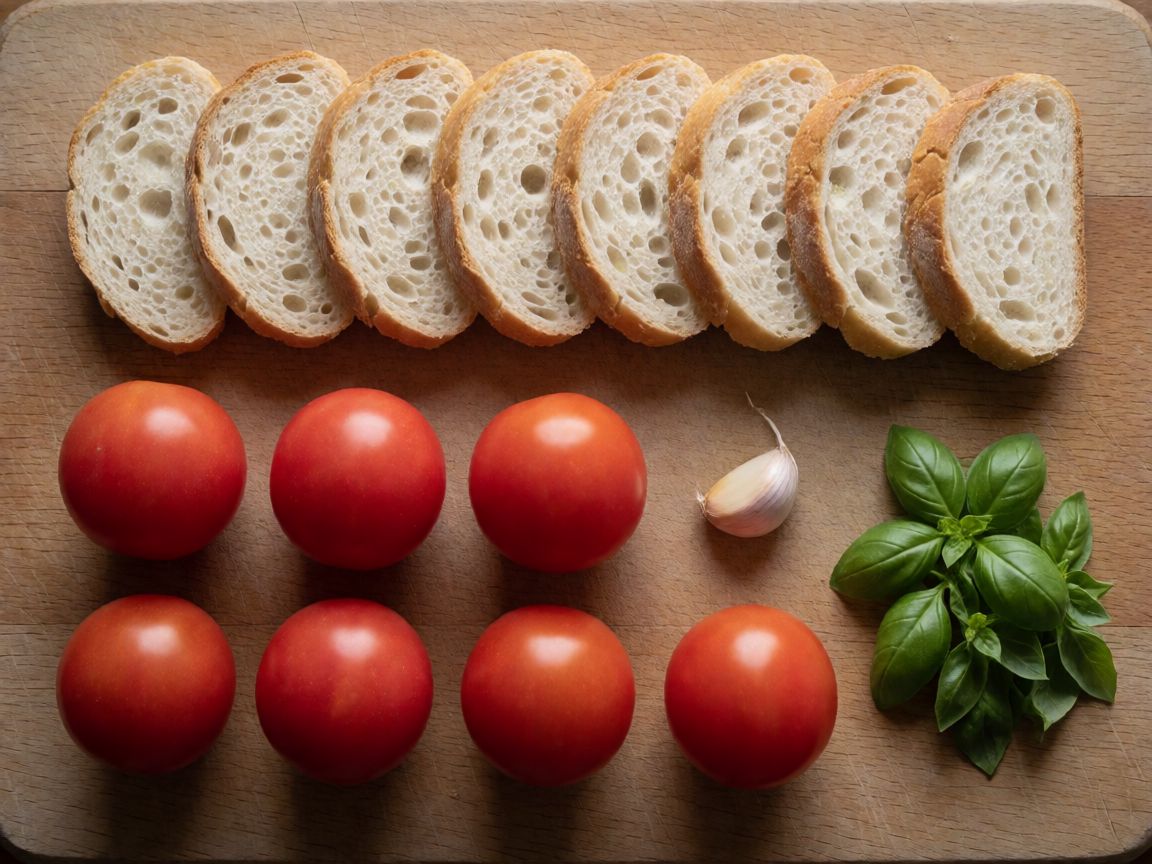
Bread: you want something with a tight, chewy crumb and real crust — a country loaf, sourdough, ciabatta — not sliced sandwich bread, which has too much air and too little structure and will turn to paste under wet tomato in under a minute. If the loaf is a day or two old, even better: it's already partway to dry, so the oven has less water to drive out, and you get crispness faster without overshooting into burnt. Slices about as thick as your thumb — thin enough to toast through, thick enough to still be bread and not a crouton.
Garlic goes on before toasting here, rubbed straight onto the raw slice, and that timing matters: as the bread dries in the oven, the garlic's oil infuses into the crumb instead of sitting raw on the surface, so you get the smell and warmth of it without a sharp, raw bite in the mouth. One clove is plenty if the garlic is young and juicy; reach for two only if the cloves are old and have gone mild and sweet — judge by smell when you peel it, not by the recipe card. No garlic in the house, or you don't want the smell lingering all evening? Skip it — the dish survives, it just loses one layer.
Tomatoes: you need eight that are actually ripe — soft enough to give slightly under a thumb, smelling of something when you hold them to your nose, not just red. That's roughly a kilo in total, about 125g a tomato, for four people having two slices each. Peel them: the skin doesn't break down with the flesh, it just sits there as a tough little ribbon that gets stuck between your teeth, and peeling lets the dice collapse into something soft that releases its juice evenly over the bread rather than in chewy knots. If good fresh tomatoes genuinely aren't to be had — deep winter, supermarket ones with no smell — good-quality tinned chopped tomatoes, well drained, will give you more flavour than a bland fresh one, even if the texture isn't quite the same.
Olive oil here is doing the opposite job it usually does. Normally, for frying, you want an oil with no character of its own so it doesn't fight the food. Here the oil is raw and uncooked, drizzled on at the very end, so it's one of maybe four flavours on the plate — you want it to taste of something. A decent extra virgin, the kind that's a bit peppery at the back of the throat, is the point, not a compromise.
Basil: tear it by hand rather than cutting it with a knife. A metal blade crushes through a lot of cells at once and the cut edges go dark and bruised within minutes — some cooks will tell you this ruins the flavour, which overstates it, but it does look tired fast, and torn leaves stay bright and keep their smell longer on the plate. No fresh basil — don't reach for the dried jar, it's a different, flatter smell entirely; a few torn leaves of parsley will at least give you green and freshness, even if it isn't basil.
Last thing, and it's the one people skip: don't assemble ahead. This isn't a dish that waits in the fridge under clingfilm while you finish the rest of dinner — the moment tomato meets hot toast, the clock on sogginess starts. If your oven's already on because there's a Sunday roast going, that's convenient, but time the bread for the last few minutes before you sit down, not the first. Patience here isn't about waiting longer — it's about not being in a hurry to put it together too soon.