
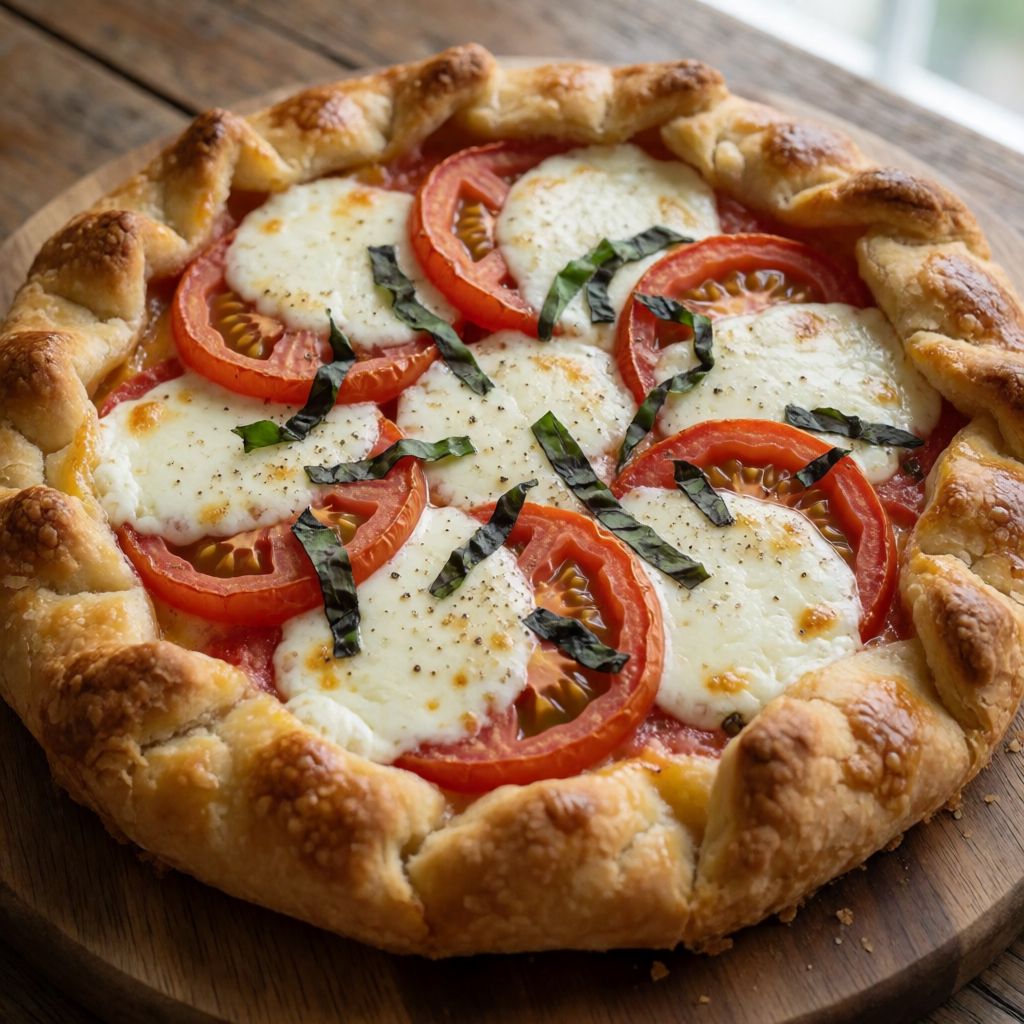
 AI photo
Tomato Crostata
A savoury shortcrust tart layered with tomatoes, mozzarella and fresh basil.
Labels are worked out automatically from the ingredients and can be wrong. Check the packaging if it matters to you.
Ingredients
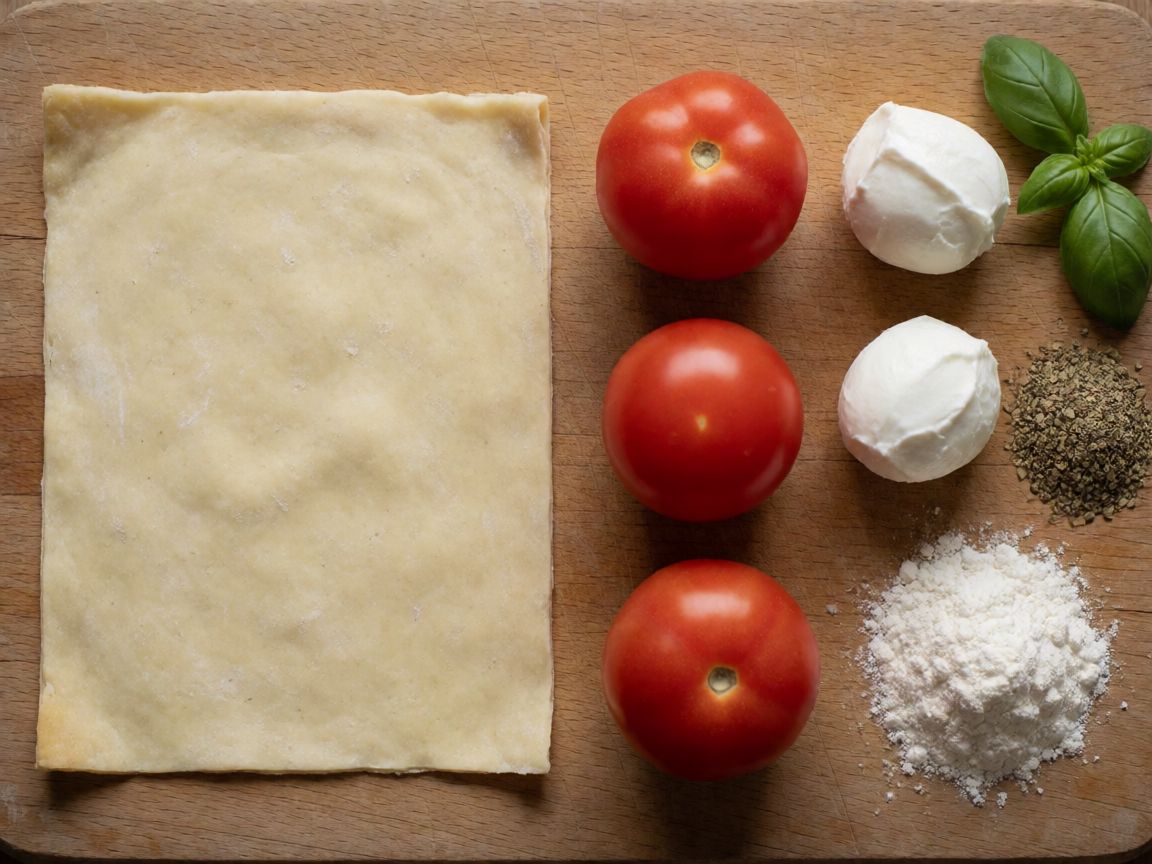
- 1 pcs Shortcrust pastry
- 4 pcs Tomato
- 2 pcs Mozzarella
- 1 bunch Basil
- pinch Salt to taste
- pinch Black pepper to taste
- pinch Oregano to taste
- tbsp Olive oil to taste
- pinch Plain flour for dusting







Steps
Roll out the shortcrust pastry into a thin sheet, 3-4 mm thick, on a lightly floured surface.
Transfer the pastry to a buttered 26 cm tin, press it firmly against the edges and prick the base with a fork.
Cover the pastry with baking paper and fill with dried baking beans to stop it puffing up.
Bake the pastry in a preheated 200°C oven without fan assistance.
15 minWhile the pastry bakes, wash the tomatoes, pat them dry and slice them thinly, laying them out on baking paper.
Slice the mozzarella thinly and roughly tear the fresh basil leaves.
Remove the pastry from the oven and lift out the beans and baking paper.
Scatter the basil leaves over the base of the pastry, drizzle with olive oil and season with salt and pepper.
Layer the tomato and mozzarella slices alternately, then sprinkle with dried oregano.
Season with salt and pepper and return to the oven at 200°C.
10 minRemove the crostata from the oven, transfer to a serving plate and serve hot.
A crostata like this is really two separate cooking problems wearing one name. There's the base — pastry that has to hold its shape and go dry and crisp — and there's the top, which is tomato and mozzarella that both want to weep water the moment they meet heat. Get the order and the timing of those two problems wrong and you don't get a tart, you get a soggy biscuit carrying a tomato soup. Everything in this recipe is built to stop that.
The blind-bake is the whole trick. Butter pastry is mostly fat suspended in flour — melt that fat too fast or trap steam under it, and it bubbles up like a pastry blister, uneven and raw-centred when you cut it. Pricking the base lets steam escape through small holes instead of one big one. The paper and dried beans weigh the middle down so it bakes flat instead of doming. Some say you can skip the beans if you prick enough holes — no, because the edges have nothing holding them down and they'll slide inward as the fat liquefies, shrinking your tart shell exactly where you need the wall.
Shortcrust pastry: buy it ready-made or make your own with 250g plain flour, 125g cold butter, a pinch of salt, and just enough cold water to bring it together — the same dough you'd use under a Sunday pie. The one thing that matters whatever the source is that it's cold going into the tin. Warm dough stretches and tears at the edges where you're pressing it in; cold dough holds the shape you give it. If yours has sat out on the worktop, five minutes in the fridge before rolling costs you nothing and saves the rim.
Tomatoes: you want flesh, not water balloons. Firm, ripe plum or vine tomatoes hold their slice and don't flood the tart when cut; a watery supermarket beef tomato in winter will undo the whole blind-bake effort in one layer. Pat them dry after washing — that's not fussiness, that's removing the one variable you can actually control before the oven adds its own moisture problem. If your tomatoes look pale and bland, that's a ripeness problem no amount of oregano will fix; a short sprinkle of salt on the sliced tomato ten minutes before layering, then patted again, will draw out some excess juice and concentrate the flavour that's left.
Mozzarella: the fresh ball type packed in water, not the dry block sold for pizza toppings pre-shredded. Fresh mozzarella has enough moisture to melt soft without going rubbery or oily at 200°C for ten minutes; the dry pre-shredded kind is built for longer, hotter pizza ovens and will seize into little chewy beads here. If you can't get mozzarella, a young, mild cheese that melts without separating — a soft provolone, even a mild halloumi sliced thin — will do the job, though you lose the gentle milkiness that makes this dish Italian rather than just "cheese on tomato on pastry."
Basil: fresh, torn by hand rather than cut with a knife — a blade bruises the leaf and you lose the volatile oils that give basil its smell before it's even in the oven. Half of it goes in raw under the tomato where the oven's heat barely reaches it, so it keeps its sharp green character; if you had more, scattering a few torn leaves back on after baking would give you a second, stronger hit, but that's an addition, not a correction. Dried basil is a different herb in practice — flat and grassy — so if that's all you have, oregano can carry more of the weight instead.
Olive oil: use one with actual flavour here, because this is a dish with almost no cooking fat otherwise and the oil is doing real seasoning work, not just lubrication. "Extra virgin" matters more in a dish like this than in a stew where it gets cooked out — drizzled raw over the basil before baking, its flavour survives. Any neutral oil would work mechanically but would leave the dish tasting of tomato and cheese alone, which is a fine dish but not this one.
Flour for dusting, salt, pepper, oregano — none of these need brand loyalty, just restraint. The dusting flour's only job is stopping the dough sticking to the worktop as you roll; too much and you're kneading extra raw flour into the surface of your pastry, toughening it. A light, even dust, brushed off the rolled sheet before it goes into the tin, is enough.
On the kitchen itself: a 26 cm tin and a domestic oven without fan assistance means you're relying on top-and-bottom radiant heat doing an uneven job, which is exactly why the blind-bake step earns its keep — it gives the base a head start before the wetter topping goes in and competes for the same heat. If your oven runs hot at the back, as most ordinary ovens do, turn the tin round once between the two bakes rather than leaving it facing one way the whole time; it's a small thing but it stops one side of your crostata finishing a shade darker than the other. And patience is doing real work in those fifteen minutes of blind-baking — rush it, pull the beans too early, and you're building the rest of the dish on a floor that isn't finished yet.