
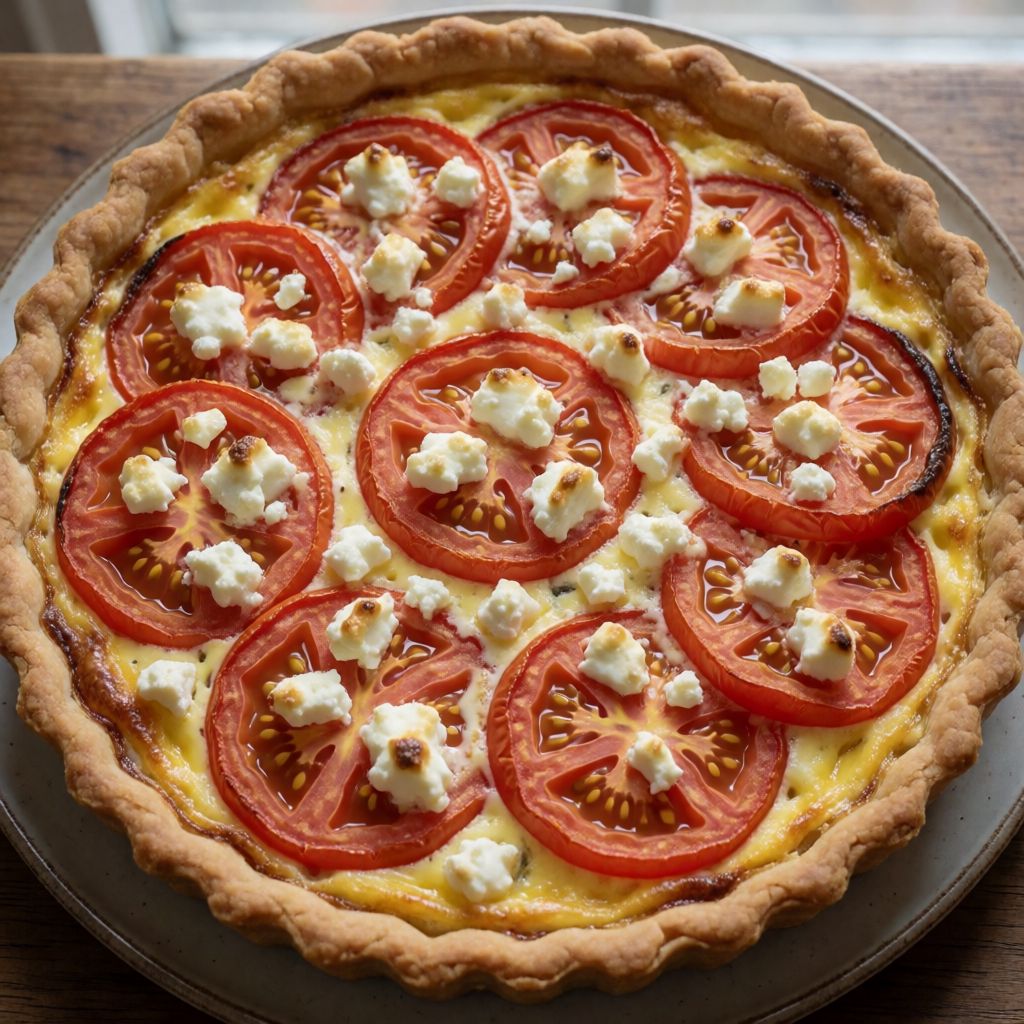
 AI photo
Tomato and Feta Tart
A savoury tart with a wholemeal and plain flour crust, filled with ricotta, thyme, tomatoes, feta and black olives.
Labels are worked out automatically from the ingredients and can be wrong. Check the packaging if it matters to you.
Ingredients
- 50 g Wholemeal flour
- 125 g Plain flour
- 100 g Butter
- 45 ml Water
- 1 tsp Salt
- 5 pcs Eggs
- 250 g Ricotta
- 2 tbsp Thyme fresh
- 450 g Tomato
- 100 g Feta
- 60 g Black olives, pitted
- Salt to taste








Steps
Mix the plain and wholemeal flour with the salt and rub the butter into the flour mixture (a food processor can be used).
Bring the dough together with the water and let it rest in the fridge for 30 minutes, then press it into a greased 24 cm tart tin.
30 minPrick the dough with a fork and part-bake in a preheated oven at 175°C (fan) for 10 minutes, after which the base is ready to be filled and finished baking.
10 minWhisk the eggs, ricotta, thyme or oregano, salt and pepper in a bowl until smooth and spread over the part-baked base.
Arrange the tomatoes over the filling, crumble the feta on top and finish by scattering over the olives.
Bake the tart in a preheated oven at 175°C (fan) for 30-35 minutes, until the egg mixture has set.
32 min
This is a quiche with a different passport — a shortcrust shell, a custard of egg and ricotta instead of cream, tomatoes sitting on top rather than folded in, feta and olives for salt. What decides whether it works is not the filling, it's the base: whether the pastry stays crisp under a wet topping of tomato and set custard, or turns to paste. That fight between crisp and wet is the whole tart.
Two flours do two different jobs. Plain flour has more gluten, which gives the dough strength to hold its shape in the tin; wholemeal brings bran and a bit of grit, so the base tastes of something and doesn't just collapse into blandness under all that tomato juice. Rubbing the butter in cold, by hand or machine, coats the flour in fat before water ever touches it — that's what stops you building gluten by accident. Some say you must use your fingertips because hands "know" pastry — no, because the real point is temperature: cold fat stays in separate flakes instead of melting into the flour, and those flakes are what give you a short, crumbly bite instead of a biscuit.
Blind-baking for ten minutes before filling isn't ceremony — it's armour. Pastry baked raw under a wet custard turns gluey in the middle because the egg mix seeps in before the base has any structure to resist it. Ten minutes at that oven temperature sets the surface starch and seals it, so what gets poured on next sits on a floor rather than soaking into one.
Flour: 50g wholemeal to 125g plain isn't a flourish, it's a ratio that keeps the dough trainable. All wholemeal and the bran cuts the gluten strands too much — the base crumbles when you try to lift a slice. All plain and you lose the texture and the slightly nutty backbone that makes the pastry taste like something next to a sweet-sharp tomato. If you've only got plain flour, use it all — the tart survives, it just reads a bit flatter.
Butter: 100g, cold, cut into the flour until it looks like coarse crumb with a few pea-sized lumps left — those lumps are the future flakiness. Butter brings flavour that a neutral fat like sunflower oil can't; if you must swap, use a hard block margarine of similar fat content, never a soft spread, because a spread is mostly water and air and won't behave the same under heat. The water, 45ml, is there only to glue crumb into dough — add it a spoon at a time, because too much and you've built gluten after all, giving you tough pastry instead of short.
Eggs and ricotta are the custard, and ricotta earns its place by being drier than double cream or crème fraîche — less water means a firmer set and less risk of a soggy base, which matters more here than in a quiche where the filling is mostly submerged. Five eggs to 250g ricotta gives you enough protein to set firm without turning rubbery; if ricotta isn't to hand, cottage cheese blitzed smooth is the nearest stand-in by texture and water content — cream cheese works too but will set denser. Thyme, fresh if you can get it, because dried thyme loses its lift fast and you'd need to double the amount to taste anything at all; oregano is named as a straight swap because both are robust, resinous herbs that don't disappear under baking the way something delicate like basil would.
Tomato, 450g — the choice here is about water content more than flavour. Watery salad tomatoes will flood the top of your tart and undo the blind-baking you did to prevent exactly that; firmer, meatier tomatoes, or ones you've salted and drained for ten minutes first, behave far better on a home hob setup where you can't blast a kazan-hot oven to cook off excess liquid fast. Some say you should always peel tomatoes for a tart like this — no, because the skin here helps the slices hold their shape against a gooey custard; peeled, they'd slump.
Feta at 100g and olives at 60g are both there for salt and a briny edge against the mild custard and sweet tomato — feta's dry crumble also helps soak up a little surface moisture rather than add to it, which is more useful here than a wet, melting cheese would be. If feta isn't available, a dry, crumbly goat's cheese does the same job; a soft, wet cheese like mozzarella changes the whole balance and isn't really a substitute, just a different tart.
On timing: thirty minutes resting the dough in the fridge isn't optional slack — it relaxes the gluten you did build and lets the fat firm back up, so the pastry doesn't shrink and slide down the tin walls when it hits heat. That's patience doing real work, not filler. And the final bake — thirty to thirty-five minutes — ends when the custard has stopped being liquid in the centre and taken on a gentle, even wobble rather than a full-on slosh; give it the lower end of the time as your floor, then watch the middle, because a domestic oven's hot spots mean the edges will always set before the centre does, and the centre is the only part worth trusting.