
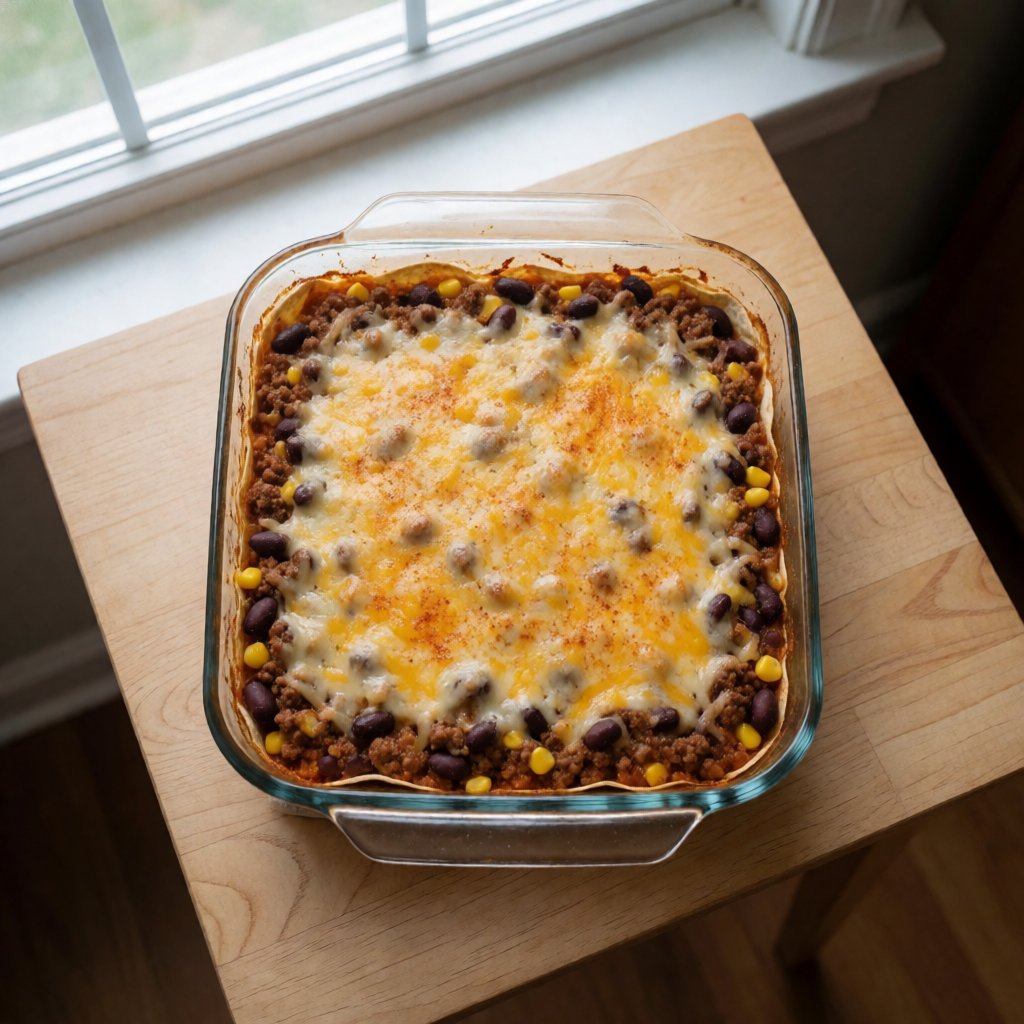
 AI photo
Tortilla Bake with Beef Mince and Beans
A quick layered bake of tortillas, beef mince, beans and melted cheese.
Labels are worked out automatically from the ingredients and can be wrong. Check the packaging if it matters to you.
Ingredients
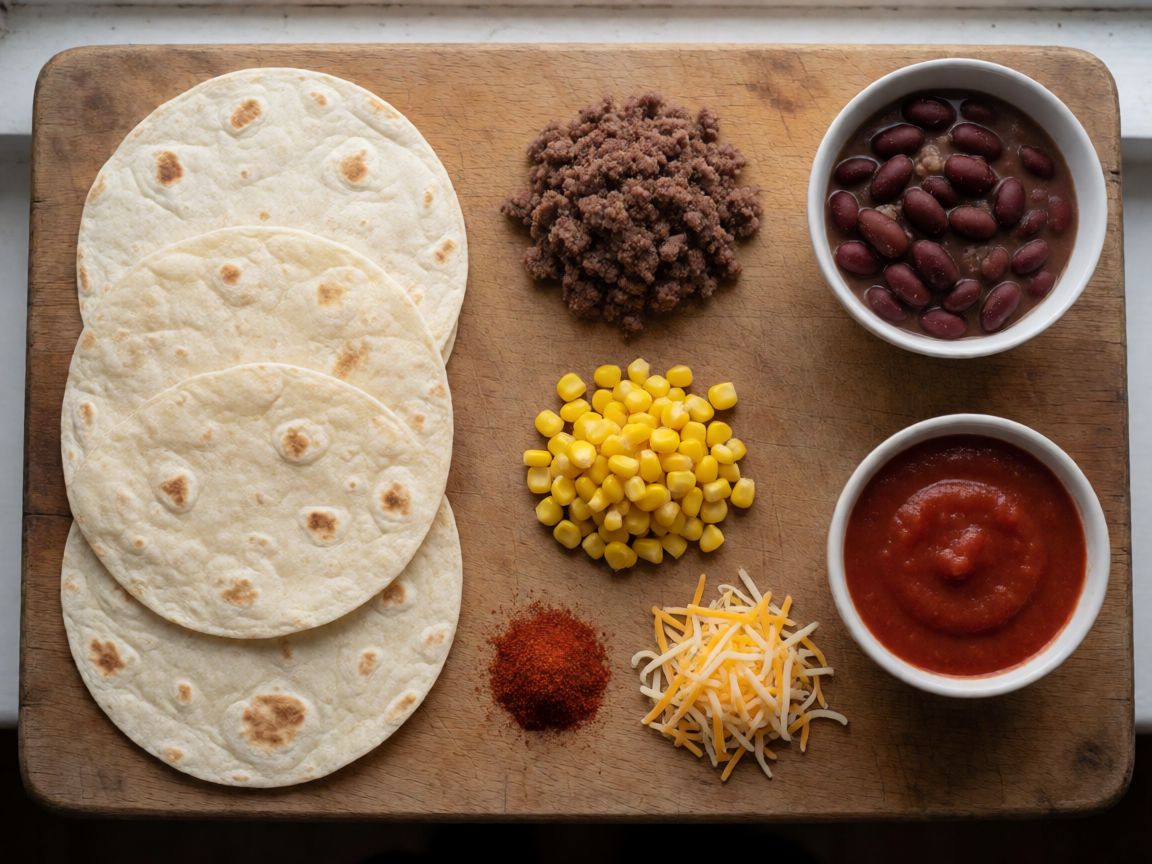
- 3 pcs Wheat tortillas
- 200 g Beef mince
- 120 g Tinned kidney beans
- 200 ml Tomato pasta sauce
- 3 tbsp Sweetcorn
- 80 g Cheddar cheese, grated
- 1 pinch Paprika to taste
- 1 pinch Salt to taste








Steps
Mix the beef mince with the tomato pasta sauce, beans, sweetcorn and spices.
Layer a baking dish with tortilla, filling and cheese, repeating until everything is used, finishing with a layer of cheese on top.
Cover the dish with foil and bake for 30 minutes.
30 minRemove the foil and bake for a further 5 minutes, until the centre reaches 71°C.
5 minTake the dish out of the oven and serve.
This is a lasagna's logic wearing a tortilla's coat: layers of starch, sauce, meat and cheese, stacked and baked until they stop being three things and become one. Swap pasta sheets for tortillas and you skip a whole stage — no pot of boiling water, because a tortilla is already cooked, flat off somebody's griddle before it ever reached your kitchen. That's the real reason this dish exists: it survives a weeknight in a flat with one oven, built almost entirely out of tins and a packet.
What decides whether it works is the foil, not the oven dial. The mince goes in raw, stirred straight into cold sauce and beans — no browning, no searing, nothing you'd expect from a dish built around meat. That only works because the dish stays covered. Foil here does the job a heavy lid would do over a fire: it traps the steam rising off the tomato sauce, and that steam cooks the mince gently from every side at once, like poaching, instead of roasting it from the top down. Pull the foil off early and the exposed mince dries and toughens while the middle is still cold — you'd be scorching the surface to force heat into the core, which is the wrong way round.
Tortillas: the criterion is pliable enough to layer without cracking, sturdy enough to sit soaking in sauce for half an hour without falling apart. Wheat tortillas manage this because their gluten holds a network together even wet — the same reason flour tortillas survive hours as wraps without turning to paste. Corn tortillas don't have that structure; they're bred to be eaten fresh or fried crisp, not stewed, and they'll break down here. If you've no tortillas, reach for any thin flatbread that behaves the same way wet — chapati works, or even lasagna sheets, pre-boiled, since the mechanism is identical: a flat starch layer that absorbs sauce without dissolving.
Beef mince, 200g for two: the fat content is doing real work. Too lean and the sauce stays thin and the whole dish eats dry, because there's nothing extra rendering in. Look for mince around 15–20% fat, so it gives up enough of itself into the tomato sauce to keep the layers moist through a long covered bake. Any ground meat will do the same job — turkey, lamb, pork — the only criterion is that it has something to render; if you're using very lean meat, add a spoon of oil to make up for what it won't give.
Kidney beans, tinned and already cooked, need only warming through. Their real job is bulk and protein without more meat — beans stretching mince is an old trick in plenty of kitchens that had less money for meat than they had for a tin of pulses; this dish just dresses that trick in Tex-Mex colours. Any tinned bean that holds its shape — cannellini, black beans, pinto — does the same arithmetic.
Tomato pasta sauce, 200ml, is already seasoned and already thickened, and it's doing two jobs at once: cooking liquid for the raw mince, and glue holding the layers together once you cut in. The criterion is body — a sauce with some reduction behind it, not a thin tin of plain tomatoes that will pool and run the moment you slice through. If all you have is tinned tomatoes, simmer them down first until they coat a spoon; that's the step a jar of pasta sauce has already done for you.
Sweetcorn earns its place on sweetness and colour against the tomato's acid, nothing more — leave it out and the dish doesn't fail, it just loses a small bright note. Cheddar's criterion is a cheese that melts and still browns rather than just weeping fat flat; an aged hard cheddar gives you both the stretch and the colour in those last uncovered minutes, while a very mild, young cheese will melt paler and flatter and change the look of the top more than the dish underneath. Paprika's job is smoke under the tomato's sharpness, not heat — and go easy on salt, since tinned beans and bottled sauce already carry their own; taste before you add rather than trusting habit.
The thirty covered minutes aren't a suggestion you can trim to save time — they're the only reason raw mince in a bake is safe to eat. Cut that stage short to get to the browning sooner and you'll get a dish that looks finished under melted cheese while the middle is still pink and cold. Patience here isn't virtue for its own sake; it's the one ingredient standing between this dish and food poisoning, which is a fairly good argument for having it.
·