
 AI photo
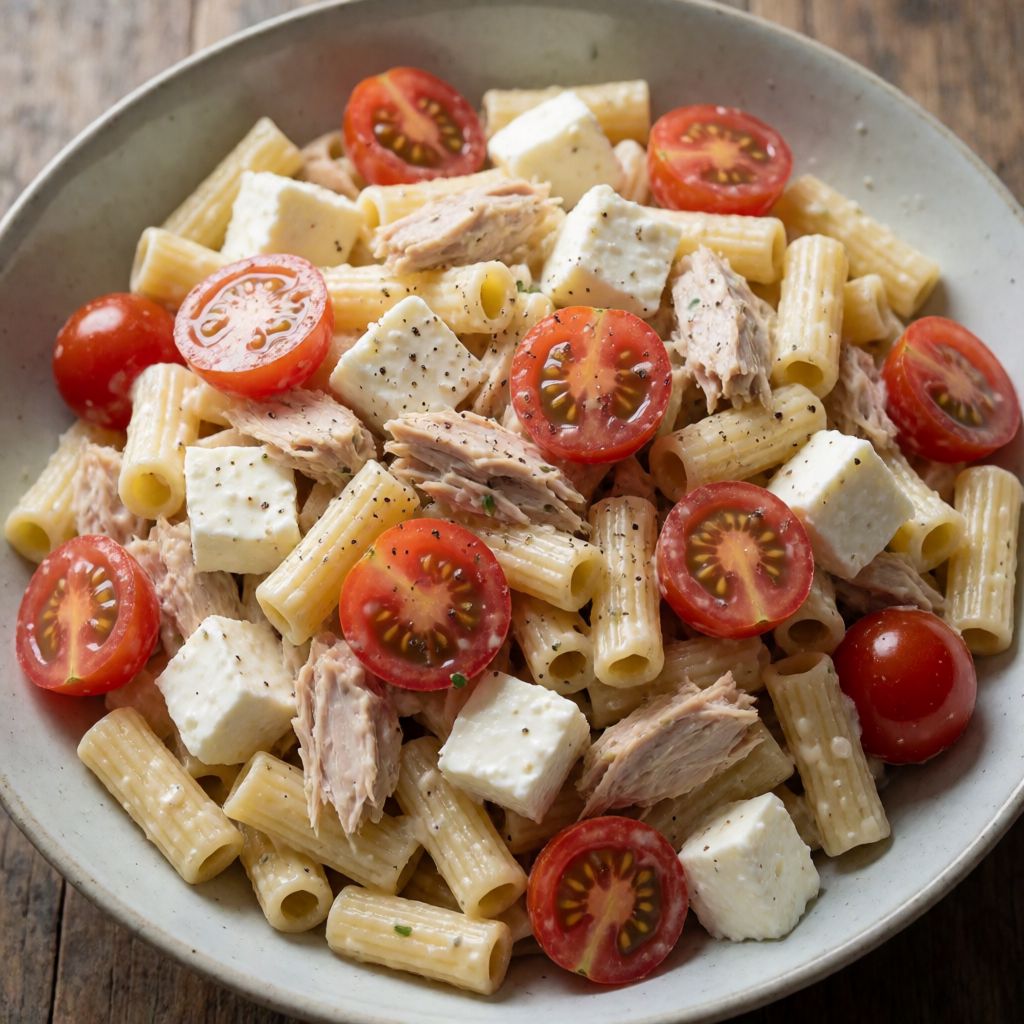
Abissine Pasta Salad with Mozzarella, Tuna and Datterini Tomatoes
A fresh pasta salad with abissine, mozzarella, tuna and datterini tomatoes.
Labels are worked out automatically from the ingredients and can be wrong. Check the packaging if it matters to you.
Ingredients
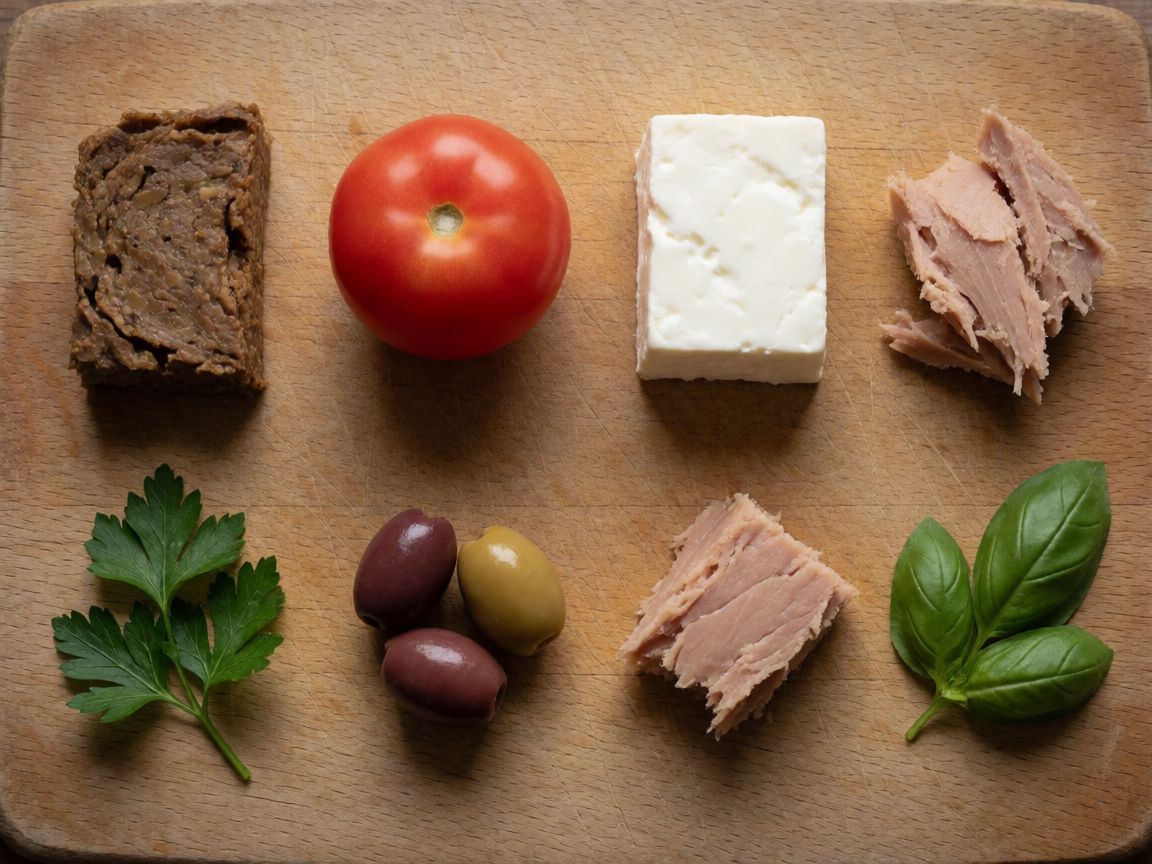
- 500 g Abissine pasta
- 200 g Datterini tomatoes sliced into rounds
- 1 pcs Fior di latte diced
- 120 g Tuna drained of excess oil
- Salt to taste
- Black pepper to taste
- Olive oil to taste
- 1 tbsp Taggiasca olives
- Parsley to taste
- 6 pcs Basil chopped










Steps
Cook the abissine pasta and drain while still firm to the bite (al dente).
Cool the pasta under cold running water, then transfer to a bowl.
Add the diced fior di latte, tuna, olives and sliced datterini tomatoes.
Add black pepper, salt and olive oil, and mix well.
Sprinkle with parsley and basil.
Chill in the fridge until ready to serve.
This is not a sauced pasta – it is a pasta that never gets a sauce, because the vegetables and the fish make one for it while it sits in the fridge. That is the whole engineering of the dish: cook the pasta, stop it cold, and let salt and oil do the rest without a flame anywhere near it. Good for a kitchen that does not want to be heated twice in one day, which in a British summer is most days.
What decides whether it works is not the ingredients, it is timing against temperature. The pasta has to be truly al dente when you lift it out, because the fridge does not stop cooking the way a flame does – residual moisture and the dressing itself will go on softening it slowly for hours. Undercook it on purpose, by a minute you'd never allow for a hot plate of pasta, and it will be exactly right by the time it's cold.
The second thing that decides it is how wet everything stays. Tomatoes, tuna, mozzarella all carry water or oil of their own. If you don't manage that – drain the tuna properly, let the tomatoes' juice run rather than trap it – you get a bowl of pasta standing in a puddle instead of a salad coated in a dressing. Some say a tin of tuna needs its oil left in for flavour. No, because that oil just sits on top of everything else like a film and keeps your olive oil and tomato juice from ever becoming one dressing.
On the pasta itself: 'Abissine' is a short, ridged tube, the kind of shape bred for exactly this job – the ribs on the outside catch tiny dice of mozzarella and crumbs of tuna that a smooth tube would just let slide off. If you can't find it, the rule is not the brand, it's the shape: anything short, tubular, with ridges – penne rigate, sedanini, even a sturdy fusilli – works, because what matters is surface for the dressing to grip, not the name on the packet. A smooth, glassy pasta like plain penne lisce will taste thinner for no reason other than geometry.
Rinsing the pasta under cold water looks like heresy if you've been told, correctly, never to rinse pasta that's about to meet a hot sauce – there, you want the starchy film so the sauce clings. Here the opposite problem exists: pasta left to cool on its own turns the surface starch to glue, and a bowl of pasta salad left in the fridge overnight becomes one solid block you have to break apart with a fork. Cold water washes that starch off while the pasta is still loose, grain by grain, so it stays separate instead of setting like a jelly.
Fior di latte is mozzarella made from cow's milk rather than buffalo – firmer, less water inside it, which matters enormously in a cold salad: buffalo mozzarella will weep milky liquid onto the plate within the hour, fior di latte mostly won't. If you only have buffalo mozzarella, salt the diced pieces lightly and let them sit on a paper towel for ten minutes first, to draw some of that water out before it ends up in your bowl. Any firm, mild, white cheese that holds a cube shape will do at a pinch – a diced halloumi rinsed of its brine, say – though it will taste nothing like Italy, just like itself.
Tuna here is a protein, not a flavour you're trying to taste through oil – which is exactly why it needs draining hard, pressed against the side of the tin or a sieve, not just tipped out. Oily tuna coats every other ingredient in a slick before the real dressing gets a chance. Datterini tomatoes are small, dense, and sweeter than an ordinary salad tomato because they're grown to concentrate sugar rather than water – cherry tomatoes are the honest substitute, just slice them thinner since they usually carry more juice than datterini do.
Taggiasca olives are small, oil-cured, and bitter in a way that's meant to cut through all that cheese and fish fat – they're doing a job, not decorating the bowl. A big brined black olive, soft and mild, won't do that job; if that's what's in the cupboard, use fewer of them and chop them, so the bitterness is spread rather than hit in single large mouthfuls. Basil and parsley go in at the very end, after everything is cold, because basil in particular turns from green to grey and loses its scent entirely if it meets any heat or sits too long pressed against acid – tear or chop it last, almost as you serve.