
 AI photo
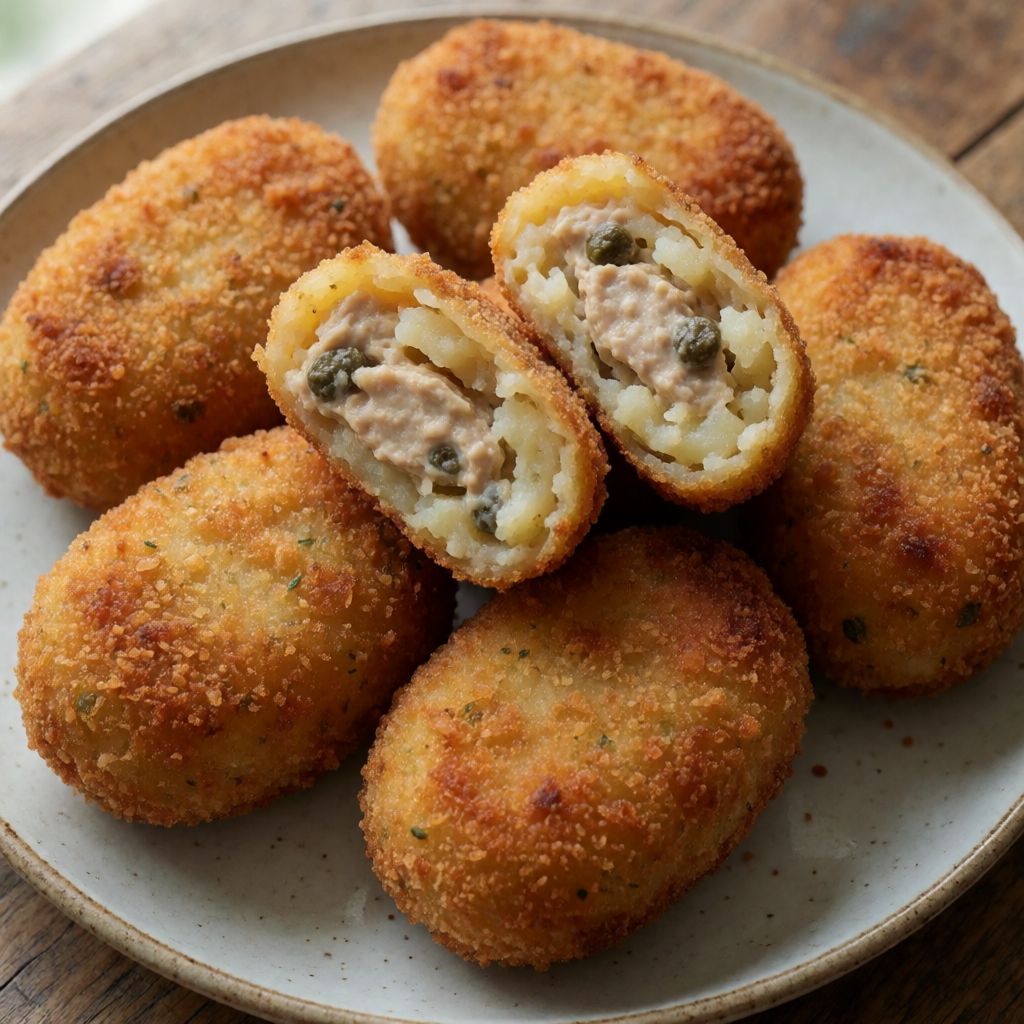
Tuna and Potato Croquettes
Soft tuna and potato croquettes, pan-fried or baked until golden, finished with a sauce and vegetables on the side.
Labels are worked out automatically from the ingredients and can be wrong. Check the packaging if it matters to you.
Ingredients
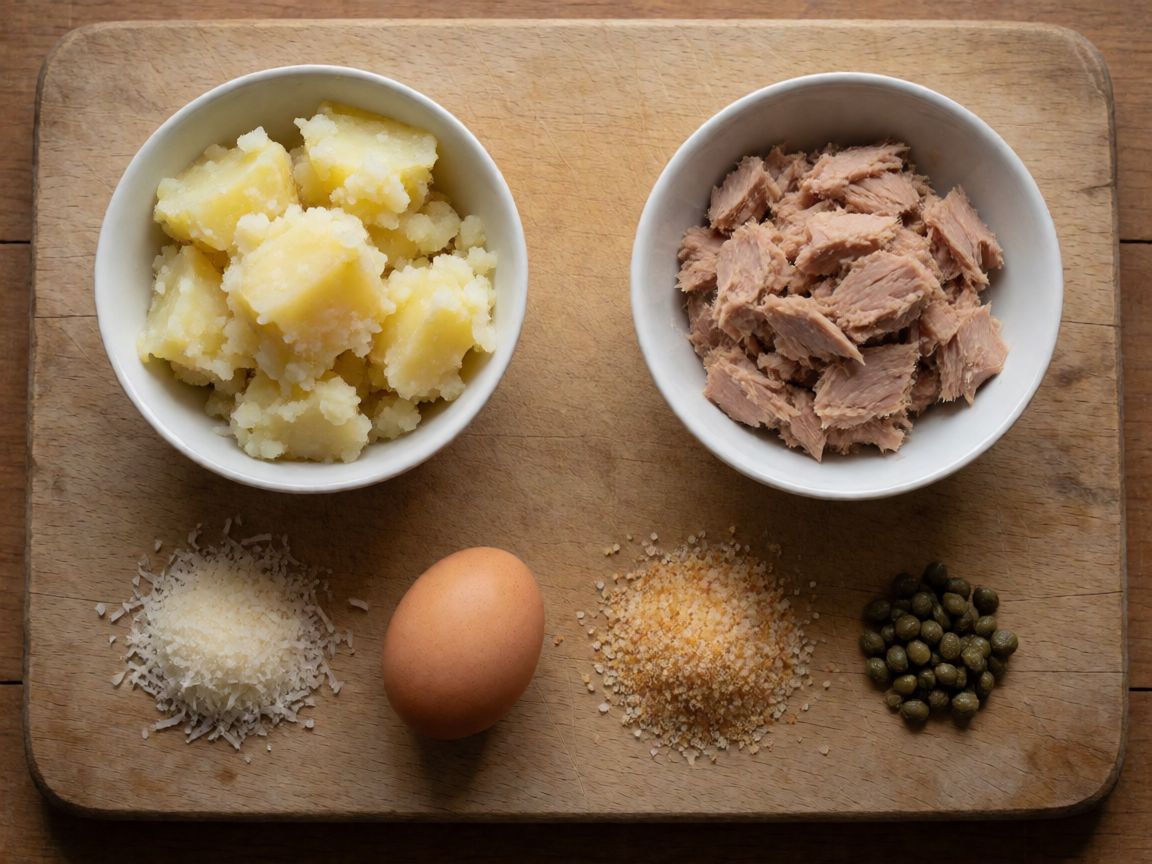
- 500 g Potato, boiled
- 380 g Tuna in oil
- 1 pcs Egg
- 50 g Parmesan
- 40 g Breadcrumbs
- 20 g Capers
- Salt to taste
- Black pepper to taste
- Olive oil for frying
- Olive oil for baking







Steps
Boil the potatoes in lightly salted water.
30 minPeel the potatoes while still warm and mash with a potato masher or fork.
Transfer the mash to a large bowl and add the tuna in oil.
Season with salt and pepper, then add the egg, capers and Parmesan.
Add a little of the breadcrumbs for a firmer texture.
Mix everything well, cover the bowl with cling film and chill in the fridge.
30 minTake small amounts of the mixture and shape into balls of about 30 g each.
Roll the balls in breadcrumbs, shaping them into spheres.
Heat a pan with plenty of oil and fry the croquettes, turning occasionally for an even golden colour.
For a lighter version, place the croquettes on a baking tray lined with baking paper, drizzle with olive oil and bake in an oven preheated to 180°C.
15 minServe the croquettes with a sauce and a vegetable side.
A croquette is a question about water. Potato is mostly water held in starch, tuna in oil brings its own fat and a bit of moisture, and the egg and Parmesan are there to pull it all into one mass instead of a crumbling heap in the hot oil. Everything that goes wrong with this dish — oil splitting, balls falling apart, a soggy middle — is a water-and-binding problem, not a flavour problem.
Boiling the potato whole and peeling it warm isn't fussiness, it's starch management. A cold, already-peeled boiled potato takes on water again and turns gluey when mashed; mash it warm and dry instead, and the starch grains stay separate, giving you a mash that's dense enough to hold its shape but not wet. That's also why there's no milk or cream in this mash, unlike a Sunday-roast potato — any extra liquid here is your enemy, not your friend.
The fridge rest is doing two jobs at once, and both matter more than the thirty minutes suggests. The fat in the mixture firms up, so the ball keeps its shape when it hits the oil instead of slumping and leaking. And the breadcrumbs inside have time to actually drink up any stray moisture rather than you discovering it's too wet only once it's frying. Skip the rest and you're not saving time, you're frying soup.
The potato is the frame, not the flavour — any floury, boiling variety works, the kind that falls apart rather than holds a cube shape when cooked (Maris Piper or King Edward, since you're in the UK, are built exactly for this; a waxy salad potato will leave you with a wet, bendy mash that never sets in the pan).
Tuna in oil, not in brine — the oil is doing load-bearing work here, carrying flavour into the fat phase of the mixture and keeping the croquette tender inside instead of dry and sawdust-like, which is what you get from the dry flesh of brine-packed tuna. Drain it, but don't rinse away every trace of oil as if it were an impurity; it's an ingredient.
The egg is the one true binder in this recipe — its proteins set the moment they hit heat and lock the shape. Parmesan does double duty: salt and savour, yes, but its low moisture and hard structure also stiffen the mix the way breadcrumbs do, just with more character. A vegetarian Italian-style hard cheese works the same way if you're avoiding animal rennet; a soft cheese will not, because it melts and loosens rather than firms.
Capers are the one note that cuts through all that richness — fat on fat on starch needs something sharp or it sits heavy. If you've none, a squeeze of lemon zest or a few chopped green olives does a similar job of waking the mixture up, though the brine-sharp bite of a caper is hard to copy exactly.
Breadcrumbs appear twice for two different reasons. Inside the mix, a small amount firms the texture by soaking excess moisture — more than "a little" and you'll taste cardboard. Outside, rolled on as a coat, they're what actually crisps and browns, because breadcrumbs toast at a lower threshold than the moist interior can ever reach; that crust is your only defence against the croquette drying out from the inside while it fries. If you want the croquette whole and true, don't shortcut the double coat with just a dusting of flour — flour browns but it doesn't crunch the same way, and the cracks it leaves are where oil gets in and turns the croquette greasy rather than crisp.
On frying temperature: there's no thermometer reading given and I won't invent one — judge it by the crumb. Drop in a pinch of breadcrumb first; if it fizzes and colours within a couple of seconds, the oil's ready. Too cool and the croquette sits soaking up oil like a sponge before it ever crisps — that's the actual cause of a "greasy" croquette, not the amount of oil you used. The 180°C oven version trades that outer shatter for an all-round gentle crust — a fair swap if you're already using the oven for a Sunday roast and don't fancy a second pan on the go, but accept that the texture will be softer, closer to baked than fried, and that's not a flaw, just a different dish wearing the same name.