
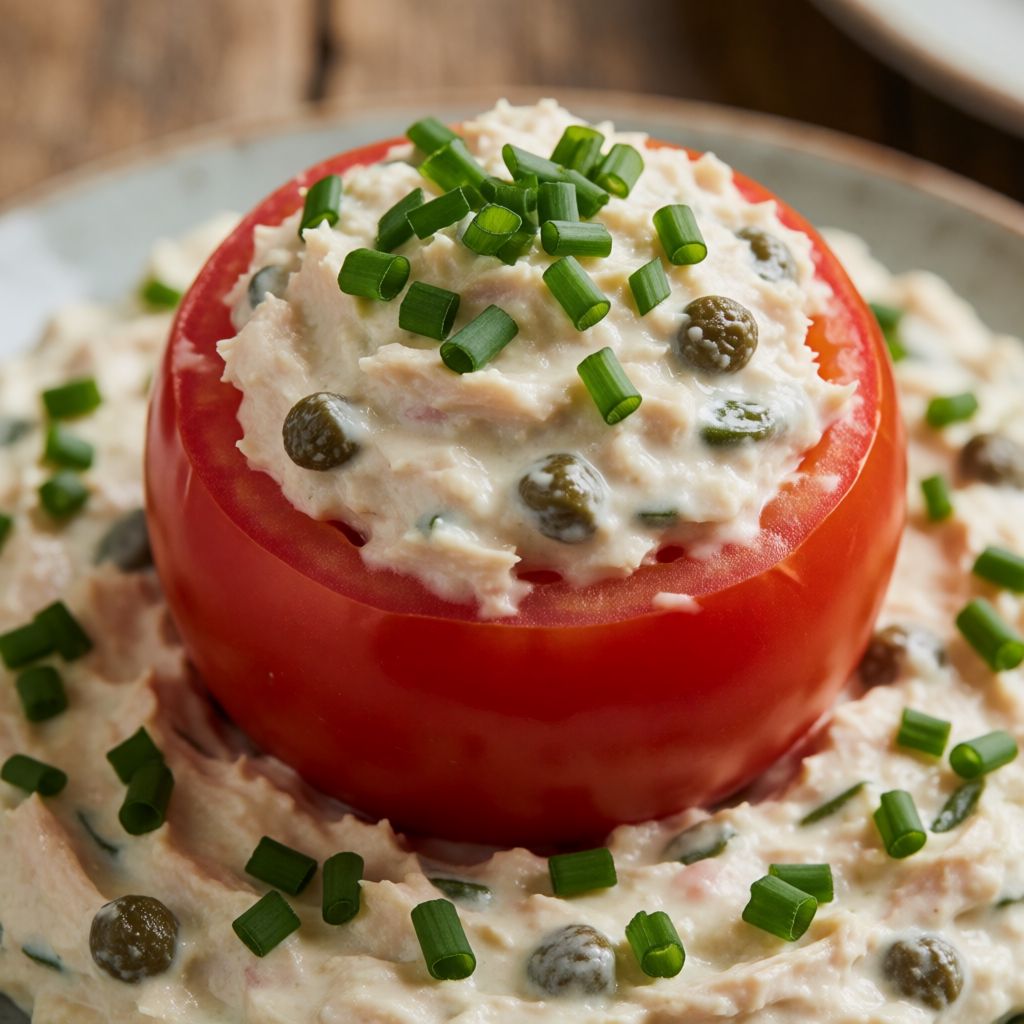
 AI photo
Tomatoes Stuffed with Tuna
Juicy tomatoes filled with a creamy tuna, caper and chive filling – a simple, refreshing starter.
Labels are worked out automatically from the ingredients and can be wrong. Check the packaging if it matters to you.
Ingredients
- 4 pcs Tomato
- 180 g Canned tuna drained
- 1 tsp Capers
- 90 g Cream cheese
- 1 bunch Chives roughly chopped




Steps
Wash the tomatoes thoroughly, slice off the tops and carefully scoop out the flesh with a spoon.
Turn the tomatoes upside down on a rack and leave to drain.
7 minFinely chop the canned tuna together with the rinsed capers.
Transfer to a bowl and add the cream cheese.
Add a little roughly chopped chives.
Mix everything until smooth and creamy.
Fill each tomato with the prepared filling.
Garnish with a few capers on top.
This is not cooking, it's assembly. A tomato becomes a bowl, a tin of tuna becomes a filling, and nothing between you and the result gets heated, so there's nowhere for a flaw to hide. That's the whole character of the dish: raw and exposed. If the tomato is wrong, you taste it. If the tuna is drained badly, you taste that too.
What decides whether it works is drainage, twice over. First the tomato: you've cut a hole in its skin and scooped it out, and a tomato wants to leak through that hole the moment gravity gets a vote. Turn it upside down and let it drip, because a filling poured into a wet shell turns to soup within the hour, and nobody wants tuna soup in a tomato. Second the tuna: tinned fish carries brine or oil in its flesh, and that liquid will thin your cream cheese until it slides off a spoon instead of sitting on it.
Some say salt the tomato halves first to pull the water out faster — no, because you've already breached the skin by cutting it open, and the juice pools and runs on its own once gravity gets to work; salting here just adds salt you don't need, on top of the capers and the tuna, both of which already carry plenty.
The seven minutes draining is a floor, not a clock to watch. The real sign is the plate underneath: once it stops gathering juice, the tomato is ready to be filled. Rushing this one step is the single most common reason this dish disappoints — patience here costs you nothing but a few minutes, and buys you a filling that stays where you put it.
Tomato: you want one with firm walls and not too much water in its cells — a tomato that holds its shape when you press a thumb into it, springs back rather than dents. Supermarket tomatoes here are often picked hard and ripened in transit, which gives you firmness without flavour — leave them on a windowsill a day or two if you have the patience, because flavour here is doing real work, there's no pan, no heat, nothing to build it for you. Avoid the softest, juiciest ones no matter how good they smell; they're lovely raw in a salad and useless as a vessel, they'll collapse before you've even filled them.
Canned tuna: this is the ingredient that makes the dish what it is, economically speaking — tinned fish exists because someone needed protein that doesn't need a fridge or a fast boat, and there's no shame in it, no need to dress it up as something it isn't. Oil-packed gives you a little more richness, brine-packed a cleaner taste; either way, drain it properly before you chop it, because the liquid it carries is exactly the kind of thinning agent that turns your filling runny, same mechanism as the tomato juice, just arriving from a different direction.
Capers: rinse them, always, whether they came in brine or in salt. They're preserved hard, on purpose — that's how they survive the tin or the jar — and if you skip the rinse, what you taste is the preserving liquid, not the caper. A quick swirl under the tap and a pat dry, and suddenly you taste the caper itself: sharp, a little green, not just salty.
Cream cheese: pick a block-style, full-fat one, not a whipped or light version. Whipped cheese carries air in it, and air doesn't bind chopped tuna — it just sits next to it. You want a cheese heavy enough to hold its own weight on a spoon, so it can hold the tuna's weight too. If you've none in the flat, well-drained ricotta or thick yoghurt strained overnight through a cloth will do the same job — the criterion is simply: does it stand on a spoon without sliding.
Chives: their job is a small sulphurous bite that cuts through the richness of cheese and tuna, so the filling doesn't sit heavy on the tongue. No chives — use the green part of a spring onion, chopped fine, same family, same effect. Dill works too, though it changes the character slightly, pulling it toward something more Scandinavian than Mediterranean; still correct, just a different accent on the same idea.
Because nothing here gets cooked, buy slightly better than you normally would for these four things — the tomato, the tuna, the cheese, the capers. There's no heat to forgive a cheap tin or a mealy tomato. This is a starter for four, a little antipasto before something heavier — a Sunday roast, say — not a meal on its own, and it rewards the twenty minutes you spend on it exactly in proportion to the quality you put in.