
 AI photo
Vanilla Custard
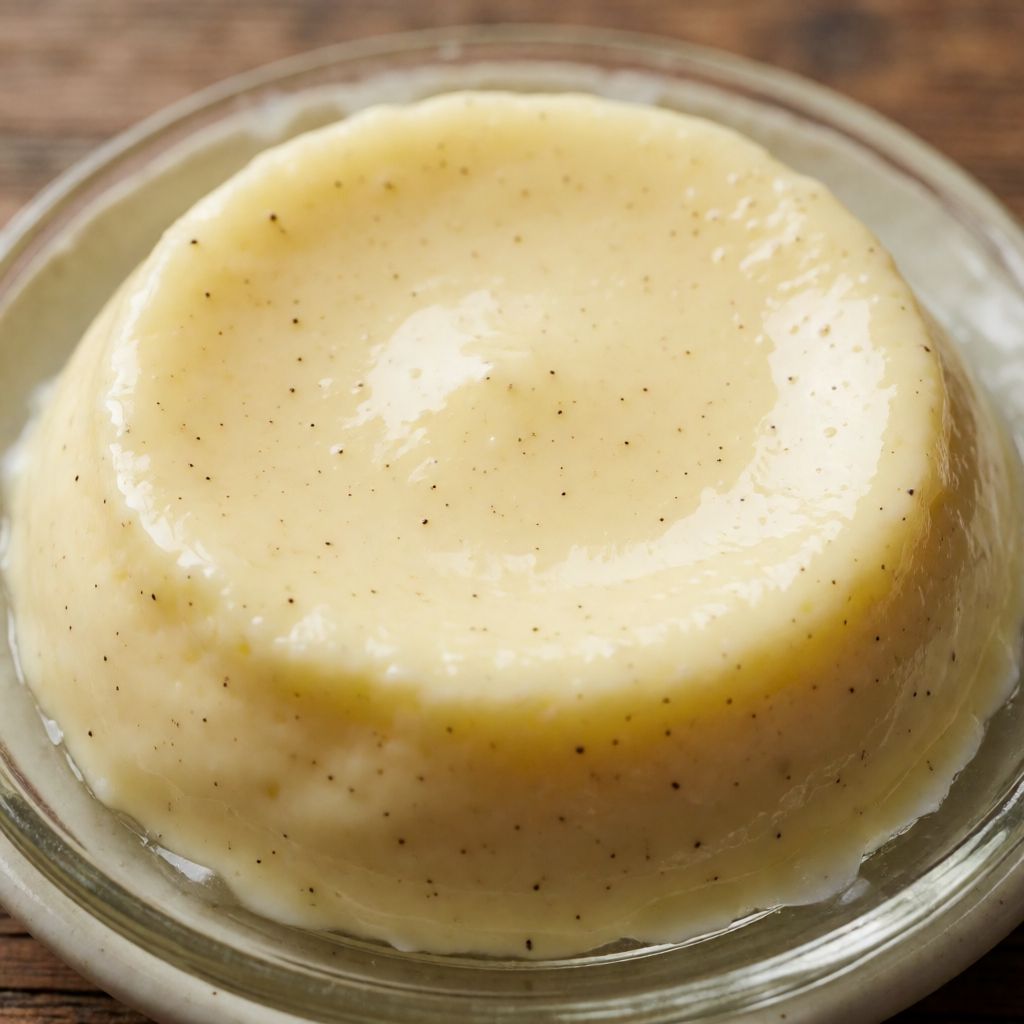
A silky vanilla custard made with egg yolks, sugar and milk, thickened with cornflour and chilled until set.
Labels are worked out automatically from the ingredients and can be wrong. Check the packaging if it matters to you.
Ingredients
- 1 pcs Vanilla pod
- 120 g Sugar
- 6 pcs Egg yolks
- 30 g Cornflour
- 500 ml Milk whole





Steps
Split the vanilla pod lengthways and scrape out the seeds.
Rub the vanilla seeds into the sugar until well combined.
In a saucepan, whisk together the vanilla sugar, egg yolks and cornflour until smooth.
Whisk in the milk, then heat gently, stirring constantly, until it just comes to the boil.
8 minSimmer the custard over a low heat, stirring, until it thickens.
5 minPour the custard into a bowl, cover the surface with cling film and chill until cool.
15 min
This is a pastry cream dressed as a dessert on its own — the same thickened, egg-yolk-and-starch custard that goes into tarts and trifles, except here you eat it straight from the bowl with a spoon instead of pouring it under fruit or crust. What decides whether it works is not flavour, vanilla is forgiving, but texture: whether the starch has fully done its job and whether the surface skin has been stopped from forming while it cools.
Some say custard must never be allowed to boil, or it curdles. That is true for crème anglaise, the thin egg-only sauce with no starch in it. It is not true here. Cornflour changes the rules: the starch granules get between the egg proteins as they swell with heat, so the proteins can't bond tight and seize into curds the way they do alone. This custard is actually meant to reach a boil — step four says so on purpose. Skip that and the starch never gelatinises properly; you'll have a thin, chalky liquid that thickens a bit more in the fridge and still tastes of raw flour.
You have no thermometer and don't need one. Watch the milk: first it steams without moving, then little slow bubbles break at the edge of the pan before the whole surface shivers and finally heaves — that's your boil, no more violent than that. After it drops to a simmer, the custard thickens the way porridge does: a spoon dragged through leaves a trail that holds its shape for a second instead of closing straight back over. That trail is doneness. The 8 and 5 minutes in the recipe are there to tell you it won't happen instantly, not to tell you when to stop watching.
The vanilla pod isn't there for look. The flavour compounds sit bound up in the oily paste inside the pod, and rubbing the scraped seeds into sugar does real work — the sugar crystals act like fine sandpaper, breaking the seed casings open and carrying the oil through the whole batch instead of leaving it in clumps at the bottom of the pan. If you only have vanilla extract, use it, added with the milk rather than rubbed into sugar — a teaspoon or two, whatever the bottle gives as 'pure' not 'flavouring'. Extract has already done the breaking-open for you; there's nothing left to rub.
Only the yolks go in, not the whites, and that's not economy, it's structure. Egg whites set firm and rubbery on heating and would turn this glossy custard grainy and cloudy. Six yolks for 500ml of milk is a rich ratio — closer to ice-cream-base territory than to a thin custard-for-tea. Use the freshest eggs you can, because a stale yolk breaks more easily and gives a flatter colour; there's no good substitute for a yolk doing a yolk's job here.
Cornflour is the one ingredient that makes this a different animal from a boiled egg custard, and it earns its place by being a pure starch with almost no flavour of its own — potato starch or rice starch will do the same job if that's what's in your cupboard. What it will not do is swap straight for plain flour. Flour carries raw-grain compounds that need longer cooking to cook out, and it thickens less per gram, so you'd need roughly double the weight and extra minutes of simmering, with a duller set and a faint flour taste if you rush it. Mixing the cornflour into the dry sugar and yolks before any liquid touches them matters too — wet starch clumps on contact with itself, dry starch mixed with dry sugar stays separated, so when the milk goes in it disperses smoothly instead of leaving little hard knots that never fully dissolve.
Whole milk gives body because of its fat; skimmed will set thinner and taste more of 'milk' than of custard. If you want it richer still, you can replace some of the milk with single cream, but go carefully — higher fat content lowers the point at which things can separate under hard heat, so keep the stirring constant and don't let it go beyond a gentle boil once cream's involved.
The cling film pressed onto the surface while it cools isn't fussy plating, it stops a specific defect: skin. A custard left open to the air loses moisture fastest at the top, and that drying surface sets into a tough, slightly rubbery film that most people then scrape off and bin — wasted custard. Press the film down so there's no air gap, and the whole batch cools as one smooth texture, no skin to peel.
One honest note on quantity: this recipe is written as serving one, but six yolks and half a litre of milk will not sit in a single bowl — that's closer to four modest servings, or dessert for a family after the Sunday roast rather than a solo treat. Worth knowing, too, that British tins of custard powder — Bird's — contain no egg at all, just cornflour and colouring, invented in the 1830s by a chemist whose wife couldn't eat eggs. It became a national habit not because it tastes better but because it was cheaper and kept longer on a shelf. This version, with real yolks doing real work alongside the starch, is the dish that powder was invented to imitate.