
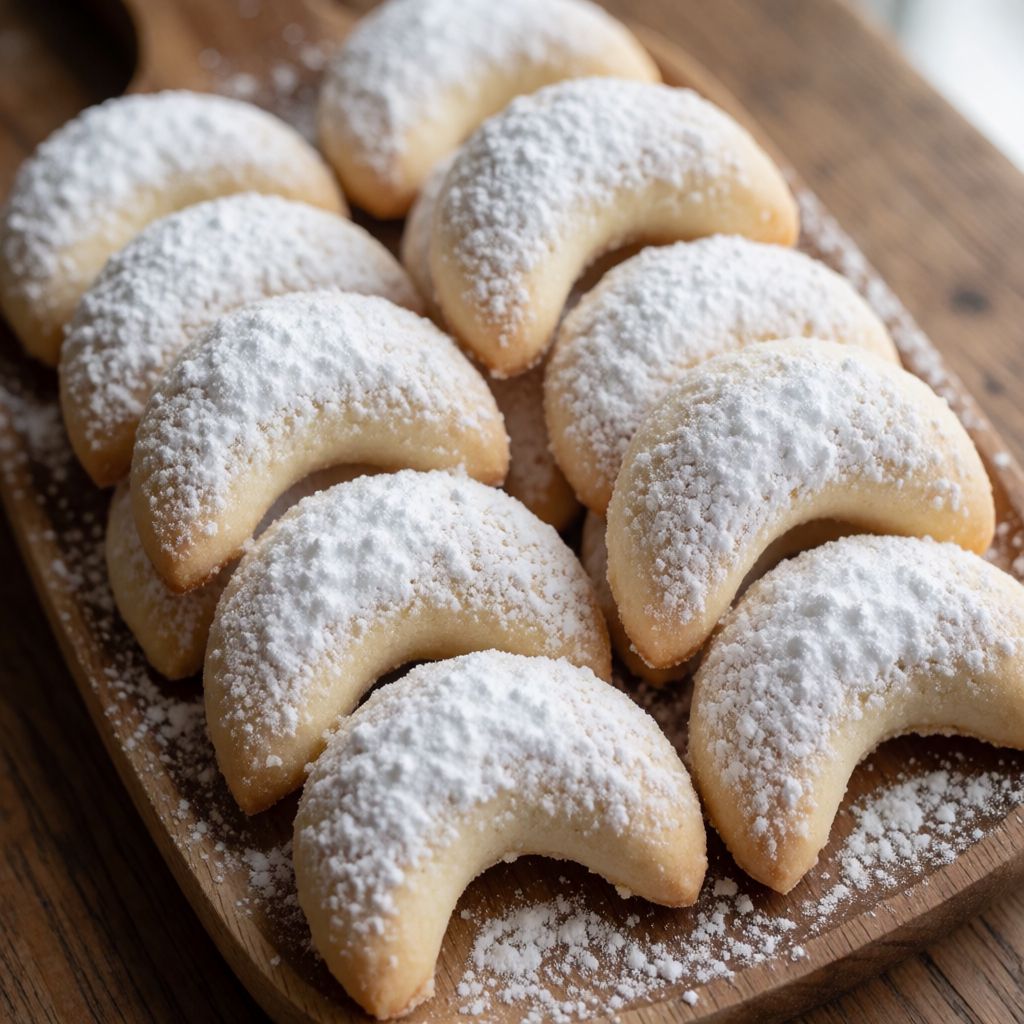
 AI photo
Vanilla Kipferl
Buttery almond-vanilla crescent biscuits, rolled in sugar while still warm.
Labels are worked out automatically from the ingredients and can be wrong. Check the packaging if it matters to you.
Ingredients
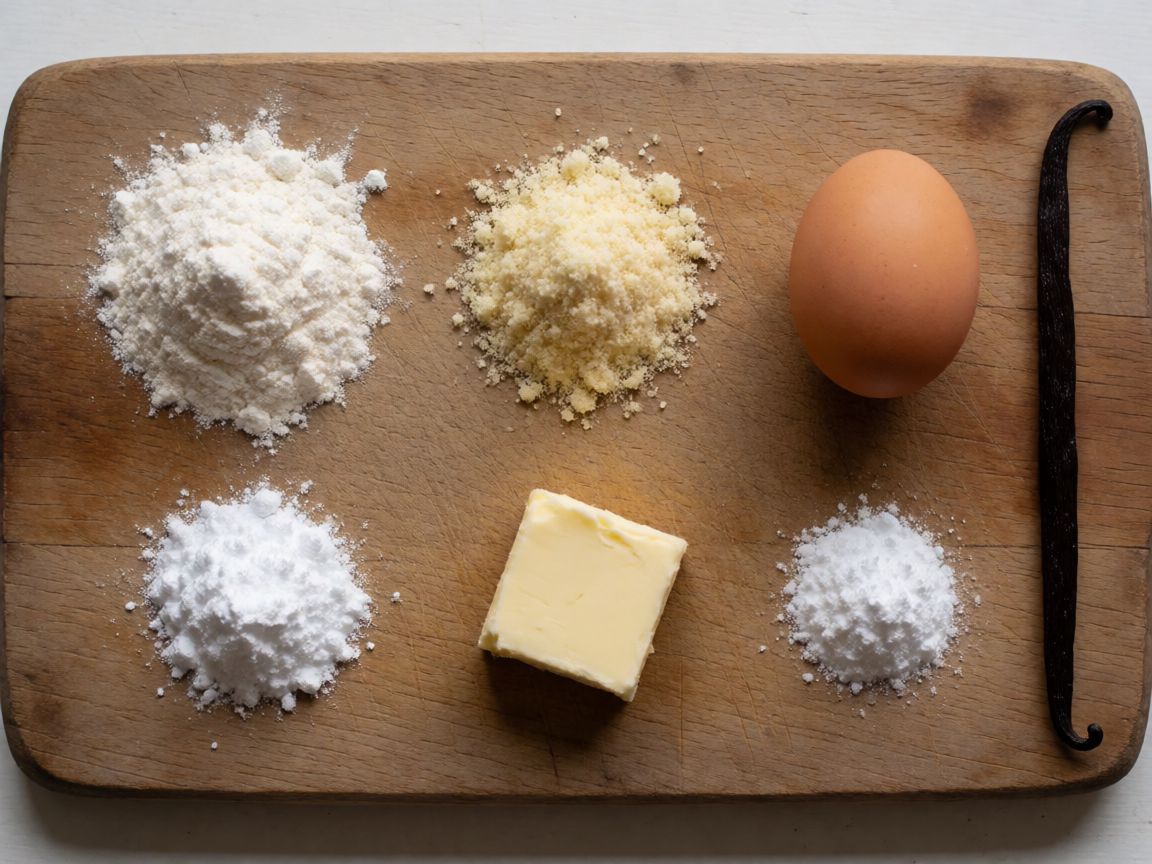
- 100 g Plain flour
- 80 g Ground almonds
- 1 pcs Egg
- 40 g Icing sugar
- 80 g Butter cold
- 1 pinch Salt
- 1 pcs Vanilla pod
- Icing sugar to taste, for rolling
- Vanilla sugar to taste, for rolling








Steps
Pile the flour on a work surface, make a well in the centre, and add the egg and icing sugar. Split the vanilla pod and scrape out the seeds.
Add the ground almonds, a pinch of salt and the cold butter, cut into cubes. Quickly work into a smooth ball of dough.
Wrap the dough in cling film and chill in the fridge.
45 minTake the dough out and shape it by hand into small cylinders about 1 cm in diameter.
Cut into pieces about 6 cm long, tapering the ends, then curve each into a crescent shape.
Place the biscuits on a baking tray lined with baking parchment and bake at 170°C (fan) for 10-15 minutes, or 180°C (conventional) for 15-18 minutes.
15 minLet the biscuits cool for a few minutes while still warm, then roll them in sugar.
This is a shortbread, not a cake — and that one fact decides everything else. Flour, almonds, butter, a whisper of egg: no raising agent anywhere, because nothing here is meant to rise. The crumb you're after is sandy, almost breaks under the tooth, and that texture comes from one mechanical trick: cold butter coating the flour particles before the egg's moisture has a chance to develop gluten. Work it fast, work it cold, and the dough stays short. Let the butter warm in your hands while you fuss over it, and you've built little gluten strands you didn't want — the biscuit turns from 'crumbles pleasantly' to 'chews like a digestive'.
The chill in the fridge isn't decoration, it's the dough buying back the coldness your hands took from it. Skip it and you'll be rolling warm butter-paste that won't hold a crescent shape, it'll just slump on the tray and spread flat in the oven — more puddle than biscuit.
The shape matters too, and not for looks. Taper the ends, and those thin tips bake through and crisp while the fat belly of the crescent stays pale and tender — one biscuit, two textures, on purpose. Some say the crescent itself is a trophy shape, baked to celebrate the defeat of the Ottomans outside Vienna in 1683, bakers mocking the enemy's flag in pastry form. No — crescent-shaped breads and biscuits turn up in Austrian records a good two centuries before that siege. Good story, wrong bakery. The shape is older and plainer than the legend: it's just a comfortable thing to form by hand from a short cylinder of dough, nothing more patriotic than that.
Flour here is structure and nothing else — it's the almonds doing the flavour work, so don't reach for a fancy one, plain flour is exactly right; its job is to hold the fat and sugar together, not to announce itself.
Ground almonds replace a third of what would otherwise be flour, and that swap is the whole personality of this biscuit. Almonds bring their own fat and zero gluten, which is why the dough stays short even where flour alone would start toughening up. Buy them pre-ground if your kitchen doesn't run to a food processor, but check they're dry and pale, not oily and clumped — clumped means they've gone rancid or damp, and that fat will taste of the tin, not of almond. Hazelnuts, finely ground, are the honest substitute if almonds aren't in the cupboard; the texture holds, the flavour just turns a shade earthier.
Butter must be cold, properly cold, straight from the fridge and cut into cubes rather than softened — that's the whole method in one sentence. Any butter will do, but unsalted gives you control over the single pinch of salt the recipe actually wants; salted butter just means guessing how much salt you've already got.
The egg is binder, not leavener — there's so little flour-protein structure here that one egg is plenty of glue to pull crumbs into a dough. Icing sugar, not caster, because its fineness dissolves into the dough without grit, leaving no undissolved crystals to catch in your teeth, and it won't fight the butter for moisture the way coarser sugar can.
The vanilla pod is the one place not to economise with a bottle of vanilla essence that smells of alcohol more than vanilla — scrape the seeds in for the dough, then don't throw the spent pod away, bury it in your icing sugar jar for a week and you've made your own vanilla sugar for the rolling stage, which is cheaper and better than buying a sachet. If a pod's out of reach, a teaspoon of real vanilla paste is the honest stand-in; vanilla essence from a bottle is the one you want to avoid, it reads as perfume rather than flavour once baked.
Rolling the warm biscuits in sugar, not hot ones, matters for the same reason icing sugar works on a warm scone: warm biscuits have just enough surface moisture to hold the sugar, hot ones melt it into a wet glaze that dries shiny and hard rather than soft and matte. Let them sit those first few minutes out of the oven before you touch them — that's patience doing its quiet, unglamorous job, and it's the difference between a biscuit coated in snow and one coated in syrup-crust.