
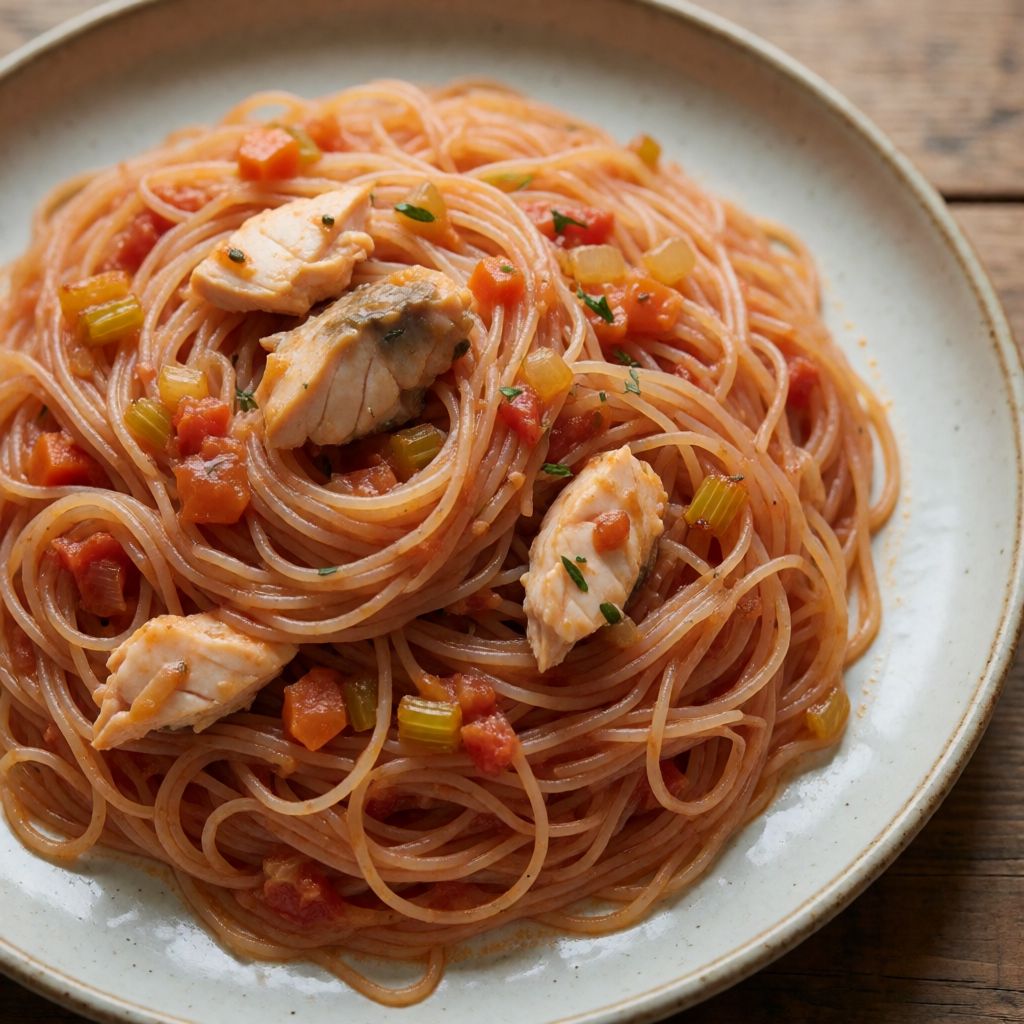
 AI photo
Vermicelli with Sea Bream Ragù
A simple fish ragù of sea bream fillets simmered with tomato and white wine, tossed with vermicelli.
Labels are worked out automatically from the ingredients and can be wrong. Check the packaging if it matters to you.
Ingredients
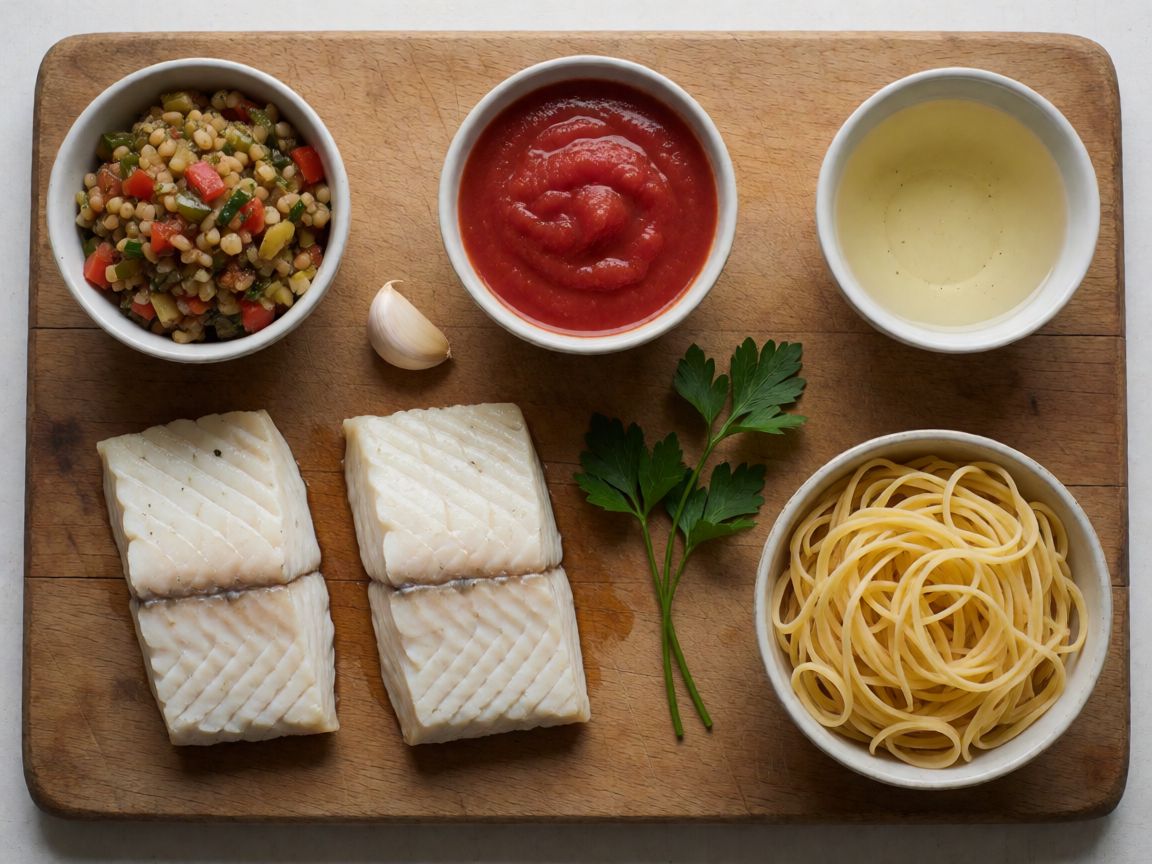
- 2 pcs Sea bream fillets
- 100 g Soffritto mix (onion, carrot, celery)
- 1 clove Garlic
- 200 g Tomato passata
- 125 ml White wine
- 2 tbsp Olive oil
- pinch Salt to taste
- pinch White pepper to taste
- 1 bunch Parsley to taste
- 400 g Vermicelli pasta










Steps
Use tweezers to remove any small bones from the sea bream fillets.
Fry the soffritto mix with the garlic in olive oil.
Add the sea bream, diced, and fry for a few minutes; the fish should reach 63°C.
Pour in the white wine and let it evaporate completely.
Add the tomato passata and simmer gently.
10 minSeason with salt, white pepper and sprinkle with parsley.
Cook the vermicelli until al dente, drain and toss into the pan with the sauce.
Mix well, fry briefly together and serve, sprinkling with extra parsley if you like.
This is a quick fish ragù pretending to be a tomato sauce — it leans on sea bream for body and the soffritto for sweetness, and it lives or dies on how gently you treat the fish. Sea bream flakes apart if you look at it wrong, so the whole method is built around not overcooking something that cooks in minutes, not seconds, but close.
What decides the dish: the fish going in diced, not whole, so it fries fast and evenly rather than sitting in the pan going rubbery while you wait for the middle to catch up. And the wine needing to actually evaporate, not just get warm — if you rush that step the sauce tastes of raw alcohol, sharp and thin, instead of round.
Some say fish sauces need long, slow simmering like a meat ragù. No — meat needs time to break down tough collagen into gelatine; fish has none of that structure to dissolve. Ten minutes of gentle simmer is there to let the tomato lose its raw edge and marry with the fish juices, not to tenderise anything. Push past that and you're not deepening flavour, you're turning good fillet into mush.
Sea bream is the backbone here, and tweezering out the pin bones first isn't fussiness — it's the difference between a sauce you eat with confidence and one you eat cautiously, checking every forkful. Bream has fine bones that hide in the flesh; find them cold, with good light, before the fish goes anywhere near heat, because once it's cooked and flaking you'll never spot them by touch alone. No bream to hand? Any firm white fish that holds its shape when diced works — hake, sea bass, even a sturdy cod loin — just avoid anything that was already flaking before you cut it.
The soffritto — onion, carrot, celery, diced small — is doing the job Italian kitchens have always asked of it: building sweetness and backbone cheaply, from vegetables that keep, before the expensive ingredient (the fish) even enters the pan. Fry it in oil with no flavour of its own to protect — a neutral olive oil or sunflower oil — because you want the vegetables' own sweetness to come through, not a second competing taste. The onion should move from pale to soft and faintly gold; past gold and into brown is where sweetness turns to bitterness, so don't wait for colour you don't need.
The fish goes in diced for surface area — more edges catching the hot pan means faster, more even cooking, and less time for the centre to overshoot. 63°C is the point where the proteins have just set and the fish is still moist; it climbs fast once it's in a hot pan, so this is a moment to watch, not to walk away from. If you don't have a thermometer, the fish going opaque and starting to flake at the edges when nudged with a spoon is your sense-cue — pull it a touch before it looks fully done everywhere, because it keeps cooking in the sauce afterwards.
White wine deglazes what's stuck to the pan and lifts the fish fond into the sauce, but only once the alcohol itself is gone — you're listening and smelling for the sharp vinous smell fading into something sweeter. Any dry white without noticeable sweetness will do; a wine with sugar in it will fight the tomato later. If you don't cook with wine, a splash of water with a squeeze of lemon gets you the acidity without the alcohol, though you lose some depth.
Tomato passata rather than whole tinned tomatoes is a texture choice — it's already smooth, so it coats the vermicelli instead of sitting in chunks that fall off the fork. Ten minutes of gentle simmer, not a hard boil, lets the tomato's raw acidity soften against the fish and vegetable sweetness; a hard bubble would just reduce it to something thick and separated, oil floating free of the tomato.
Vermicelli specifically, because it's thin enough to pick up a loose, fish-based sauce without the sauce clinging in blobs the way it would to a tubular pasta — this is a sauce for coating, not for trapping in grooves. Salt the pasta water properly; the pasta's your only chance to season from the inside, since the sauce itself only gets salted lightly, to taste, at the end. Toss the drained pasta into the pan rather than pouring sauce over a plated nest — that last brief fry together is where the starch on the pasta surface grabs the sauce and the two stop being two separate things on a plate. Parsley goes in raw, at the end, for the same reason you don't boil herbs: heat kills the brightness you added it for in the first place. This feeds four as a main, no side needed — it's a complete plate on its own, the way a proper Sunday roast doesn't need convincing either.