
 AI photo
Vol-au-vent with Ham Mousse
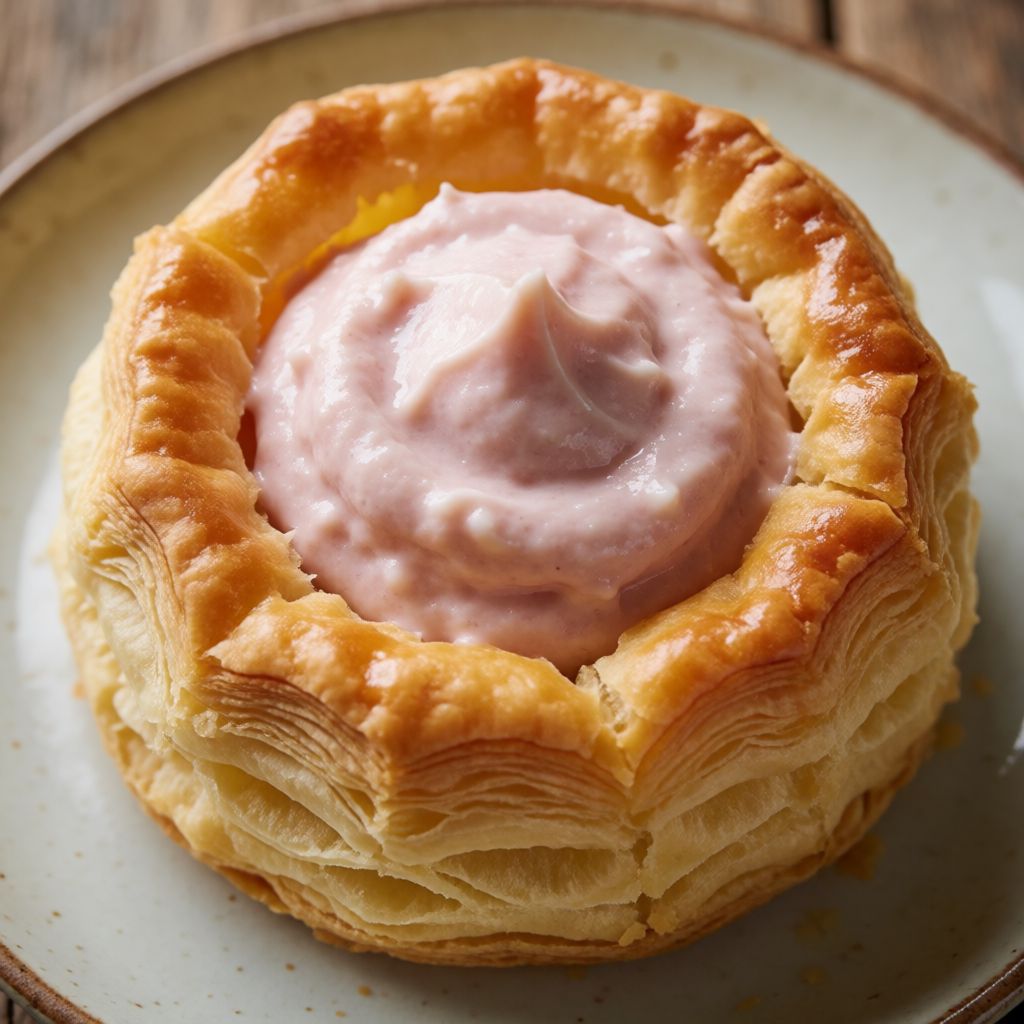
Puff pastry vol-au-vent cases filled with a creamy ham, parmesan and butter mousse, topped with diced ham.
Labels are worked out automatically from the ingredients and can be wrong. Check the packaging if it matters to you.
Ingredients






Steps
Buy ready-made vol-au-vent cases, or make your own from puff pastry by cutting and joining rounds and rings of dough.
Put the sliced ham in a blender, add the cream cheese, parmesan and milk, and blend until smooth and creamy.
Add the butter and blend everything again until fully combined.
Put the mousse in the fridge to chill.
30 minTransfer the chilled mousse to a piping bag and fill the vol-au-vent cases.
Garnish each vol-au-vent with diced ham.
This is not really a cooked dish — it is an assembly of two things made separately: a crisp, hollow puff-pastry shell and a cold, savoury mousse, married at the very last moment. Whether it works has almost nothing to do with the mousse's flavour and everything to do with timing. Pipe it into the case too early, and by the time it reaches the table the shell has gone soft and chewy where it should shatter. That is the whole game here: keep the wet and the crisp apart until the guest is about to eat.
The name itself tells you what the shell is for. "Vol-au-vent" means "flight in the wind" — a nod to how absurdly light a well-risen puff pastry case is, all air and thin buttery layers, almost nothing to it by weight. That lightness is the product of lamination: dozens of paper-thin sheets of dough separated by butter, which steams and pushes the layers apart in the oven. It's a technique that wants a cold room, a cold slab, and a baker who isn't in a hurry — none of which a flat in July reliably offers. So buying the cases ready-made isn't cutting a corner, it's recognising that pastry-making and mousse-making are two different jobs, and a home cook has time for one of them tonight.
On the ham: use sliced ham for the mousse itself, because it blends to a paste without stringy bits catching in the nozzle — sliced ham has already been pressed and has no coarse grain left to fight the blender. Dice a separate piece for the garnish, because there you want the opposite: a bite of texture on top of something smooth. If a British Sunday roast has left you with the end of a baked gammon or boiled ham joint, that's exactly the right ham for this — already cooked, already seasoned, no need to go hunting for deli packs.
Cream cheese is the matrix that holds everything together and carries a mild tang without shouting over the ham. The criterion for swapping it: any soft, fresh cheese with no strong character of its own — mascarpone will make the mousse richer and sweeter, quark lighter and sharper. Don't reach for a cheese that already has an opinion, like a strong goat's cheese; it'll fight the parmesan for attention.
Parmesan's job here is dry salt and savoury depth, delivered without adding more liquid — which matters, because the milk and cream cheese have already made the mix wetter than it wants to be for piping. Any hard, aged grating cheese does the same work; a long-aged pecorino is a fine stand-in, just saltier, so taste before you add more salt elsewhere.
Milk loosens the blend to something you can push through a piping bag — too little and it tears the nozzle, too much and it won't set firm in the fridge. The test is the dent test above, not a measuring jug. Any plain dairy liquid with a clean taste does the job; a thin pouring cream works too and makes the mousse a touch richer. Stock or anything savoury-liquid would change what this dish is, so leave that for soup.
Butter goes in after the first blend, deliberately second — straight from the fridge, not softened on the counter. Blended in cold, it keeps the mix from overheating in the machine and firms properly once chilled, which is what actually gives the piped mousse enough backbone to hold a peak rather than sag into the pastry. Cream cheese alone, at fridge temperature, is already too soft to do that job on its own; the butter is the structural ingredient here, not a flavour one.
No piping bag at home is not a reason to improvise with a spoon and hope — a strong sandwich bag with one corner snipped off gives you the same control, which is the real point of a piping bag: a narrow, steady opening, nothing more exotic than that. And if vol-au-vent cases are nowhere to be found, any small pre-baked pastry shell with a hollow centre will take the filling the same way — mini tart cases, blind-baked puff squares, even crisp wonton cups if you want to go off-script; the only requirement is a dry, rigid shell with a cavity, because that's the whole mechanism the dish runs on. Twelve cases between four people is three each as a starter — generous for antipasti, modest if this is the only savoury thing on the table before a roast.