
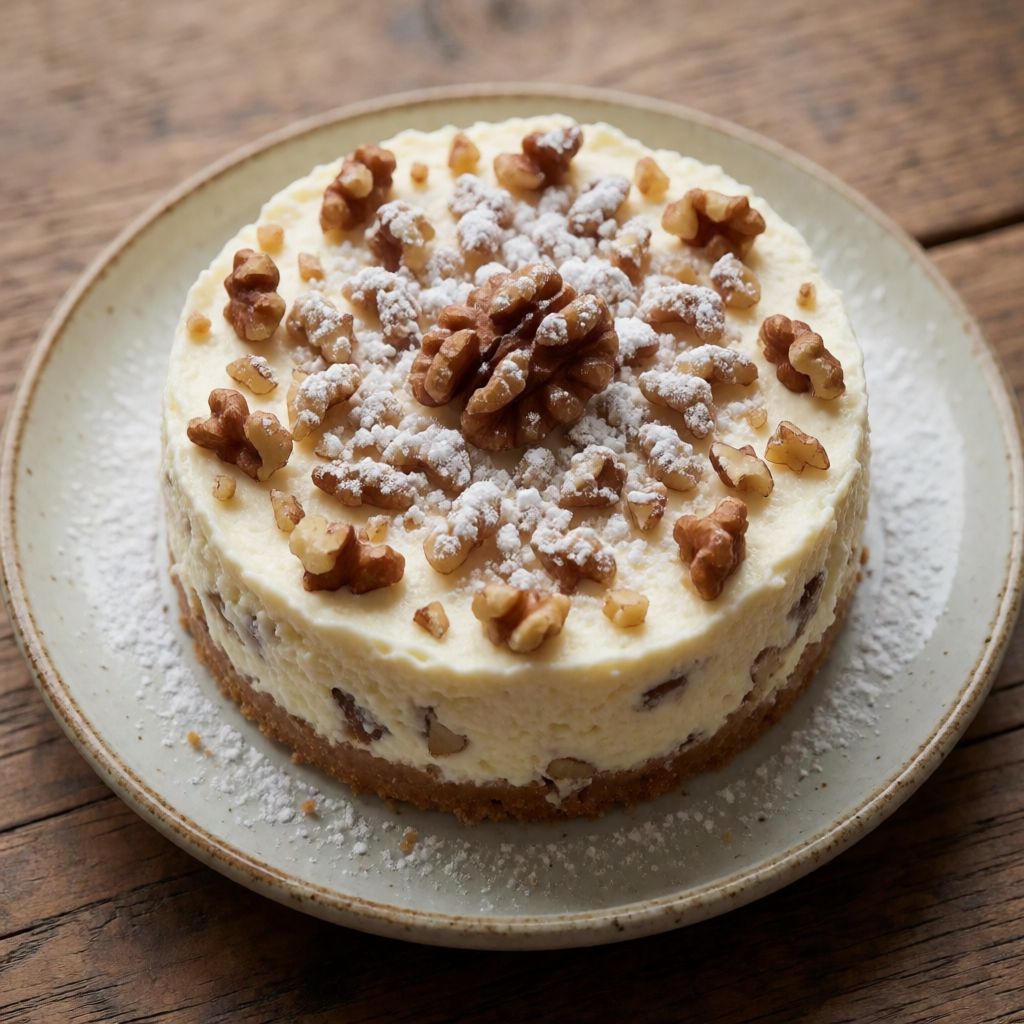
 AI photo
Walnut Cheesecake
A creamy no-bake walnut cheesecake with a buttery digestive biscuit base, set with gelatine and sweetened with honey.
Labels are worked out automatically from the ingredients and can be wrong. Check the packaging if it matters to you.
Ingredients
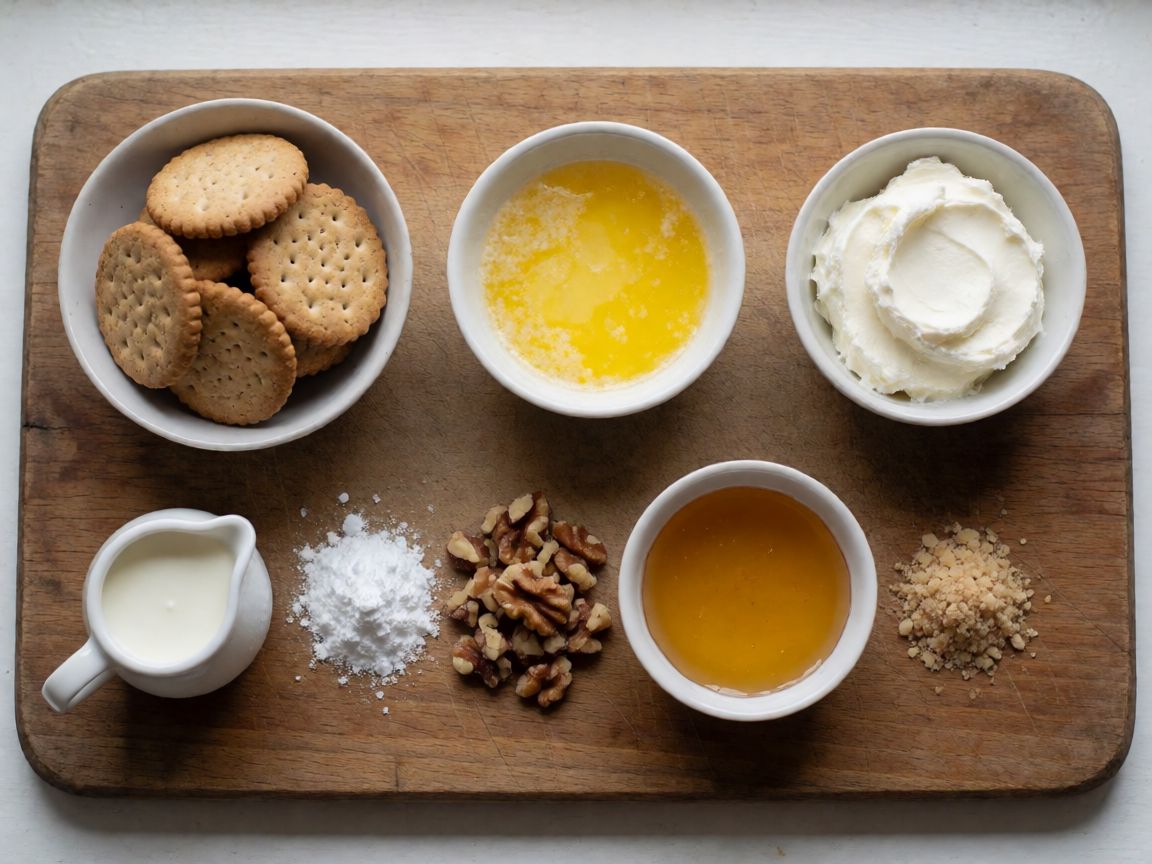
- 280 g Digestive biscuits
- 150 g Butter melted
- 350 g Cream cheese
- 250 ml Double cream
- 100 g Icing sugar
- 100 g Walnuts
- 50 g Honey
- 10 g Gelatine








Steps
Crush the digestive biscuits in a blender and mix with the melted butter. Mix thoroughly and press into a 22 cm springform tin lined with baking paper. Smooth the base with a spoon, pressing it down firmly, then chill in the fridge.
Soak the gelatine in cold water and blitz the walnuts in a blender. In a large bowl, mix the cream cheese, crushed walnuts and honey.
Set aside 50 ml of the cream and warm it in a small saucepan or the microwave. Squeeze out the gelatine well and dissolve it in the warm cream.
In a separate bowl, whip the remaining cream with the icing sugar, then fold it into the cream cheese, walnut and honey mixture, stirring gently from the bottom upward with a spatula.
Take the biscuit base out of the fridge and spread the cream mixture on top, smoothing the surface with a spatula.
Chill the cheesecake in the fridge for at least 4 hours before serving.
240 min
This is a no-bake cheesecake, and that phrase explains almost everything about it. There's no oven step because nothing here is cooked — the structure comes from gelatine and whipped cream trapping fat in a soft net, the way jelly holds water. Zero cook time in the recipe isn't a typo, it's the method: you're not applying heat, you're taking it away.
What decides whether it works comes down to two moments, both easy to rush. First, the biscuit base has to firm up in the fridge before anything goes on top of it — butter is liquid warm and solid cold, and a soft base under a heavy cream filling just squashes into crumb soup the moment you cut into it. Second, the gelatine has to go into the cream warm but not hot, and then into the rest of the mixture quickly — gelatine starts setting the second it cools, so if you dawdle it sets in the saucepan instead of in the cake, and no amount of stirring brings that back.
Some say a cheesecake needs the oven. No — that's the New York style, egg-set, baked low and slow so the custard doesn't crack. This one is the fridge style: no eggs, lighter, the cold doing the whole job. Neither is the "real" one; they solve different kitchen problems — one belongs to a cooker that's already on for something else, one belongs to a flat with fridge space and no appetite for heating an oven on a hot day.
Digestive biscuits give the base its body, and the reason every British kitchen defaults to them is economics, not magic — cheap, mildly sweet, a wheat-and-oat crumb that breaks fine without turning to dust. The criterion for swapping them: any dry, plain biscuit with enough starch and little moisture to bind with melted fat. Graham crackers are the obvious cousin abroad; even rich tea biscuits work, though they're drier, so add a touch more butter to compensate.
Butter's role is pure mechanics, not flavour — melted, then cooled, it sets into a solid fat lattice that holds the crumb together, which is exactly why the base goes into the fridge before the filling touches it. Skip that chill and you've built a base that can't carry weight. Unsalted butter lets you taste biscuit rather than salt, but salted is fine here — you're not adding more salt elsewhere to compound it.
Cream cheese needs to be full-fat and low-moisture. The cheaper, wetter tubs weep the moment they meet whipped cream, and gelatine can't rescue a mixture that's already thin — it sets what's there, it doesn't thicken it. Philadelphia is a brand name people treat like a rule; any firm, full-fat cream cheese block behaves the same way.
Double cream, whipped with icing sugar, does two jobs at once: sweetens, and traps air, so the finished filling is something a fork breaks into rather than a wall of cheese. Icing sugar dissolves without grit because it's already fine powder; caster sugar can stand in if you whip long enough to melt it in, but icing sugar is the sensible shortcut here.
Walnuts should be crushed, not pulverised to dust — you want bite against the smoothness. Buy nuts that smell sweet, not sharp or oily; rancid walnut is a flavour this recipe has no heat step to burn off, so a bad batch stays bad in the finished cake. Honey, beyond sweetness, is hygroscopic — it holds onto moisture and keeps the walnut-cheese mix from tightening up over those four fridge hours. Any runny honey works; set honey just needs gentle warming to loosen before mixing in.
Gelatine is the actual engine of the whole dessert, so treat it with some respect. Bloom it in cold water first so it hydrates evenly rather than clumping, then dissolve it in cream that's warm, not boiling — gelatine is a protein, and boiling breaks the very structure that's supposed to set your cake later. "Boil it to be sure it dissolves" is a myth worth naming and dropping; boiling is how you ruin it, not how you guarantee it. If you've no gelatine to hand, agar agar sets firmer and holds even at room temperature — handy in a warm kitchen, but it gives a firmer bite, not the soft wobble this cake is built for.
And the four hours in the fridge aren't dead time — they're when this stops being cream cheese in a bowl and becomes a cheesecake. Push it in the freezer to cut that short and you'll set the outside while the middle stays loose. Make it the day before the roast, not the hour before pudding, and let the cold do the work it needs to do.