
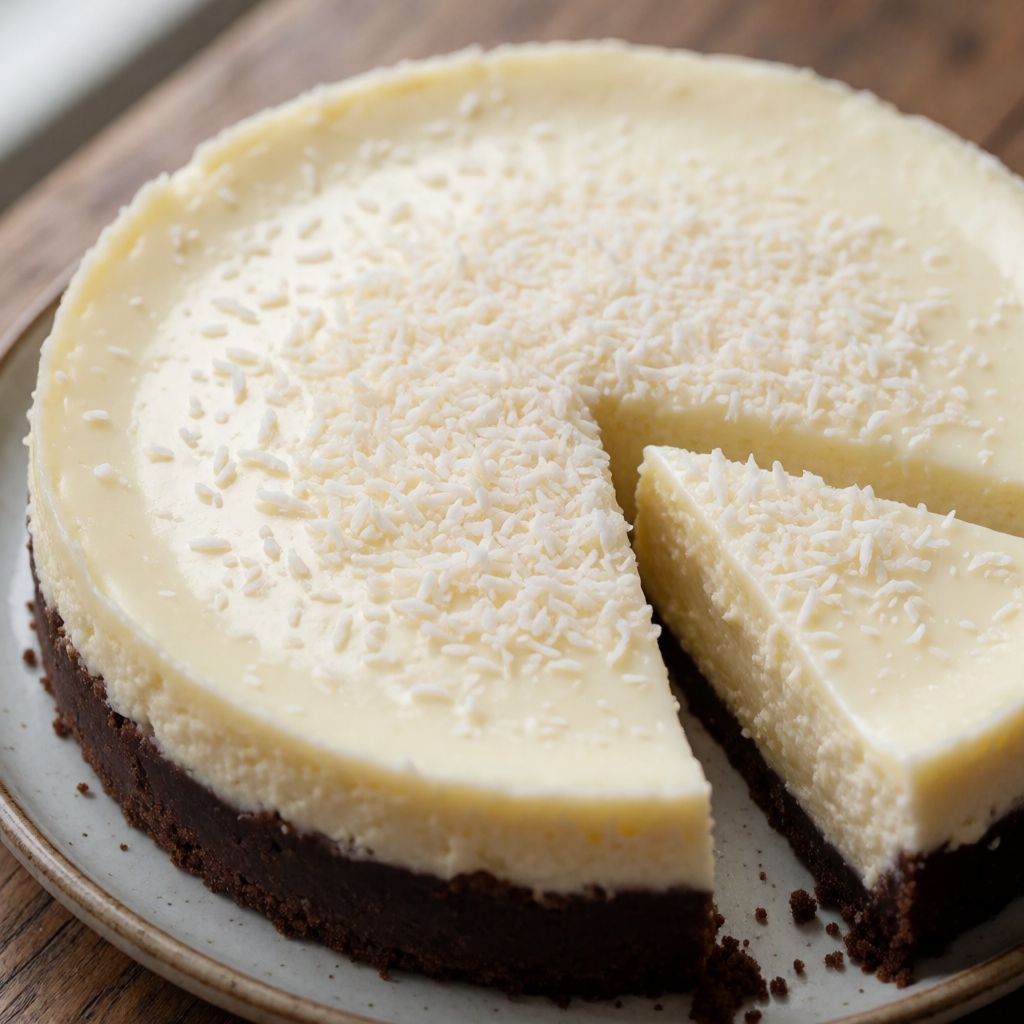
 AI photo
Baked White Chocolate and Coconut Cheesecake
A baked cheesecake flavoured with white chocolate and coconut, set on a crunchy cocoa biscuit base.
Labels are worked out automatically from the ingredients and can be wrong. Check the packaging if it matters to you.
Ingredients
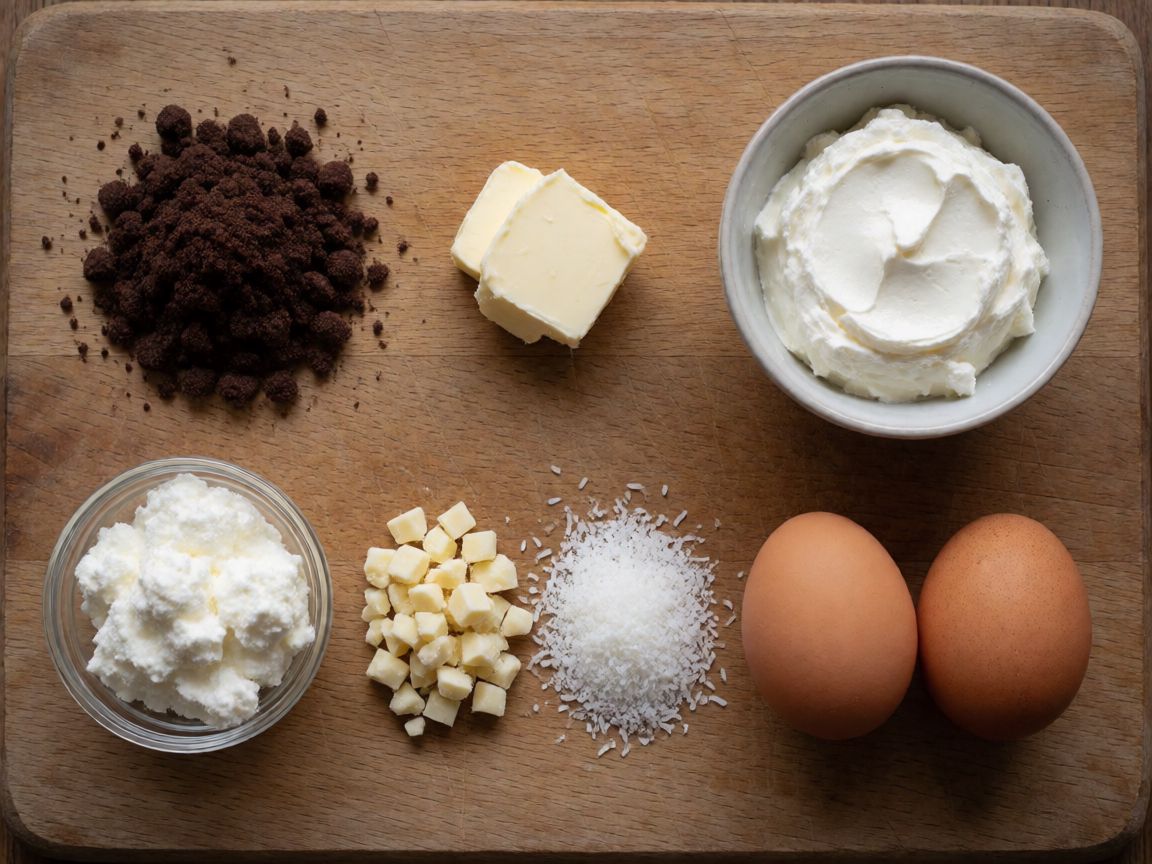
- 350 g Cocoa biscuits
- 150 g Butter
- 500 g Cream cheese
- 100 g Ricotta
- 350 g White chocolate
- 60 g Desiccated coconut
- 2 pcs Eggs






Steps
Crush the biscuits in a blender until fine crumbs, add melted butter and mix together.
Transfer the mixture into a 24 cm round tin, level it out and press down firmly.
Put the tin in the fridge.
30 minCombine the cream cheese and ricotta, and beat with a mixer until smooth.
Add melted white chocolate and mix until smooth.
Beat in the eggs, then stir in the desiccated coconut.
Spread the filling over the biscuit base and smooth the top.
Bake in an oven preheated to 170°C.
60 min
What you're building here is two different kinds of "setting" stacked on top of each other. The base is a cold-set structure: butter, melted to liquid, coats crushed biscuit and then, in the fridge, goes solid again — that solidifying fat is the glue holding the crumbs together, nothing else. The filling is a heat-set structure: egg proteins, gently warmed in the oven, unfold and link into a net that traps the cheese and melted white chocolate inside it. There's no raising agent anywhere in this list, no flour either — this isn't a cake with cheese flavouring, it's a custard that happens to be sitting in a biscuit shell. Keep that distinction in your head and the whole thing stops being mysterious.
What decides whether it works is restraint at two points: the oven temperature and the moment you decide it's done. 170°C isn't "medium-high" for no reason — it's low enough that the egg proteins coagulate slowly and evenly, instead of seizing the way they do in a hot pan of scrambled eggs. Doneness isn't a clock reading, it's a wobble: nudge the tin and the middle should move like a softly set jelly, not slosh like liquid and not sit rigid like a cut custard tart. Pull it when the edges have gone from shiny-wet to matte and the centre still trembles — because after it comes out, residual heat keeps cooking the middle for a while on its own.
Cocoa biscuits aren't there for looks. White chocolate and coconut together are sweet with no sharp edge to them — a slight bitterness from cocoa in the crust is what stops the whole thing tasting like one long note, the same reason a Bounty bar works and a bar of plain white chocolate on its own gets tiring fast. The criterion for the biscuit, whatever brand you reach for, is that it's dry and crumbles without a fight — digestives, Hobnobs, gingernuts if you want a spiced undercurrent. Avoid anything with a cream filling; that's extra fat and sugar you didn't ask for, and it throws off the balance between crumb and butter that makes the base hold.
Butter here is doing one job: it's the fat that goes liquid under heat and solid again in the cold, and that solid-again state is the whole structure of your base. Any fat with that same behaviour will do — coconut oil would even sit nicely with the coconut in the filling, flavour-wise, though it sets harder in a cold fridge than butter does, so don't overchill it to the point the base turns brittle rather than firm.
Cream cheese and ricotta together aren't a random pairing — cream cheese alone is heavy and a bit rubbery once baked, ricotta is lighter and wetter, and mixing them stops the filling turning into one dense, gluey block. Worth knowing where cream cheese even comes from: it's not an old tradition dressed up, it's an American industrial product from the 1870s, made shelf-stable so it could be sold in shops rather than made fresh at home like the soft curd cheeses it was copying. If you want to swap it, the rule is low moisture and full fat — mascarpone works but is richer, so use a touch less; quark is leaner and will need the chocolate's fat to do more of the setting work.
White chocolate is carrying two jobs at once, which is why there's no separate sugar anywhere on this list — it's sweetening the filling and, because it's full of cocoa butter, it's also the second setting agent alongside the eggs, firming the mixture as it cools. The one thing to actually check on the wrapper: cocoa butter listed, not "vegetable fat". Bars that swap in vegetable fat are cheaper and taste similar enough warm, but they don't set the same way cold, and your filling will stay soft and slightly greasy instead of holding a clean cut.
Eggs are the only ingredient in this filling that reacts to heat rather than cold — they're what actually sets in the oven, the protein tightening into a net as it warms. Let them come to room temperature before they meet melted chocolate, or the shock of cold against warm can make the chocolate seize into tiny hard flecks. And beat them in, don't whip them — whipping air into egg is what gives a sponge its rise and its later collapse; you don't want either here, you want a dense, even custard, not a soufflé pretending to be one.
Desiccated coconut earns its place by being dry. Fresh grated coconut carries water the desiccated kind has already lost, and that water would loosen your filling and push the centre further from setting in the time you've got. It's there for a bit of chew against all that smoothness, nothing more complicated — and it's the ingredient doing the work of making this taste, deliberately or not, like a grown-up version of a chocolate bar most people in this country have eaten since childhood. Patience is the last ingredient, and it's not optional: give the oven the slow finish it needs, and give the cheesecake time to cool before you cut it, because the fat in that filling is still re-solidifying even after the egg protein has set. Cut it warm and you get a slump on the plate, not a slice.