
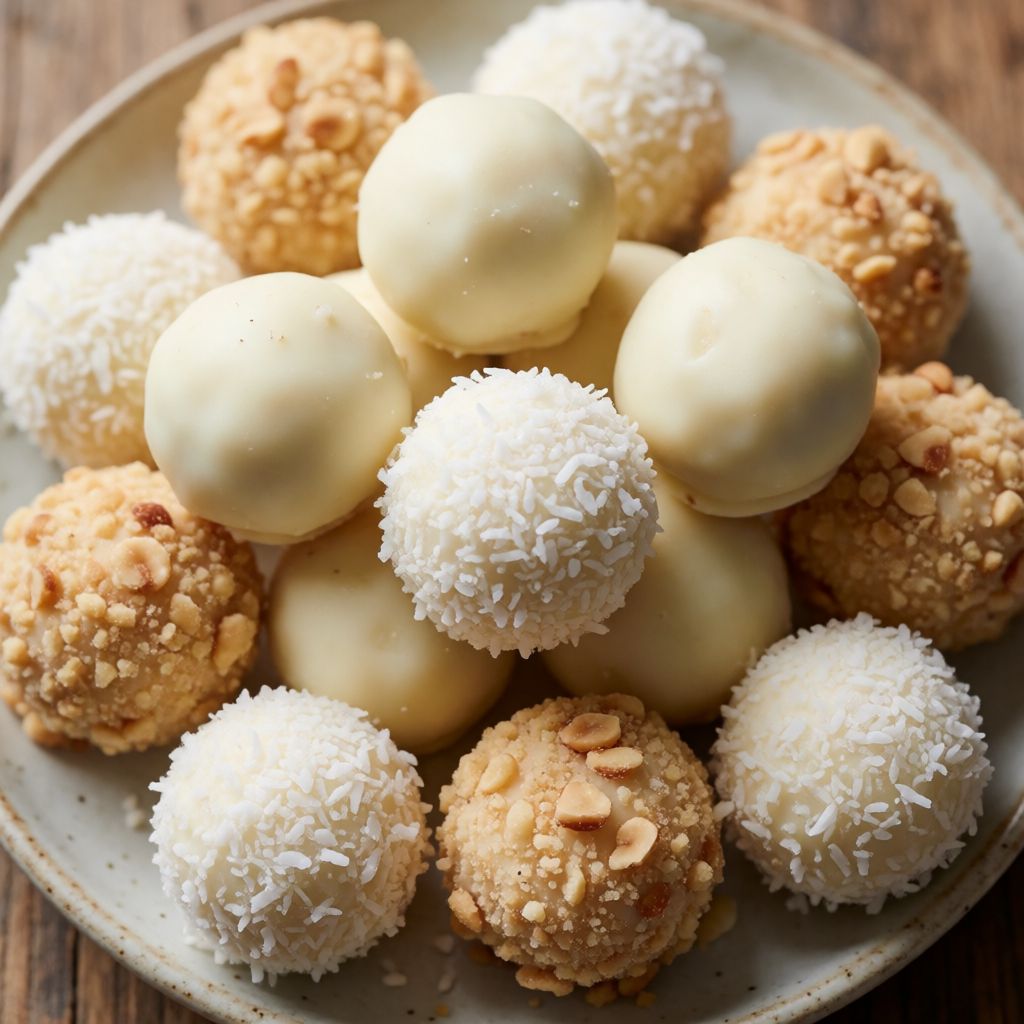
 AI photo
White Chocolate Truffles
Rich white chocolate truffles rolled in desiccated coconut, with a hazelnut tucked inside each one.
Labels are worked out automatically from the ingredients and can be wrong. Check the packaging if it matters to you.
Ingredients
- 100 g Double cream
- 10 g Butter
- 250 g White chocolate
- Hazelnuts to taste
- Desiccated coconut to taste



Steps
In a small saucepan, combine the butter with the double cream and melt over low heat.
Once the butter has completely melted, remove from the heat and break the white chocolate into it. Melt the chocolate until smooth, then pour the mixture into a bowl.
Chill in the refrigerator for at least 2 hours, or until the mixture has completely set.
120 minOnce set, start shaping the truffles: take a walnut-sized portion of the mixture and tuck a hazelnut inside.
Roll the truffles in the desiccated coconut and place them in paper cases.
Chill in the refrigerator for a few more minutes, then serve cold.
What was changed
For the coating, we used Desiccated coconut, since the original's coconut flour is meant for baking, not for rolling truffles.
These aren't truffles in the fungus sense — just named for the shape, the earthy roll, a nod to something once rare and expensive. What you're actually making is a ganache: cream and fat holding chocolate in suspension, firm enough to shape when cold, soft enough to give on the tongue. Whether it works comes down to one thing — how gently you let heat near white chocolate.
White chocolate has no cocoa solids worth mentioning. It's cocoa butter, sugar, milk powder — less structure than dark chocolate, far more sensitivity to heat. Put it straight on a flame and it won't melt, it'll seize: grains, a dull matte look, a mixture that won't come back however hard you beat it. That's why the butter and cream go on the heat first, then come off it entirely before the chocolate goes in. The chocolate melts in borrowed warmth, never on the stove itself.
Some say you need a double boiler for this kind of job — no, because what protects the chocolate isn't the method, it's the ceiling on the heat. A low flame under cream and butter, chocolate melted off the heat completely — that's as much control as any domestic hob gives you, and it's enough, double boiler or not.
Then comes the part with no shortcut: the fridge. Two hours isn't a suggestion, it's physics — cocoa butter has to recrystallise, go from pourable to firm. Rush it and you're not shaping truffles, you're fighting warm slush with a teaspoon and losing.
Double cream, not single, not milk. You need enough fat in there to bind with the chocolate's own fat cleanly, rather than separate into something greasy and thin. Single cream won't carry enough fat to set properly — your truffles stay soft at best, runny at worst. If you've genuinely nothing else, full-fat crème fraîche will do the job, though it brings a tang the chocolate's sweetness has to cover for.
The butter does a small, specific job: it's a softer-melting fat than cocoa butter, and it's what keeps the set ganache pliable enough to roll between your palms instead of cracking like fudge when you press a hazelnut into it. Use plain unsalted butter — salted will sharpen a dessert that doesn't need sharpening.
For the chocolate, check the label before the price: you want one where cocoa butter sits near the top of the ingredients, not "vegetable fat." Vegetable-fat bars behave differently under heat and set harder and flatter in the fridge — you lose that slow give in the mouth that's the whole point here. 250g feeds six, in walnut-sized pieces — don't scale the truffles up without scaling the chilling time with them, or the middle stays liquid under a set shell.
The hazelnut inside isn't filler, it's contrast — a crack of texture against something otherwise uniformly soft. Any whole nut with a decent snap does the same job: almonds, pistachios, even a piece of dried apricot if you'd rather have chew than crunch.
The coconut coating earns its place by solving a real problem, not decorating one: ganache at room temperature is sticky, and coconut keeps the truffles off your fingers and off each other in the box. Any dry, fine coating that won't soften in a warm room works just as well — cocoa powder, finely crushed nuts, even icing sugar, though that one disappears fastest if your kitchen runs warm, which most British kitchens with the oven on for the Sunday roast tend to.