
 AI photo
Witch Fingers for Halloween
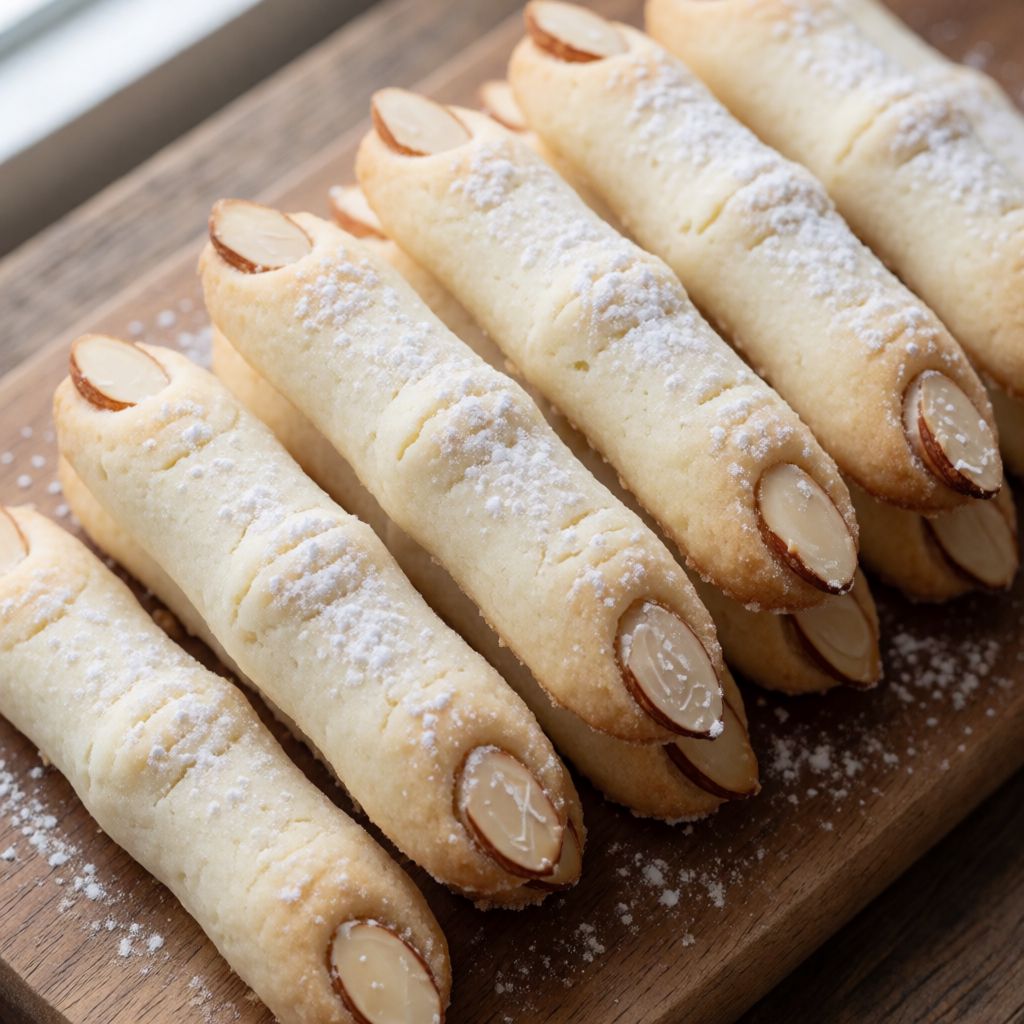
Spooky biscuit fingers shaped like witches' fingers, filled with strawberry jam for a playful Halloween treat.
Labels are worked out automatically from the ingredients and can be wrong. Check the packaging if it matters to you.
Ingredients
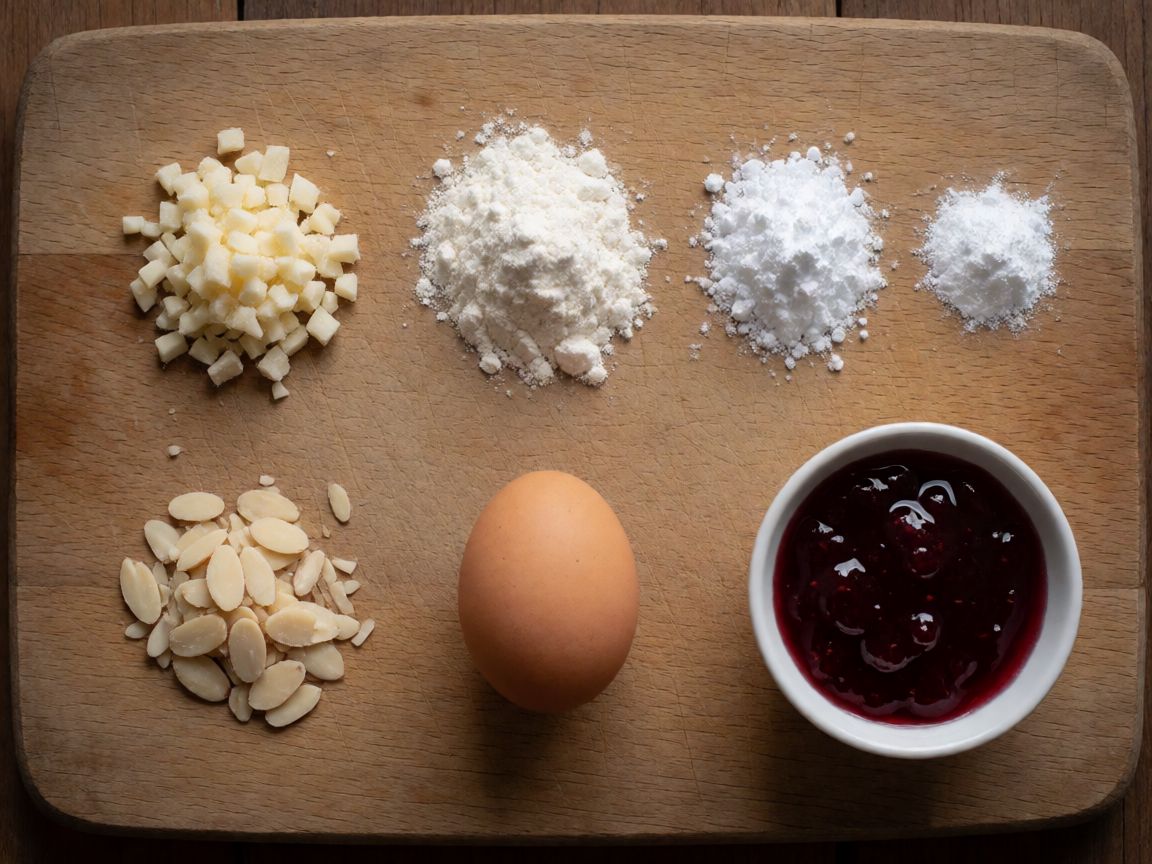
- 100 g Butter cold, cut into small cubes
- 280 g Plain flour
- 100 g Icing sugar
- 1 tsp Baking powder
- 1 pinch Salt
- 1 pcs Egg
- Almonds to taste, one per finger
- Strawberry jam to taste








Steps
Sift the flour, add a pinch of salt, the icing sugar and the cold butter, then rub together with your fingers until the mixture resembles fine crumbs.
Add the egg and knead by hand in the bowl and on a lightly floured surface until the dough is smooth.
Divide the dough into balls of about 20g each and roll each one into a sausage shape about 12cm long.
Shape each biscuit like a finger, making shallow cuts with a smooth knife to look like knuckles.
Press an almond onto the tip of each finger.
Place the fingers on a baking tray lined with parchment paper, leaving about 3cm between them.
If needed, chill the tray of biscuits in the fridge for 10 minutes before baking.
10 minBake in a preheated oven at 180°C for about 20 minutes.
20 minLet the biscuits cool, remove the almonds, fill the hollow with strawberry jam and decorate the tips.
This is shortbread wearing a costume. Everything that makes real shortbread work — cold fat, rubbed rather than melted into flour, enough sugar to soften but not enough liquid to toughen — is what makes these fingers hold their shape and snap cleanly instead of bending like a biscuit gone wrong. Get that mechanism right and the finger shape is just theatre on top of it.
What decides whether it works is whether the butter stays solid until it hits the oven. Rub it into the flour with your fingertips, not a machine, not a softened lump — the fat has to end up as a thin film around each flour particle, so it blocks water and egg from building long gluten strands. That's the whole trick of "short" pastry: less gluten, more crumble. Butter that's warmed or worked too long turns this into a more elastic dough, and then your finger bakes up closer to a breadstick than a biscuit.
Some say chilling the shaped biscuits before baking is just for convenience, so you can do the washing-up first. No — it's structural. If the butter in the dough has softened on a warm kitchen counter, it starts melting the instant it meets oven heat, and the finger spreads flat before the crumb has set around it. Ten minutes in the fridge buys you the shape you spent half an hour rolling.
The knuckle cuts aren't decoration either. A shallow cut in raw dough gives the biscuit a place to crack as it bakes, instead of splitting randomly somewhere else or not splitting at all — you're steering an inevitable stress line to exactly where you want it to read as a joint.
Flour here is plain, not self-raising, for a reason: the baking powder is already doing the modest lifting this biscuit needs. Self-raising on top of that would puff the finger into something rounder and softer, losing the bony look entirely. If plain flour isn't in the cupboard, self-raising will work, but leave out the baking powder, or you'll get a stubby thumb instead of a finger.
Icing sugar instead of ordinary granulated matters structurally, not just for smoothness underfoot. Fine sugar dissolves into the fat as you rub it in, rather than sitting as hard crystals that melt unevenly once they hit oven heat and leave small pockmarks in the surface. If all you have is granulated, give it a few seconds in a blender first — don't skip that and expect the same finish.
The egg is a binder, not a leavener. One egg gives just enough moisture to pull the crumbs into a dough that holds a sausage shape without cracking, but not so much that you build real gluten and lose the crumble that defines this kind of biscuit. Adding a second egg "for luck" is how shortbread quietly turns into a cookie.
Almonds sit at the tip for crunch and for a convincing nail, pressed in raw so they toast gently alongside the dough rather than scorching on their own in a hot pan first. Any whole nut with a flattish end will do the same job — a cashew works, a round hazelnut less well, because the shape reads wrong. For a nut-free table, worth thinking about if children are eating these, press a white chocolate button into the hollow after baking and cooling, once the almond's been taken out — same visual trick, no allergen.
Strawberry jam fills the hollow left by the almond, standing in for blood with the sort of kitchen economy that uses what's already there — the jar bought for scones gets a second job here. Use a smooth jam without whole pieces of fruit, or it won't settle evenly into the groove; raspberry or redcurrant do the same work if that's what's open in the fridge.
This quantity gives you somewhere around eighteen to twenty fingers at 20g each, so for six people reckon on three or four each if they're the only sweet thing on the table, fewer if there's a full spread around them. And don't rush the kneading or the chilling — patience isn't sentiment here, it's what keeps the butter solid long enough to still be doing its job once the tray goes in.