
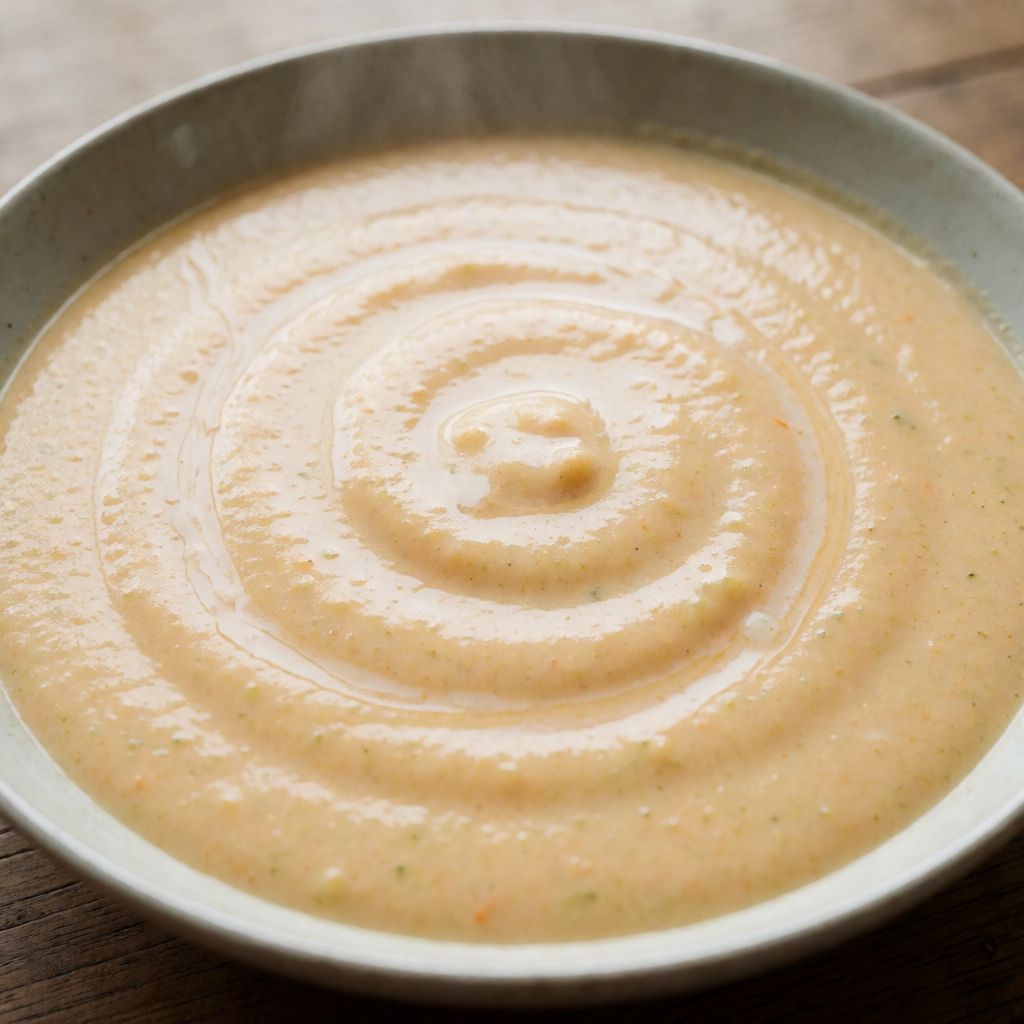
 AI photo
Courgette and Carrot Cream Soup
A simple, comforting cream soup of courgette, carrot and potato.
Labels are worked out automatically from the ingredients and can be wrong. Check the packaging if it matters to you.
Ingredients









Steps
Wash the vegetables thoroughly under running water to remove any soil or dirt.
Peel the potatoes and carrot, then dice them together with the courgette into small cubes.
Roughly chop the onion with a knife.
Put all the vegetables in a bowl, drizzle with olive oil and mix well.
Add water and milk to taste, in equal parts.
Transfer everything to a pan, place over heat and cook, stirring occasionally.
Cook for about 30 minutes, until the carrot is tender enough.
30 minRemove from the heat and blend with a stick blender until smooth.
Season with salt and black pepper to taste.
This is a cream soup built on the slowest-cooking vegetable in the pot, which is the only real rule here: the carrot decides when the soup is done, not the clock. Everything else — potato, courgette, onion — will fall apart long before the carrot bends under a spoon, so your 30 minutes is really "however long the carrot takes," and the number in the recipe is just what one average carrot, one average pan, needed on one particular day.
What makes it a cream soup rather than a vegetable stew is the blender, not an ingredient. There's no cream in it. The body comes from potato starch breaking down and thickening the liquid once you blitz it, the way it thickens any potato soup — cream or no cream. Milk is there to soften that starch-thick texture and round off the sharper vegetable notes, not to make it rich.
Equal parts milk and water matters more than it looks. All milk and you get something heavy, slightly sweet, closer to a baked rice pudding than a soup; all water and you get a thin vegetable broth with nothing to carry it. Half and half gives you enough fat and protein from the milk to smooth the blended texture without curdling badly, and enough water so it isn't cloying.
Olive oil goes on the raw vegetables before they ever meet heat — not for flavour, but so the pieces don't catch and stick to the base of the pan in that first minute before the liquid starts running. A bare pan with dry diced potato on it is how you get the burnt bits that then flavour the whole pot bitter.
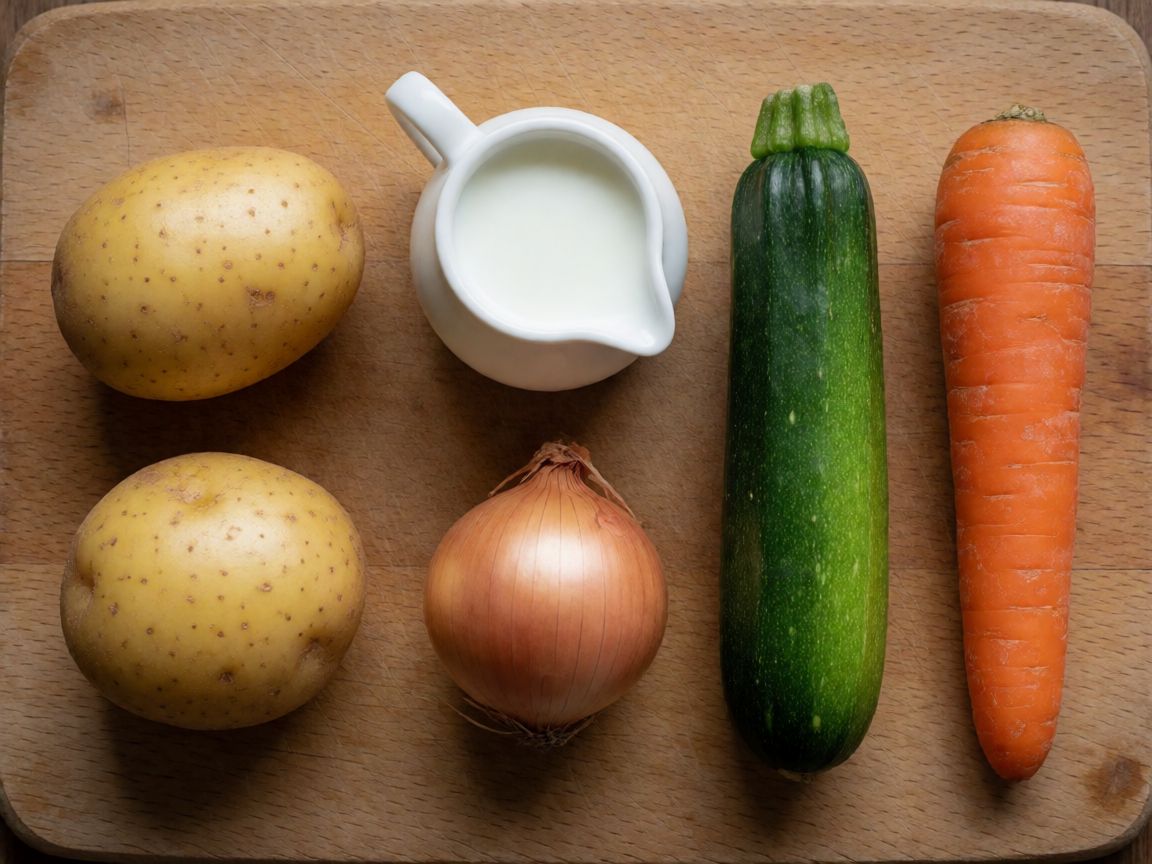
Potato: the thickener. Choose a starchy, floury variety — Maris Piper or King Edward, the ones that go fluffy for mash — because starch is exactly what you want breaking down in the liquid. A waxy salad potato holds its shape and won't give you the same body; you'll get chunks in a thin broth instead of a cream. Two medium potatoes for two people is generous, which is the point — potato is cheap, and it's doing the heavy lifting of the whole texture.
Carrot: the clock. It's the densest vegetable here and the one with the most structural fibre, so it's always the last thing to give in. Dice it to roughly the same size as the potato and courgette pieces — not because of appearance, but because if it's cut bigger, it'll still be raw in the centre when everything else has turned to mush, and you'll have no honest way to judge doneness except cutting one open.
Courgette: it's mostly water held in a loose cell structure, so it collapses fast and contributes almost no body — it's there for a grassy freshness that cuts through the starch and milk. If you don't have one, use another soft summer squash, or leave it out and lean a little harder on pepper for brightness; don't reach for cucumber, which won't cook down the same way.
Onion: roughly chopped because it's going in the blender anyway — no need for the fine dice you'd use in a soup eaten with the pieces visible. Its job is sweetness as it softens in the liquid, not crunch or colour, so there's no browning stage here; this isn't a soup built on a fried base.
Milk and water, equal parts, "to taste": read that as "enough to cover the vegetables generously," because this isn't a soup with a fixed stock amount — it's vegetables cooked in just enough liquid to tenderise them, then blended to the consistency you want. Add more if you prefer it thinner after blending; it's easier to loosen a thick soup than to thicken a thin one.
Olive oil: any oil with a flavour you don't mind contributing will do — a mild olive oil, sunflower, or a flavourless vegetable oil if you want the vegetables to speak for themselves. Avoid a heavily peppery extra virgin here; its bitterness holds up badly under 30 minutes of simmering and blending, and you paid for a flavour you're about to boil away.
A stick blender is doing something a kazan and a wooden spoon never could — this soup is a product of a kitchen appliance, not an old tradition, and there's no shame in that. If you don't have one, a potato in a pot still mashes down reasonably with a fork or a potato masher once soft enough; it won't be silk, but it'll be soup. And some say a soup needs stock to have any depth — no, because the potato starch and the vegetables' own liquid are what's building the body here; stock would just be extra salt and extra cost for a dish that's deliberately plain and quick.