
 AI photo
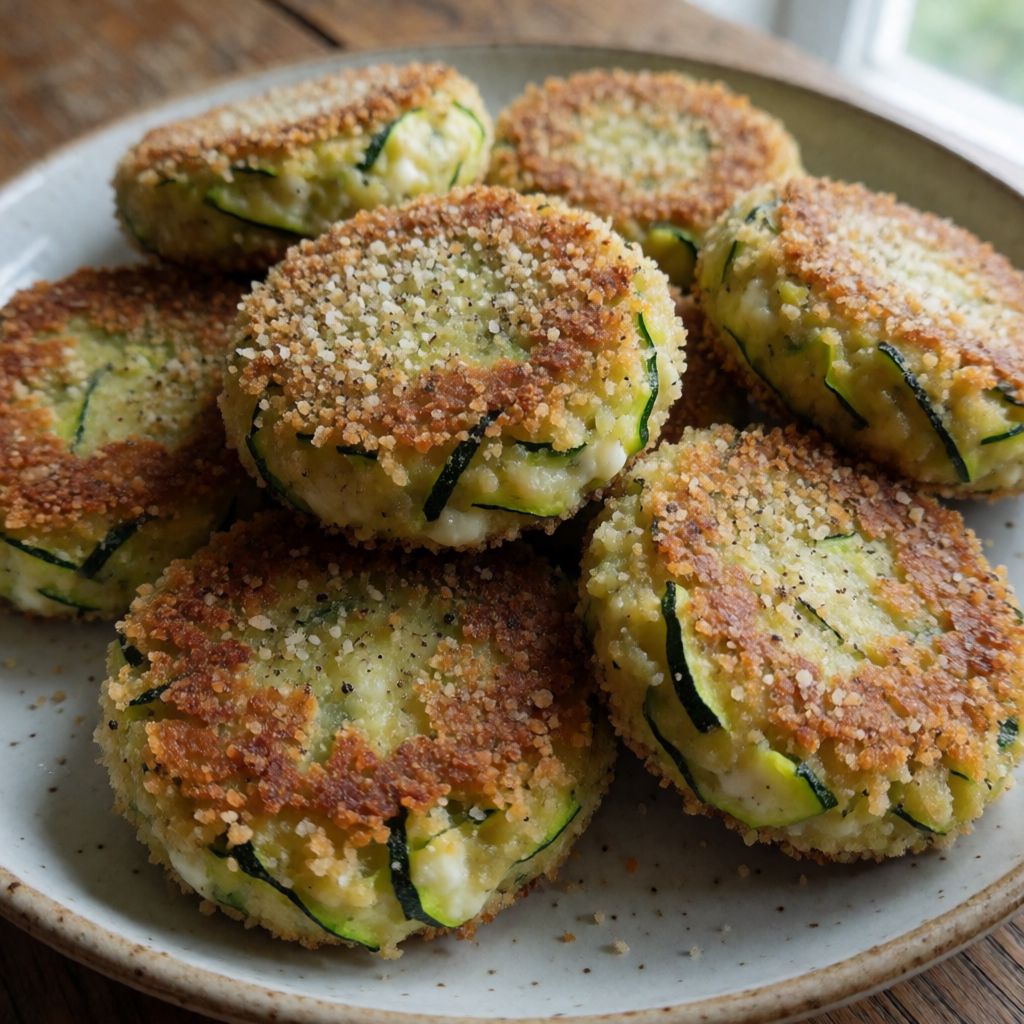
Soft Courgette Patties with a Melting Cheese Centre
Tender courgette patties with a gooey melted cheese centre, baked or fried until golden.
Labels are worked out automatically from the ingredients and can be wrong. Check the packaging if it matters to you.
Ingredients
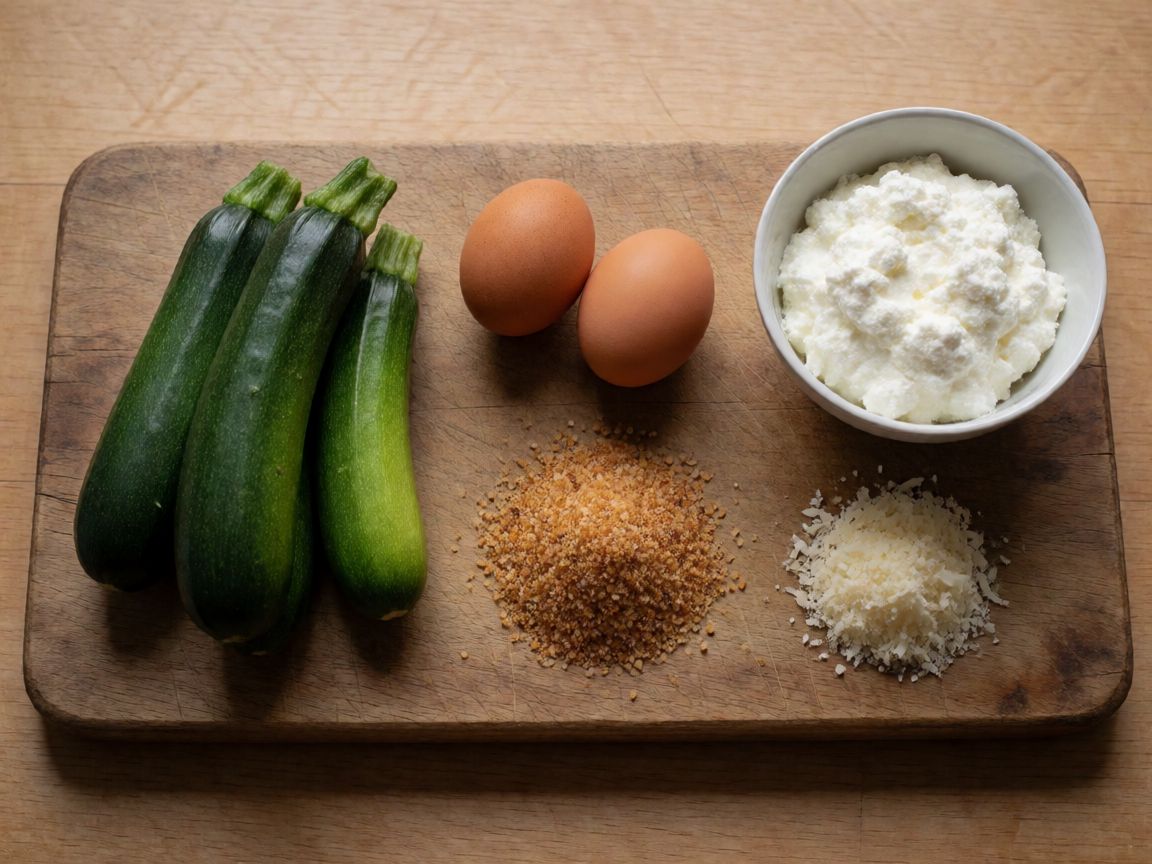
- 500 g Courgette
- 2 pcs Eggs
- 500 g Ricotta
- 200 g Breadcrumbs gluten-free
- Salt to taste
- Black Pepper to taste
- 100 g Fontina
- Olive Oil for drizzling
- Vegetable Oil for frying, optional









Steps
Wash the courgettes, trim the ends and grate them into a bowl using the medium-large holes of a grater.
Add the eggs and ricotta, and mix well.
Season with salt and pepper to taste, then stir in the breadcrumbs.
Shape the mixture into patties by hand — about 35g each.
Make a hollow in the centre of each patty, place a cube of fontina inside, close it up and coat in breadcrumbs.
Place the patties on a baking tray, drizzle with olive oil and bake in a preheated oven at 180°C.
18 minAlternatively, heat vegetable oil in a frying pan and fry the patties until golden.
5 minTransfer the patties onto paper towel to drain off excess oil.
Serve the patties at the table.
This is a vegetable patty built around a trick: you hide a cube of cheese in the middle so that by the time you bite into it, the outside has gone from wet mixture to a dry, holding crust, and the inside has gone from a solid cube to a pool. Two different states of matter in one small cake, and the whole recipe is really about timing those two changes to land together.
What decides whether it works is water. Courgette is about 95% water held in cells that are easy to rupture — the grater does that for you, and the moment you grate it, the clock starts: liquid begins leaking out. The mixture has to absorb that liquid (breadcrumbs), bind the solids (egg, ricotta) and still hold a shape you can press a hollow into without it collapsing. Too wet, and the patty won't take a cube of cheese without oozing. Too dry, and it'll crack when you try to close it up, and the cheese will leak out under heat anyway — same failure, two different causes.
The second thing that decides it is how you close the hollow. You're not stuffing a dumpling with a thin wrapper, you're folding vegetable mash over a cube, so the seal is only as good as how well the mash grips itself — which is exactly the same water-and-binder balance as above. A second coat of breadcrumbs on the outside isn't decoration, it's a dry barrier: it crusts before the inside gets hot enough to turn the cheese fully liquid, so the pressure builds behind a wall instead of out through a crack.
Courgette: pick ones that feel heavy and firm for their size — a light, spongy one has already started drying out and gives you less juice to manage, which sounds helpful but actually makes the mixture crumbly instead of wet-but-holding. No courgette, use another watery vegetable that grates fine and cooks soft fast — grated carrot won't do, it stays crunchy; a grated marrow with the seeds scooped out will.
Eggs and ricotta together are the binder, but they're not doing the same job. Egg sets with heat and locks the structure; ricotta is mostly there for softness and a little acidity, and because it's a loose curd rather than a firm cheese, it doesn't fight the courgette's own texture — it just thickens the mixture without making it rubbery. Any fresh, mild, unsalted curd cheese stands in — cottage cheese drained of its liquid, or a soft quark. Don't reach for cream cheese; it carries too much fat and not enough structure, and the patty will slump in the pan instead of holding its shape.
Fontina is the melting centre, chosen for one property: it goes liquid-smooth under heat without turning oily or stringy, and it has enough flavour of its own to be worth hiding. Any cheese that melts cleanly works — a young Gouda, a mild Cheddar, mozzarella if you want it stretchier. Avoid anything that was bred for grating over pasta and staying dry (hard, aged, low-moisture cheeses) — it'll soften but never truly run, and the whole point of the hollow is lost.
The breadcrumbs here are gluten-free, which tells you their job is structural, not flavour — they're a dry, flavourless scaffold that drinks up moisture and gives the crust something to crisp against. Any dry crumb with no smell of its own does the job: regular breadcrumbs if you don't need gluten-free, ground rice crackers, even finely crushed cornflakes in a pinch. What you don't want is anything pre-seasoned or sweet — it'll fight the cheese instead of framing it.
On heat: the oven at 180°C is a slow, even bath — it gives the inside time to reach the cheese's melting point before the outside overcooks, which is exactly what you want for a filled patty. A domestic oven runs its own temperament — a few degrees off true, hotter at the back — so judge by colour and give, not the clock: the surface should go from pale to a dry gold, and the patty should feel firm enough to lift with a fish slice without sagging. If you fry instead, in a wide pan standing in for the kazan nobody in a London flat owns, you're trading evenness for speed — the outside sets fast in contact with hot oil, which risks the inside staying short of melted unless you keep the heat moderate enough that the crumb browns steadily rather than scorches before the centre's had its turn. That's the real reason the recipe gives you a choice: bake if you want certainty, fry if you want speed and are willing to watch the pan instead of walking away.
These make a reasonable stand-in for the potatoes next to your Sunday roast — same job, holding a plate together, different vegetable doing the work — and they don't want gravy, just a squeeze of something sharp if anything, because the cheese inside is already the rich part.