
 AI photo
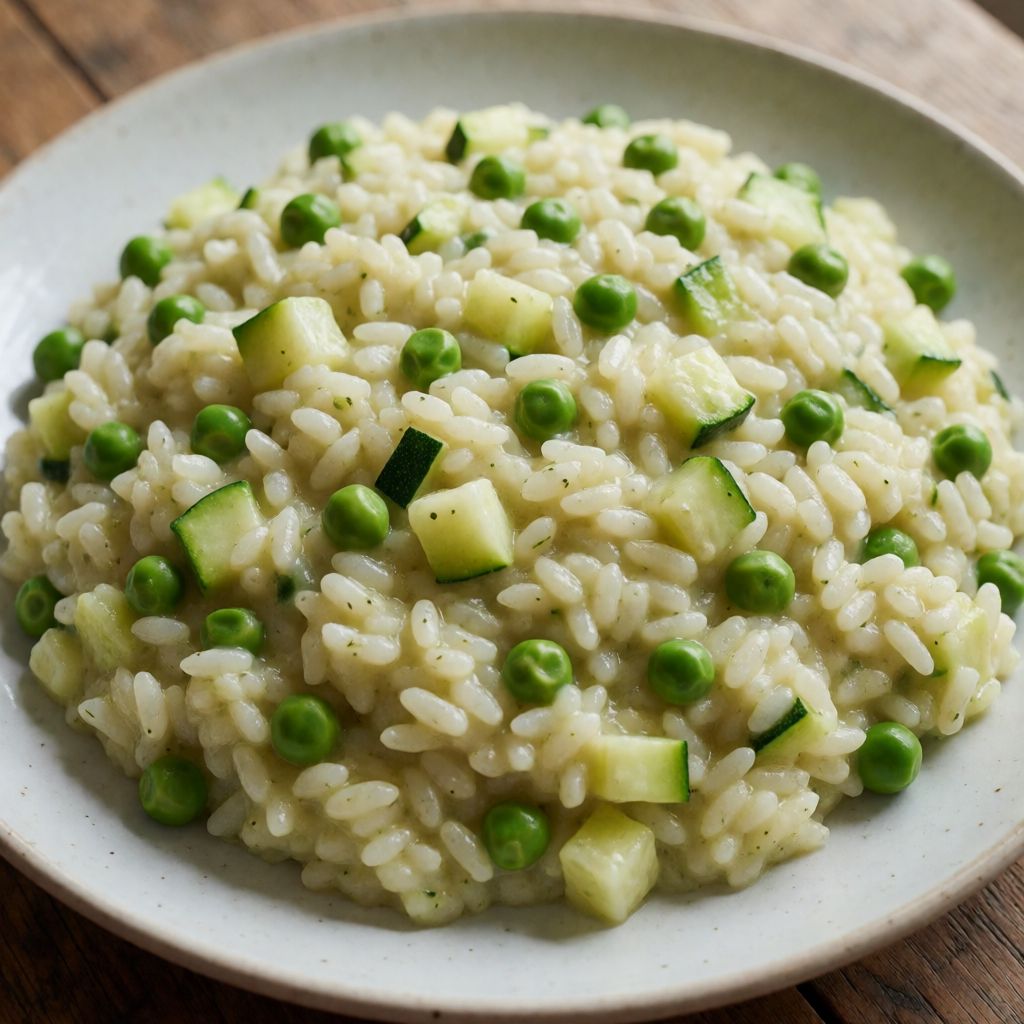
Risotto with Courgette and Peas
A creamy rice dish with courgette and peas, gently flavoured with saffron and white wine.
Ingredients
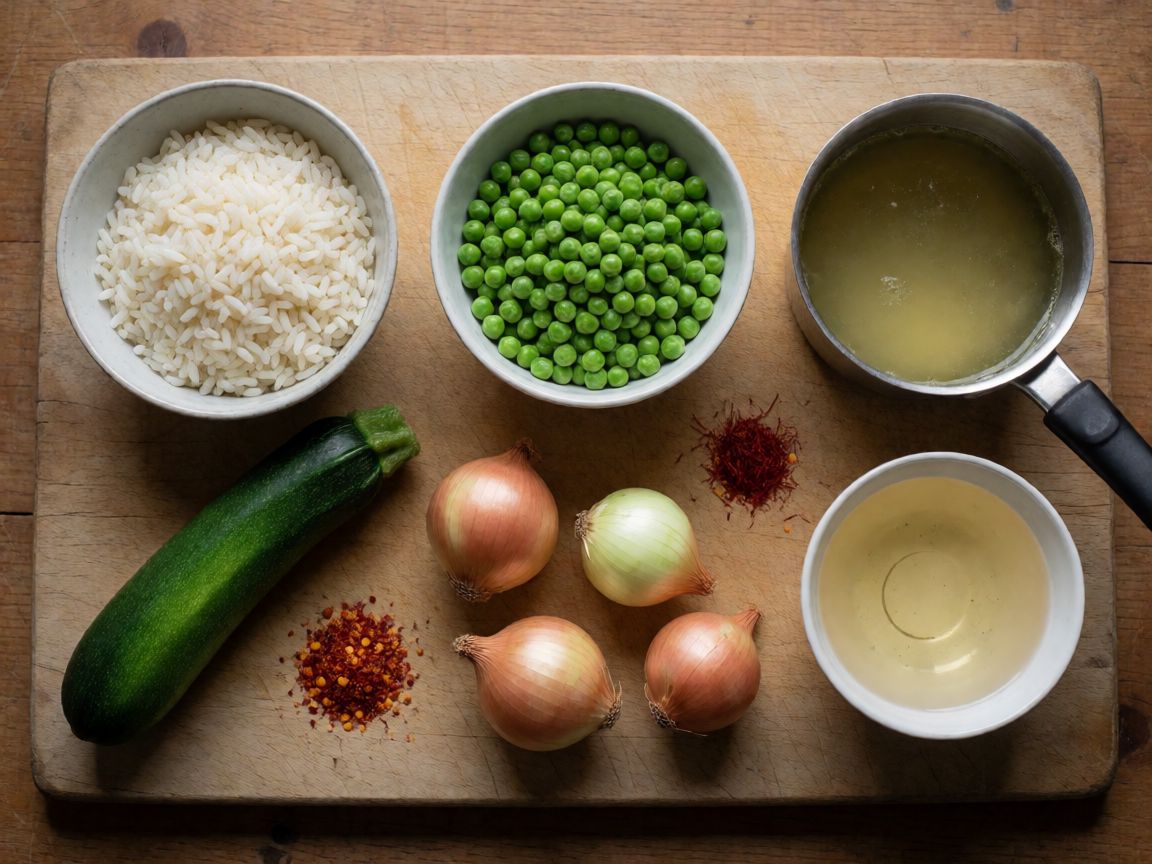
- 320 g risotto rice
- 200 g peas
- 1 pcs courgette
- 3 pcs onion
- olive oil to taste
- 200 ml vegetable stock
- 250 ml white wine
- 1 package saffron
- chilli flakes to taste
- salt to taste
- black pepper to taste










Steps
Peel the onion and chop finely.
Put the onion in a pan with olive oil and chilli flakes, and fry gently over low heat.
10 minAdd the peas, warm through for a few minutes, pour in the vegetable stock, cover and cook over low heat.
20 minWash and dice the courgette, add to the peas, pour in more vegetable stock and cook.
15 minIn a separate pan, heat olive oil and fry the chopped onion until soft.
Add the rice and fry for a few minutes until the grains turn translucent.
Pour in the white wine and wait until it has fully evaporated.
Add the vegetable mixture to the rice along with the vegetable stock, gradually adding more stock as it is absorbed.
Halfway through cooking, add the saffron and stir.
Season the risotto with salt and pepper, and serve hot.
Risotto is not a rice dish. It's a starch-management exercise — you're coaxing amylopectin out of the rice grain by grain, against a constant trickle of hot liquid, until the whole thing turns creamy without a single grain actually breaking apart. That's the entire mechanism. Everything else — the saffron, the peas, the courgette — is scenery around that process.
What decides whether it works: whether you add the stock in small amounts and keep stirring, or whether you dump it all in and walk off to watch telly. Rice starch releases slowly. Flood the pan and the outside of the grain turns to paste before the inside has had a chance to cook — you get risotto that's either soupy and undercooked at the core, or a solid clump if you then try to boil off the excess. A ladle at a time, with stirring, is not fussiness for its own sake — it's how you let starch escape at the rate the grain can actually manage.
Some say you need a kazan-wide paella pan to do this properly. No — you need a pan wide enough that the rice sits in a shallow layer, maybe two centimetres deep, so heat reaches every grain evenly. Any ordinary wide frying pan or a sauté pan does that job in a British kitchen; a narrow saucepan just means the bottom layer scorches while the top stays raw.
Rice first. You want a short-grain variety bred for exactly this — Arborio, Carnaroli, Vialone Nano — because they're high in amylopectin, the starch that swells and goes creamy rather than just softening. Long-grain rice, basmati, anything bred to stay fluffy and separate, will never give you the sauce-like body risotto needs; it's built to resist exactly what you're trying to do to it. If all you've got is a bag of pudding rice from the baking aisle, oddly, that's closer in starch behaviour than basmati — not ideal, but it won't fight you.
Frying the rice dry in oil for a few minutes before any liquid goes in is not decoration. It coats each grain and very slightly toasts the outer layer, which slows how fast the starch dissolves once the stock arrives — the difference between a controlled release and the grain dissolving into glue in the first two minutes. You'll see it: the translucent white centre of each grain, with an opaque ring. That's your cue, not a stopwatch.
The wine does a real job too: deglazing the fond left by the onion and rice, and its acidity cuts the eventual richness of all that starch and oil. "Wait until it has fully evaporated" isn't fussiness — leave wine in with raw alcohol still present and it tastes sharp and chemical all the way through the dish, because alcohol doesn't cook out once it's buried under stock.
Onion three times over sounds like a lot for one dish, and it is — you're using it twice, once in the vegetable pan, once in the rice pan, because risotto in its home logic is built from a soffritto base every single component touches. Use a mild onion, and if the sharpness bothers you raw, a shallot or even leek works on the same principle — something that goes sweet and translucent rather than staying harsh when fried gently.
Vegetable stock is doing the whole job of flavouring the rice from the inside, since the rice itself has none. Homemade is better only because it's less salty and less one-note than a cube, which tends to flatten everything to the same savoury hum — but a good stock cube with a light hand on the salt step is not a failure, it's just a known compromise, and plenty of Italian kitchens on a weeknight use exactly that.
Saffron: a pinch, bloomed in a spoonful of warm stock before it goes in, gives you more colour and aroma per strand than tipping it in dry — dry threads can sit stubbornly whole in the finished dish and never release. It's expensive because it's hand-picked stigmas from a flower that gives up three threads each; there's no cheap substitute that does the same thing, though turmeric will at least give you the colour if the aroma doesn't matter to you.
Peas and courgette go in by feel, not clock: peas just need warming through — they're already cooked from freezing or blanching — and courgette wants to lose its raw squeak but keep a little resistance, because it's mostly water and collapses fast once heated. Patience is the real ingredient in the rice pan itself: stir, add a little stock, wait, stir again. Rushing it with a flood of liquid is the one shortcut that guarantees the dish you're trying to avoid.