
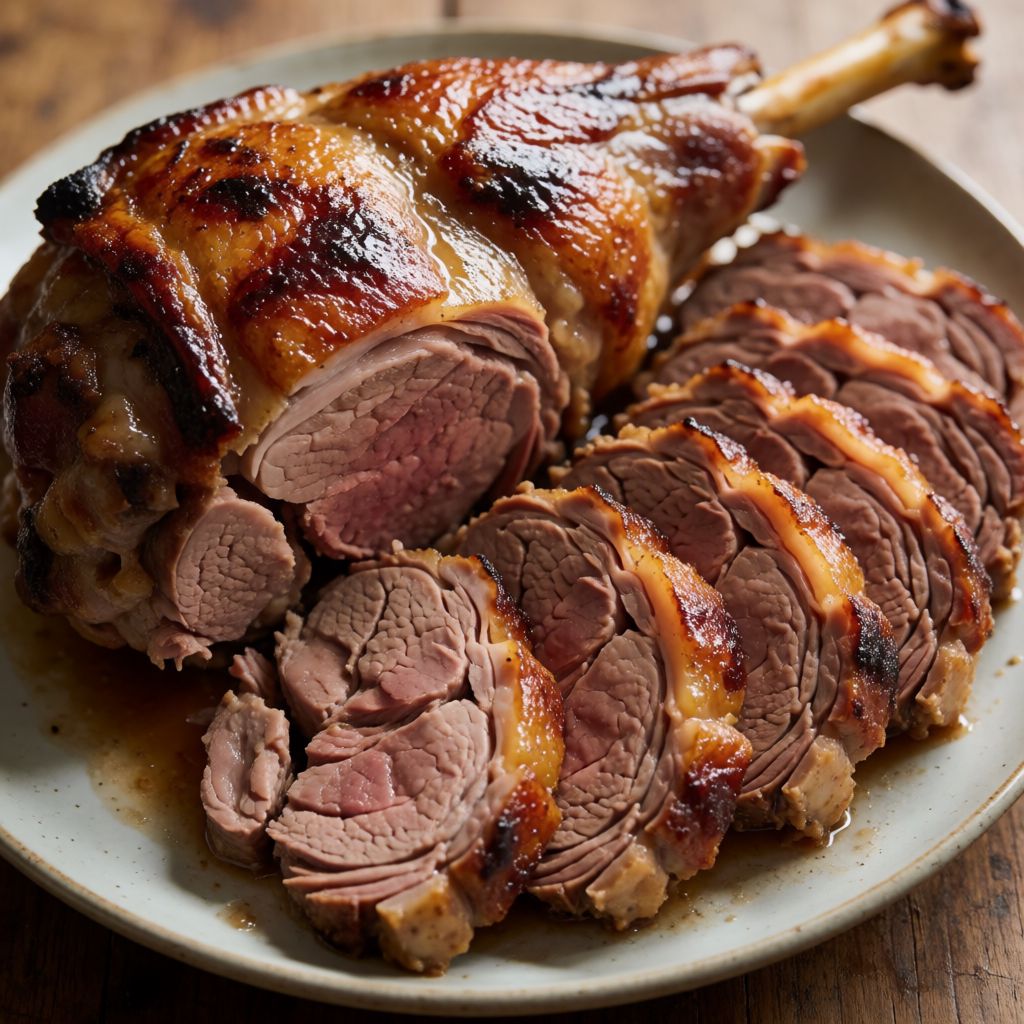
 AI photo
Roman-Style Abbacchio (Roast Lamb)
A classic Roman lamb dish, cooked until tender with wine, vinegar and a touch of anchovy for depth.
Labels are worked out automatically from the ingredients and can be wrong. Check the packaging if it matters to you.
Ingredients
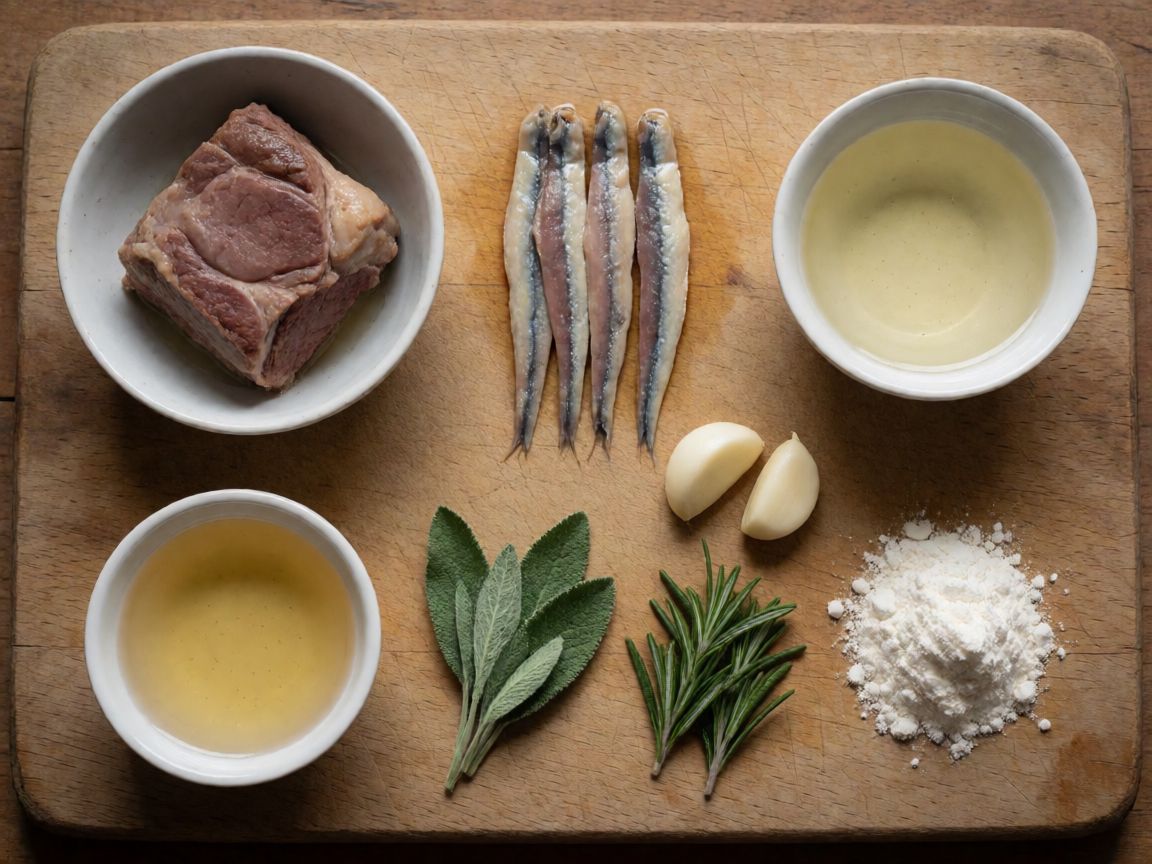
- 1 kg leg of lamb
- 3-4 pcs salted anchovies
- 200 ml white wine
- 100 ml white wine vinegar
- 40 g olive oil
- 2 clove garlic
- sage to taste
- rosemary to taste
- salt to taste
- black pepper to taste
- plain flour to taste











Steps
Cut the leg of lamb into medium-sized pieces and coat them all over in flour.
Heat the olive oil in a frying pan. Add the finely chopped garlic and fry it along with the sage leaves and rosemary sprigs.
Add the flour-coated lamb pieces and fry over high heat, turning often, so the meat browns evenly.
Season with salt and black pepper to taste.
Pour in the white wine vinegar and white wine. Cook over high heat so the alcohol evaporates.
Add a little boiling water to the bottom of the pan and transfer the lamb to an oven preheated to 180°C.
Roast for about 30 minutes, checking occasionally that there is still sauce at the bottom.
30 minRemove the lamb from the oven and pour the sauce into a small saucepan.
Add the salted anchovies and simmer for a few minutes over low heat.
Transfer the lamb to a serving dish and spoon over the anchovy sauce.
Serve hot with a seasonal side dish.
Abbacchio isn't a roast in the English sense — the name tells you what it actually is. "Abbacchio" means milk-lamb, an animal so young it never grazed, so the meat is pale, soft-fatted and takes to fast, high-heat cooking rather than the slow low-and-slow you'd give a Sunday leg. What you've got here is really a Roman trattoria dish disguised under a Sunday-roast name: pieces browned hard in a pan, braised briefly with wine and vinegar, finished in the oven, then hit with an anchovy sauce that has nothing to do with fish flavour and everything to do with salt and savoury depth (umami, if you want the modern word — the Romans just called it good cooking).
What decides whether this works is the browning in step 3, not the oven time in step 7. Flour on wet meat, high heat, a pan that isn't crowded — that's what gives you a crust instead of grey, boiled-looking lamb sweating in its own liquid. If you throw all the meat in at once in a pan sized for a UK hob (which is smaller and weaker than people think), it steams instead of fries, and no amount of time in the oven afterwards fixes that. Fry in batches if you have to. A slightly undercrowded pan beats a slightly overcrowded one every time.
Leg of lamb, 1 kg, feeds four generously as a main with a side — this isn't a whole-leg centrepiece roast, it's cut into pieces first, more like a hearty lamb fry-up than the carving-at-the-table ritual the UK Sunday roast trains you to expect. That's worth saying plainly because it changes your buying decision: you don't need a trophy joint here, you need meat that cooks evenly in pieces, so ask the butcher to bone and cube it, or do it yourself — bone-in works too if you don't mind gnawing, but boneless cooks and browns more evenly in a crowded domestic pan.
The anchovies are doing a job, not adding a flavour you're meant to taste as "fish." Three or four salted fillets melt into the sauce and give it saltiness and savoury weight — the same trick you see in a proper Caesar dressing or a puttanesca, where nobody tastes "anchovy," they taste "this is good, why." If you genuinely can't get salted anchovies, use the oil-packed tinned ones (patted dry, less salty so adjust seasoning after), or in a pinch a small spoon of good fish sauce or even Worcestershire sauce — not traditional, but it's chasing the same umami-salt effect rather than a flavour you're trying to fake.
The wine should be a dry white you'd actually drink a glass of, nothing sweet — it's reducing down to almost nothing, so a bad wine turns into a concentrated bad flavour. The vinegar should be a plain white wine vinegar, sharp and clean; don't reach for balsamic, it's sweeter and darker and will muddy the pale sauce instead of brightening it. Olive oil here is for frying and flavour both, so use one you don't mind tasting — "any oil with no smell of its own" is the wrong criterion this time, because the oil's faint fruitiness is part of the dish; a bland vegetable oil will get the job of browning done but leaves the sauce thinner-tasting.
Sage and rosemary go in early, fried in the oil with the garlic before the meat goes in — that's the step that infuses the fat itself, rather than just scattering herbs on top later and hoping. Fresh is worth the small effort here over dried; rosemary dries reasonably well but sage loses a lot of its character dried, so if you only have dried, use rosemary generously and go lighter on dried sage, which can turn dusty and bitter if it sits too long in hot oil.
Flour on the meat before frying isn't there to thicken the sauce much — it's there to help the crust form and to give the sauce something to cling to and slightly body up later. Plain flour is fine; don't use self-raising, the raising agent has no business near a savoury braise.
Patience is the ingredient nobody lists. The browning in step 3 wants you standing there turning pieces, not multitasking; the 30 minutes in the oven wants checking, not forgetting; the anchovy sauce at the end wants a gentle simmer, not a rolling boil that'll make it taste harsh and salty all at once instead of rounded. Rush any one of those three points and you get a technically-finished dish that tastes like it was rushed — there's no fixing that at the table with extra salt.